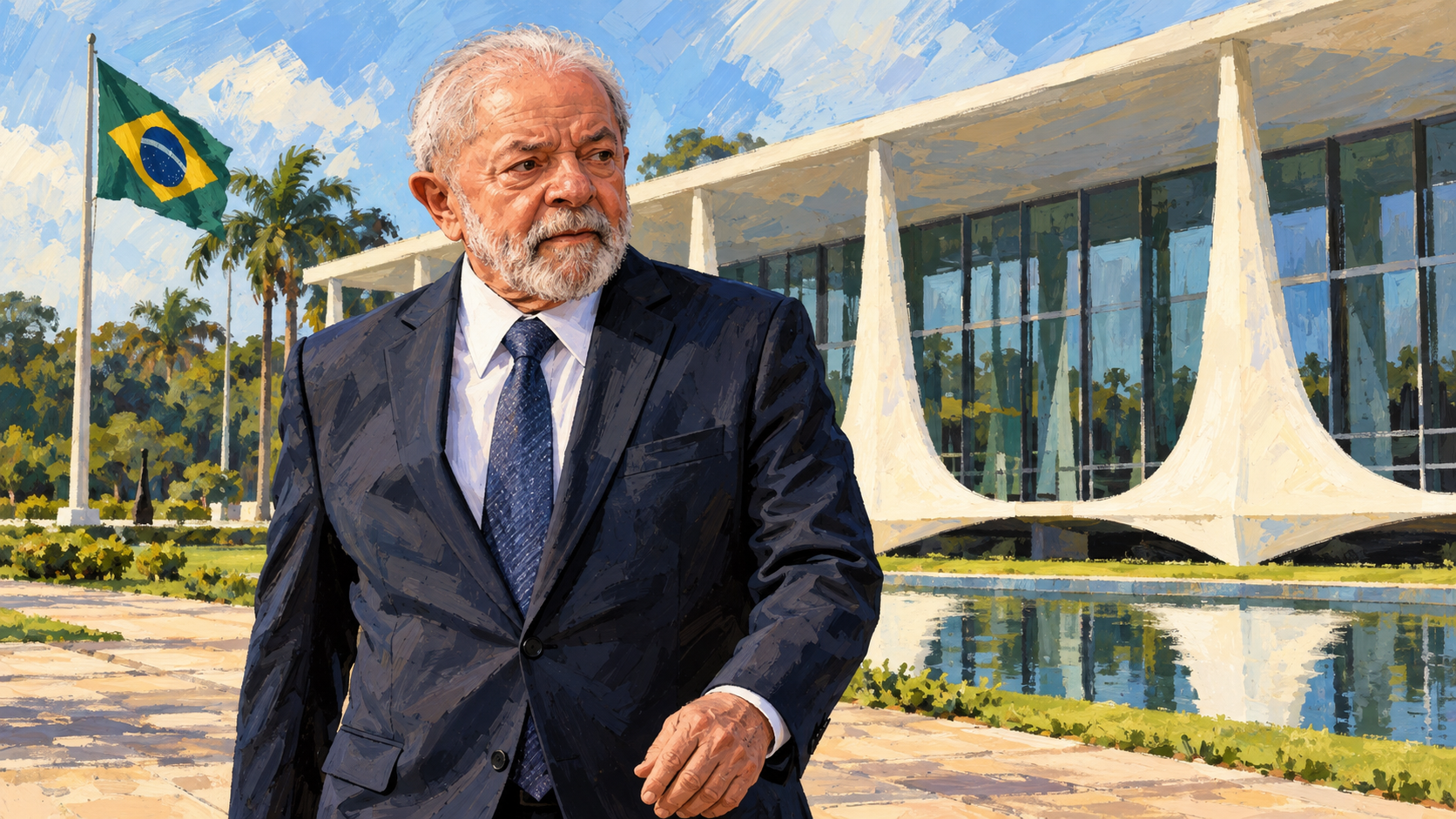
Investors bought Brazilian stocks and the real after Flávio Bolsonaro won the first round. Lula da Silva won the runoff, and the main U.S.-listed Brazil fund traded about 19% lower in evening trading, with real futures down nearly 10%.
For three weeks, the trade in Brazil was a bet on a change of government. On Sunday night, the voters declined to make it.
President Luiz Inácio Lula da Silva won Brazil's presidential runoff with 51.79% of valid votes, against 48.21% for Flávio Bolsonaro, according to the electoral court's final count. Lula received about 4.4 million more votes. He had trailed in the first round on Oct. 4, and his win is the first time since Brazil's return to democracy that a candidate who lost the first round has come back to win the runoff. The final polls before the vote had Bolsonaro ahead, 51% to 49%.
The market reaction arrived before Brazilian exchanges could open. The iShares MSCI Brazil ETF, which closed Friday at $42.59 after a 1.77% gain, traded about 19% lower in Sunday evening trading in New York. Front-month Brazilian real futures weakened nearly 10% against the dollar during Asian hours, and a Tokyo-listed fund tracking the Ibovespa fell 15%. Petrobras's U.S.-listed shares traded about 14% lower overnight, and MercadoLibre about 6% lower.
What was being unwound
The selloff is large relative to what had been built. Since the first round, Brazilian stocks had closed Friday almost 7% above where they stood going into that vote, and the real was nearly 5% stronger.
Those gains rested on one expectation: that a Bolsonaro government would bring a tighter fiscal stance. "We expect the rally that followed the first round to be largely priced out," said Alejo Czerwonko of UBS Global Wealth Management. Luis Felipe Vital of Warren Investimentos said he expects an "aggressive repricing," with local interest-rate futures likely to hit their daily trading limit shortly after the open.
The fiscal arithmetic explains the concern. Public debt is above 82% of gross domestic product. Lula's team has set a target of a primary budget surplus of about 1.3% of GDP by 2030.
Seven percent up, nineteen percent down
The overnight numbers should be read with care. EWZ is priced in dollars, so its move combines a fall in Brazilian share prices with a fall in the real. A 19% drop in the fund and a 10% drop in real futures are not two separate signals; much of the first contains the second. Evening trading in ETFs and ADRs is also thin, and the first full read will come when B3 opens in São Paulo.
Even so, the direction is not in question. Measured in dollars, the post-first-round rally was roughly 12%: about 7% in stocks plus about 5% in the currency. An overnight drop of about 19% in EWZ is larger than that, which suggests investors may be pricing more than the loss of that rally, including the cost of a fiscal path they had stopped expecting.
The political overhang
The result is contested. Bolsonaro refused to concede and said he would seek an annulment, citing a Supreme Court justice's order on Sunday extending voting by two hours. Both campaigns had asked for extensions during the day. Analysts said the size of the margin makes an annulment unlikely to succeed.
Two readings
One reading is that the fiscal risk premium returns in full. Debt is high, discretionary spending room is limited, and a challenge to the result adds political uncertainty to a currency already under pressure.
The other is that the first night overshoots. The rally being reversed was about 7% in equities and 5% in the real, smaller than the overnight drop in EWZ. Lula's team has a stated surplus target, and exporters with dollar revenue may hold up better than domestic-facing companies, as some local analysts argue.
Divya Singaravelu of Meridian 1305 pointed to the choice of the next finance minister as the first real signal. That appointment will tell investors more about fiscal policy than the overnight price.
What to watch
B3's open around 9 a.m. Eastern, local interest-rate futures and the real's spot rate, any formal filing of Bolsonaro's challenge, the finance minister nomination, and the 2027 budget.