

Businesses raised prices at the fastest pace since 2022, and oil and yields rose together. Investors offered the parent of OYO far less than it asked.
Friday's data put prices back at the center of the trade.
The Dow fell about 650 points, or 1.2%, and the S&P 500 slipped about 0.5%. The Nasdaq Composite dipped about 0.2% after Thursday's 2.6% drop. Brent climbed past $116 as Treasuries gave back part of Thursday's rally. Brent ended the stock session near $117, and the 10-year Treasury yield rose to about 4.99%. Gold fell about 1.2% to near $4,013, and bitcoin traded near $81,200.
Oil and yields moved together.
Thursday's split did not hold.
Better Than Oil Stocks
The best way to profit from energy is NOT a stock...
Rather, it's this little-known alternative investment.
Two surveys showed price pressure building before the Fed decides on Oct. 28.
U.S. companies raised prices at the fastest pace since 2022, days before the Fed decides. S&P Global's flash composite index slipped to 57.6 from 58.4, still strong growth. The rise in prices charged for goods and services was the largest since August 2022. S&P Global tied part of the cost pressure to oil.
Consumers' long-run inflation expectations rose to 3.5%, and the survey's director warned of entrenchment. The University of Michigan's year-ahead gauge rose to 4.7%. The long-run reading sits above its 2024 range of 2.8% to 3.2%. Director Joanne Hsu wrote that elevated expectations risk becoming entrenched. Sentiment held near a record low at 48.0.
The 2-year yield rose more than the 10-year by early afternoon. Yields were already higher before the data.
Prices, Not Growth
Thursday's bond rally treated the AI selloff as a growth scare. Friday's surveys showed firms growing and raising prices, and households expecting more of it. The 2-year, the maturity most tied to the Fed, led the move. For traders, the Oct. 28 decision now turns more on prices than on growth.
A pension fund spread its bet, and IPO investors called one private price too high.
CalPERS says it traded some Big Tech concentration for exposure to hundreds of private companies. Its deputy investment chief spoke to the Financial Times. He said the fund swapped heavy exposure to seven companies for several hundred firms. The aim was to spread equity risk. By the FT's count, the fund cut its direct Magnificent Seven shares by about 26% in the first half. That is a share count, not a dollar shift.
Oravel's prospective IPO investors are valuing it about 37.5% below its ask. They indicated about 250 billion rupees before new money. Bloomberg reported the figure, citing people familiar with the matter. The SoftBank-backed parent of OYO has sought 400 billion rupees. No price range has been set.
The Listing Is the Test
CalPERS is adding private exposure to spread its risk beyond seven stocks. Oravel shows what happens when a private price meets public buyers. A listing is where a private mark gets tested in cash. Where Oravel prices will show how far public bids sit below private asks.
1 Free Thing American Citizens Can Do to Target More Income
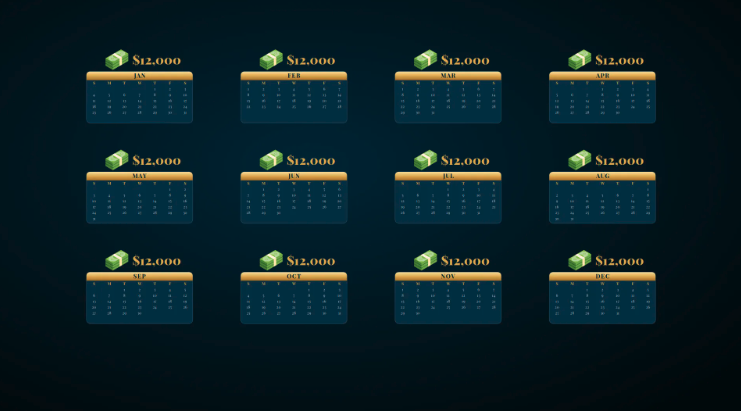
It's not investing in CDs, Treasurys, or even getting a second job. Wall Street insider Rob Spivey has uncovered an income engine hidden beneath Elon's empire. He calls it Elon's "Shadow Trust." It consists of a handful of little-know companies that have paid out a steady stream of income going back 20 years... They've paid out $4 billion in the past 12 months… over $100 million in the past few weeks…and the next payout hits November 4. Details here…
This ad is sent on behalf of Altimetry, 110 Cambridge Street, Cambridge, MA 02141. If you would like to optout from receiving offers from Altimetry pleaseclick here.
Oil-linked shares rallied, and a profit beat was sold.
SLB's fourth-quarter forecast assumes no Middle East rebound. SLB (SLB) beat estimates on revenue of $9.45 billion and guided to about $10 billion next quarter. Shares rose about 7%, and energy stocks rose about 2.6% as a group. The gain can't be split between the report and oil.
American Express beat and raised, then fell almost 4%. American Express (AXP) earned an adjusted $4.68 a share, above estimates, and raised its 2026 forecast. Revenue rose 9% to about $20.1 billion, close to forecasts. It will cut about 5% of its workforce and took a $336 million charge. Card peers fell too.
Paid for the Barrel
SLB set a cautious forecast and still rose with Brent. Amex beat on profit while revenue only matched forecasts, and it fell. For now, exposure to the oil price is drawing more buyers than a clean quarter. If Brent eases, that support fades with it.
A talks contract climbed on one headline and not another, and hike bets edged up.
Traders lifted odds of Russia-Ukraine talks as high as 88.5%. Polymarket's contract on in-person talks by Dec. 31 rose from 81 cents early Friday to 88.5 cents by late morning. It eased to near 83.5 cents late Friday. The Kremlin and Ukraine's president both pointed to talks in Abu Dhabi in the first half of November. The White House also announced a humanitarian ceasefire in Oleshky. The contract excludes humanitarian-only talks, and most of the gain came before that announcement.
Kalshi is pitching inflation futures to Wall Street. It aims to launch consumer-price futures in December, Bloomberg reported. Kalshi's October hike contract traded at 8 cents late Friday, up from 6 cents. Polymarket's "no change" contract slipped to about 91.5 cents from 93.5 cents. Both moves began before the morning data.
The Rules Did the Sorting
The timing fits a market pricing the meeting its rules count, not the ceasefire they exclude. Hike bets rose on both venues, but a hold still trades above 90 cents. If the Abu Dhabi talks slip past Dec. 31, the contract fails on its own terms.
On December 10th, a powerful new law signed by President Trump
will trigger a radical shift in America’s money system...
When a small group of private companies — not the Fed — will perform a major mint of a new kind of money.
And those who act before this new system fully kicks in could see gains as high as 40X by 2032.
But those who fail to prepare will be blindsided by this sea change to the U.S. dollar.
Go here now for the details — before the December 10th mint hits the market.
A bank and a stablecoin issuer each worked on how users get into and out of digital cash.
HSBC put a licensed Hong Kong dollar stablecoin in front of 3.3 million payment-app users. HSBC RedCoin went live Friday on the PayMe app, with wallets switching on in stages. The bank says each token is designed to be redeemable one for one.
Circle built an hourly auction for its own dollars. Circle Match pairs institutional orders to create and redeem USDC. Matched minters earn a rebate paid by redeemers.
Who Sets the Price
Across Friday, customers, IPO buyers and contract traders set the price by deciding what they would pay. In digital cash, that price is the cost of getting in and out. HSBC put its token inside an app customers already use. Circle let institutions bid for the fee. Cheaper entry and exit is how a stablecoin competes for large users.
Friday's surveys put prices back at the center.
Oil and yields rose together, and the 2-year led. A pension fund leaned into private companies while IPO investors bid one down. Oil-linked shares rose while a profit beat was sold. The Fed decides on Oct. 28.
Capital moves early. Coverage catches up. The gap between the two is worth watching.
Rates Just Reset. Who Feels It First?
On January 2, the 10-year Treasury yielded 4.19%. By September 30, it was 5.29%. Most of that move landed in a single quarter.
The bond market repriced and companies are starting to report it.
Some companies earn from higher rates. Some pay for them. And each one runs on a different clock.
We traced three of them, IBKR, WRB and FIS, in a new FREE Special Report:
Rates Just Reset. Who Feels It First?
Who earns it fast. Who earns it slowly. Who pays. One has already reported. The other two report next, and the report tells you the exact line to check.
We'll text the report straight to your phone.