
The president ruled out a U.S. attack on Iran before the midterms, and Brent still held about 72% of its jump. Treasury then sold $22 billion of 30-year bonds at 5.618%, and long yields fell with oil up 4%. Bitcoin slid below $81,000 through all of it.
Oil Held. Long Yields Let Go.
Brent crude hit $105.91 Thursday morning, 5.7% above Wednesday's close. At 12:17 p.m. Eastern, President Trump posted that the U.S. "will not be attacking Iran at any time prior to the Midterm Elections." By 1:45 p.m. Brent was at $104.30, still up 4.1%.
Long Treasury yields fell over the same stretch. The 10-year traded near 5.23%, below Wednesday's 5.28% close, after a 30-year auction drew solid demand.
The Nasdaq fell about 1.4% in early afternoon as chipmakers slid. The Financial Times reported that OpenAI's annualized revenue was near $50 billion, about $20 billion below the figure reported last month. The S&P 500 was down about 0.5%.
Investor Signal
Oil and long yields have mostly risen together this month, on the theory that costlier energy keeps the Fed tightening. Thursday afternoon they split. Bonds rallied through the pledge and a solid 30-year sale. Oil held onto the ships, storm and blockade. The settlement, Hurricane Isaias and Iran's reply will show which market read the day correctly.
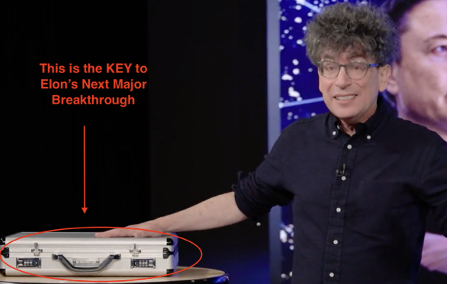
Renowned tech investor James Altucher – the man who called the rise of Nvidia, Apple and SpaceX years in advance – just uncovered Elon Musk’s latest breakthrough idea…
And according to James, it’s going to be even bigger than the SpaceX IPO – creating up to 1.8 million new millionaires over the coming years.
The pieces behind it are inside this briefcase – which he reveals 100% FREE in this video.
The President Removed One Risk. Oil Priced the Rest.
Of Brent's $5.71 peak gain, about $4.10 remained in early afternoon. That is roughly 72%.
The post covered one scenario: a U.S. strike before Nov. 3. The Atlantic reported Wednesday, citing two administration officials, that the White House had asked for strike options usable before the vote. The post says nothing about after Nov. 3. It keeps the blockade "in full force and effect."
Other risks sit outside the pledge. A tanker was struck by multiple projectiles north of Qatar, with casualties, Britain's maritime trade agency said. Hurricane Isaias, carrying 85 mph winds, is forecast to reach the northern Gulf Coast late Friday or early Saturday. About a quarter of Gulf of Mexico oil output was shut in as of Wednesday.
Diesel led. Heating oil futures rose about 5.1%, more than either crude benchmark. Natural gas fell about 1.7%.
Investor Signal
When the U.S. paused strikes in late July, Brent fell 6.7% that session. By 1:45 p.m., Brent was about 1.5% below its high. One reading is that most of what remains is physical: ships, storm and blockade. The other is that storm outages reverse after landfall and talks with Tehran erase the rest. If Brent holds near $104 after Gulf output restarts, the storm was not the main support.
Oil Rose 4%. The 30-Year Rallied.
The strike pledge landed 43 minutes before the week's last Treasury sale.
Treasury sold $22 billion of reopened 30-year bonds at 5.618%, up from 5.308% in September. That is the highest yield at a 30-year auction since August 2000.
Demand held up. Bids covered the sale 2.54 times, above the 2.41 average of the past six 30-year sales. Dealers, who absorb what others leave, kept 6.8% against a 10.3% six-sale average. Indirect bidders, including foreign official accounts, took 72.3%, against 80.3% at Wednesday's 10-year sale.
By 1:45 p.m. the 30-year traded near 5.61%, down about 5 basis points on the day. The post and the auction overlapped, and the price action does not separate them.
Investor Signal
Two long sales in two days cleared near quarter-century highs with solid demand. That supports the case that buyers have found a level near 5.3% on the 10-year. The counterpoint is the price: the 30-year cleared 31 basis points above last month. The September consumer price index on Oct. 14 tests whether that demand holds if oil stays high.

The $16 Trillion Rare Earth Discovery
The Guardian calls it "the beginning of the biggest gold rush in history"... and one stock under $5 owns exclusive rights to harvest these rare earths.
Elon Musk and his companies need these minerals before a January 1 Pentagon deadline.
Waller Expects More Hikes. Energy Is One of His Reasons.
The post took a strike off the calendar. It did not take energy off Fed Governor Christopher Waller's list.
If the data come in as expected, "I anticipate additional hikes," Waller said in Istanbul, but "the hikes do not need to come at consecutive meetings." He listed three pressures: Middle East energy costs that experts warn could stay high through 2027, the AI build-out lifting high-tech prices, and threatened tariffs.
The labor data gave him room. Initial jobless claims fell to 197,000, below the 200,000 expected. Continuing claims rose to 1.716 million. The median spell of unemployment is near its longest in four and a half years.
Kalshi's contract on an October hike traded at 16 cents. Waller cited market odds of 85% for at least one hike by December, as of Wednesday.
Investor Signal
Waller's wording lets the Fed skip October without changing direction. Few layoffs keep the focus on inflation, and oil near $104 feeds the energy pressure he flagged. A hot September CPI would test the 16-cent October price first.
Mortgage Rates Hit 7.40%. Builders Traded the 10-Year.
Lower long yields reached home builders within hours. They reach mortgage rates later.
Freddie Mac's 30-year average rose to 7.40% from 7.28%, its seventh straight weekly increase and the highest since November 2023. It was 6.76% on Sept. 10. On a $400,000 loan, the monthly payment is about $172 higher than four weeks ago.
The iShares U.S. Home Construction ETF (ITB) touched a 52-week low of $83.69. It then traded at $86.11 in early afternoon, up about 1.7%, as Treasury yields fell.
Investor Signal
Freddie Mac collects its survey Thursday through Wednesday, so 7.40% misses Thursday's drop in yields. Builder shares trade the daily 10-year, not the weekly survey. Builders that buy down rates for customers pay more with every increase. If lower yields hold, next week's survey is the first chance for the streak to end.
Middle East Conflict Lights Fuse on US Debt Bomb
America was already drowning in $38 trillion of debt, but the recent conflict in the Middle East just accelerated the timeline.
As oil spikes, a 100-year-old stock market signal that accurately predicted the 2008 and 2020 crashes is flashing a massive "Sell" on dozens of popular U.S. equities.
If you hold the wrong stocks when this debt crisis hits, it could wipe out years of gains.
Click here to see the 10 popular stocks to dump immediately
11780 US Highway 1, Palm Beach Gardens, FL 33408-3080 Would you like to edit your e-mail notification preferences or unsubscribe from our mailing list? Copyright © 2026 Weiss Ratings. All rights reserved.
Bitcoin Got Lower Yields and a Strike Pledge. It Fell Anyway.
One market took neither piece of relief.
Bitcoin traded near $80,600 at 1:50 p.m., down about 3% and below $81,000, its lowest since Sept. 21. Ether fell about 6.4% to near $2,409.
The steepest drop came in the 11 a.m. hour, before the post. Bitcoin did not recover after the post, or as yields fell.
On Wednesday, bitcoin set an October low as yields climbed. Spot bitcoin funds lost about $485 million that day, per Farside Investors.
Investor Signal
Rising yields fit Wednesday's drop. They do not fit Thursday's, when yields fell and bitcoin fell further. That points away from rates and toward positioning. Bitcoin's 50-day average sits near $80,300. Thursday's fund flows will show whether investors are still pulling money out.
The president took a pre-election strike off the table, and oil gave back only a slice of its gain. The struck tankers, the hurricane over Gulf output and the blockade were all still there. Bonds rallied over the same afternoon, and long yields fell through the highest-yielding long-bond sale in a quarter century.
Mortgage rates have not caught up. Builders already have. Bitcoin took none of the relief.
The storm's landfall, Iran's reply and the September price index come next. If oil holds once the storm passes, the bond rally faces the harder test.
3 STOCKS OUR SIGNAL ENGINE SAYS TO WATCH CAREFULLY
Three stocks. Three signals. Two weeks later, the story changed.
On September 2, we published three market questions around KLAC, HPE and PG&E.
Two weeks later, every one of them produced new evidence.
One company delivered record revenue and raised its outlook.
Another saw weakness spread across its entire peer group.
And in the third, a market risk that had only been showing up beneath the surface suddenly became explicit.
Yet none of these stories is finished.
That’s why we built Market Tell.
To track the signals that keep moving after the headline is gone — and show you what investors should be watching next.
We’ve put the latest analysis into a new FREE Special Report:
3 Stocks at a Major Turning Point
See what changed… what still hasn’t been resolved… and the signals we’re watching now.