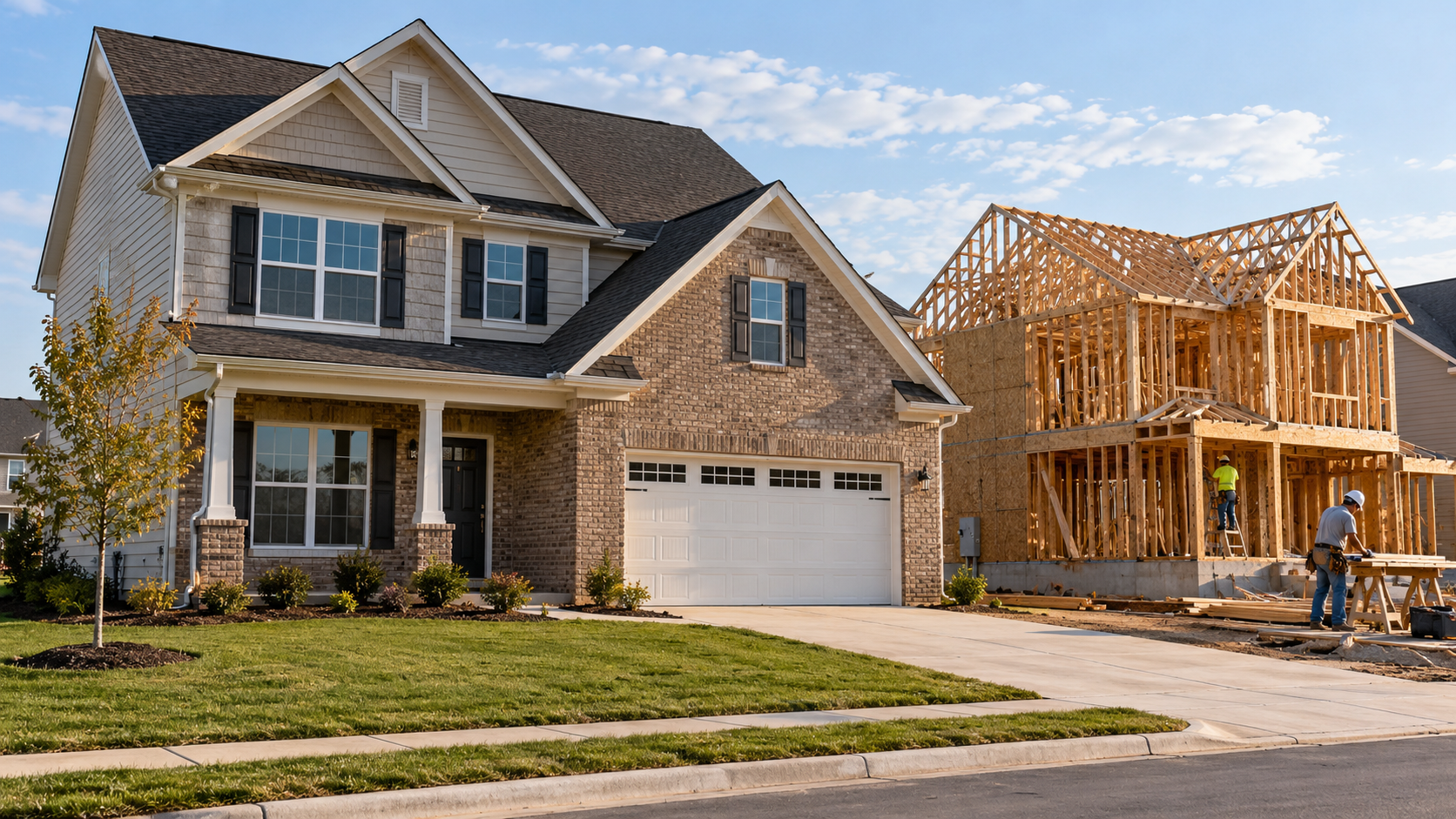
Freddie Mac's 30-year average is up 64 basis points since early September and at its highest since November 2023. The monthly payment on a $400,000 loan has risen about $172 in four weeks.
The weekly gauge of U.S. mortgage costs has climbed every week since early September, and home builder shares have been under pressure.
The average rate on a 30-year fixed mortgage rose to 7.40% this week from 7.28% a week earlier, Freddie Mac said Thursday. That is the highest since November 2023. A year ago the rate was 6.30%. The 15-year average rose to 6.73% from 6.60%.
The weekly path
The run began from 6.76% on Sep 10, 2026. Since then the average has moved to 6.95%, 7.03%, 7.28% and now 7.40%, a cumulative increase of 64 basis points in four weeks.
On a $400,000, 30-year loan, the monthly principal and interest payment at 7.40% is about $2,770. At 6.76% it was about $2,597. The difference is about $172 a month, or more than $2,000 a year, added in a single month of rate moves. Against a year ago, the gap is about $294 a month.
The rate behind the rate
Mortgage rates track the 10-year Treasury yield, which closed Wednesday at 5.28% after setting its highest level since 2002 earlier in the week. Freddie Mac's survey is collected from Thursday through Wednesday, so this week's figure reflects that run-up. It does not yet capture Thursday's move, when the 10-year fell to about 5.23% in early afternoon.
The builders
Home builder shares have been under pressure in recent sessions, with D.R. Horton and PulteGroup among the decliners. On Thursday, the iShares U.S. Home Construction ETF touched $83.69, a new 52-week low, then reversed as Treasury yields fell and traded at $86.11 in early afternoon, up about 1.7%.
That round trip suggests builder stocks are trading off the daily path of long-term yields rather than the weekly mortgage survey, which lags it.
Two interpretations
One reading is that affordability is deteriorating fast enough to cut into fall home sales and builder margins, since builders that pay to buy down mortgage rates for their customers face a higher cost with every increase.
Another reading is that builder stocks have already priced a peak in rates and are now trading off the 10-year in real time, so a sustained pullback in Treasury yields would lift them well before the weekly mortgage average turns.
Next week's survey
If Thursday's lower yields hold, next week's survey would be the first chance for the streak to end. Home builders' fourth-quarter orders and incentive spending, reported over the coming weeks, will show how much the higher rates are costing them.