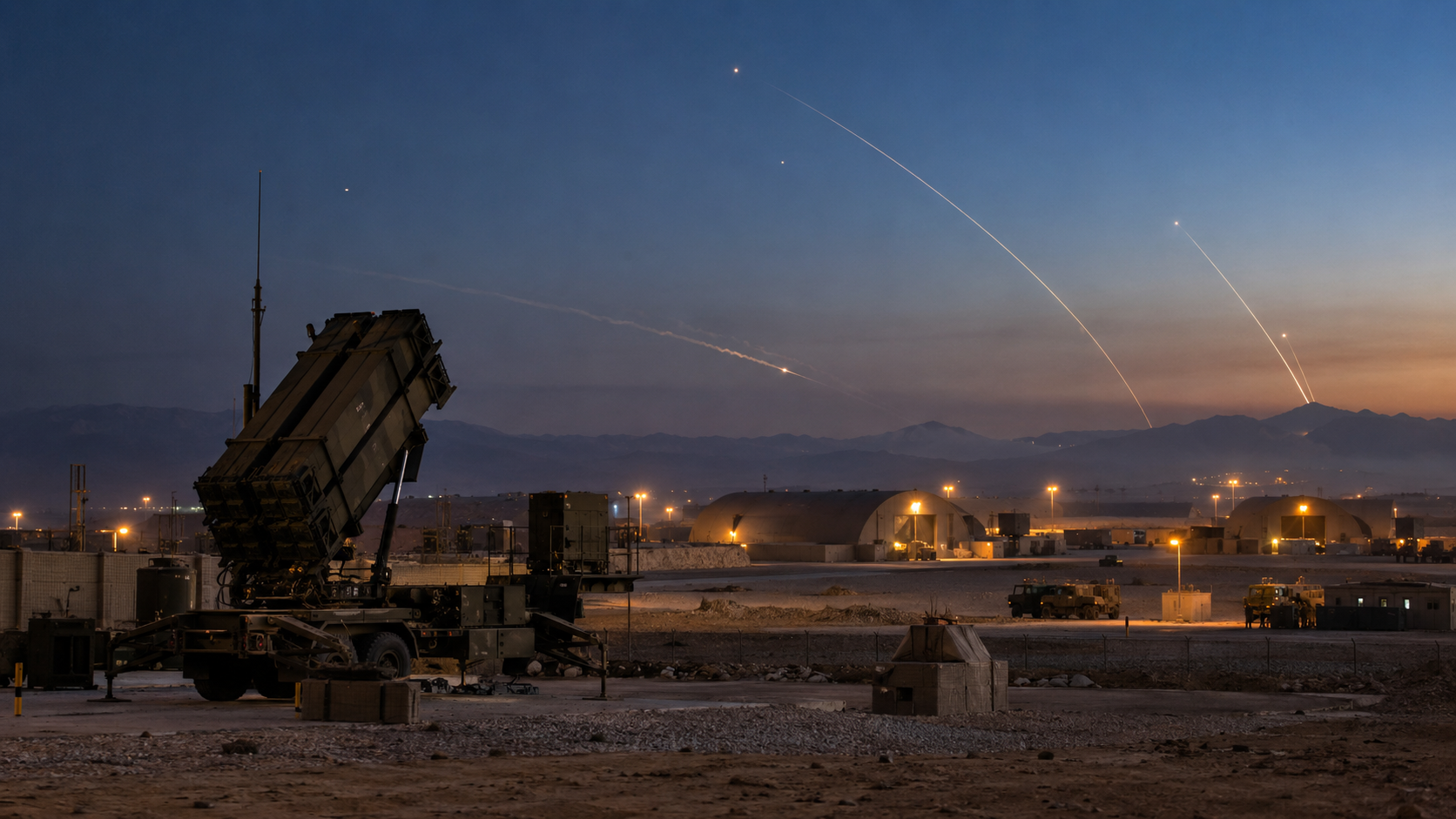
American strikes on five Iranian tankers drew a 20-missile response at a U.S. base in Jordan, widening the Gulf confrontation.
The confrontation between the United States and Iran moved beyond the Gulf overnight. Iran fired on a U.S. ally's territory for the first time since the current round of hostilities began.
U.S. forces struck five Iranian oil tankers early Wednesday in the Gulf of Oman and near Kharg Island. Iran's Islamic Revolutionary Guard Corps had tried twice in the prior two days to target a U.S. warship, the stated justification for the strikes.
Iran's response came within hours. The IRGC said it fired 20 ballistic missiles at the Al Azraq base in Jordan and claimed separate strikes on two U.S. Navy destroyers. Jordan's Armed Forces said its air defenses intercepted 18 of the 20 missiles, with the remaining two landing in unpopulated areas. Neither side reported casualties from the exchange.
Conflict moves beyond the Gulf
What sets this exchange apart from weeks of tanker skirmishing is where the missiles landed. Jordan is a longtime security partner of Washington, not a combatant, and its territory had not previously been targeted in this conflict. Reaching it changes what a Gulf-based confrontation now has to be priced as.
That neither side took a confirmed casualty despite firing 20 missiles and striking five tankers leaves two readings open for investors weighing regional risk: either both militaries are still calibrating the fight short of mass casualties, or the calibration no longer holds once the fighting has spread to a third country's soil. Which reading proves right will decide whether markets treat this as a one-off spike or the start of a broader repricing of Gulf adjacent risk.
Oil was already climbing before the Jordan strike, on a separate attack on Saudi energy infrastructure hours earlier. The Jordan strike adds a second, distinct source of pressure on the same complex of assets.
Hong Kong’s Hang Seng closed at 25,280 Wednesday, down 0.2%, with the move tied directly to rising crude prices and escalating Middle East tensions. U.S. cash equities had not yet opened as the news broke.