Brent crude has held above $100 a barrel for three straight sessions after US strikes on Iranian tankers and Iran's retaliation against a US ally. In this conflict, that alone is unusual.
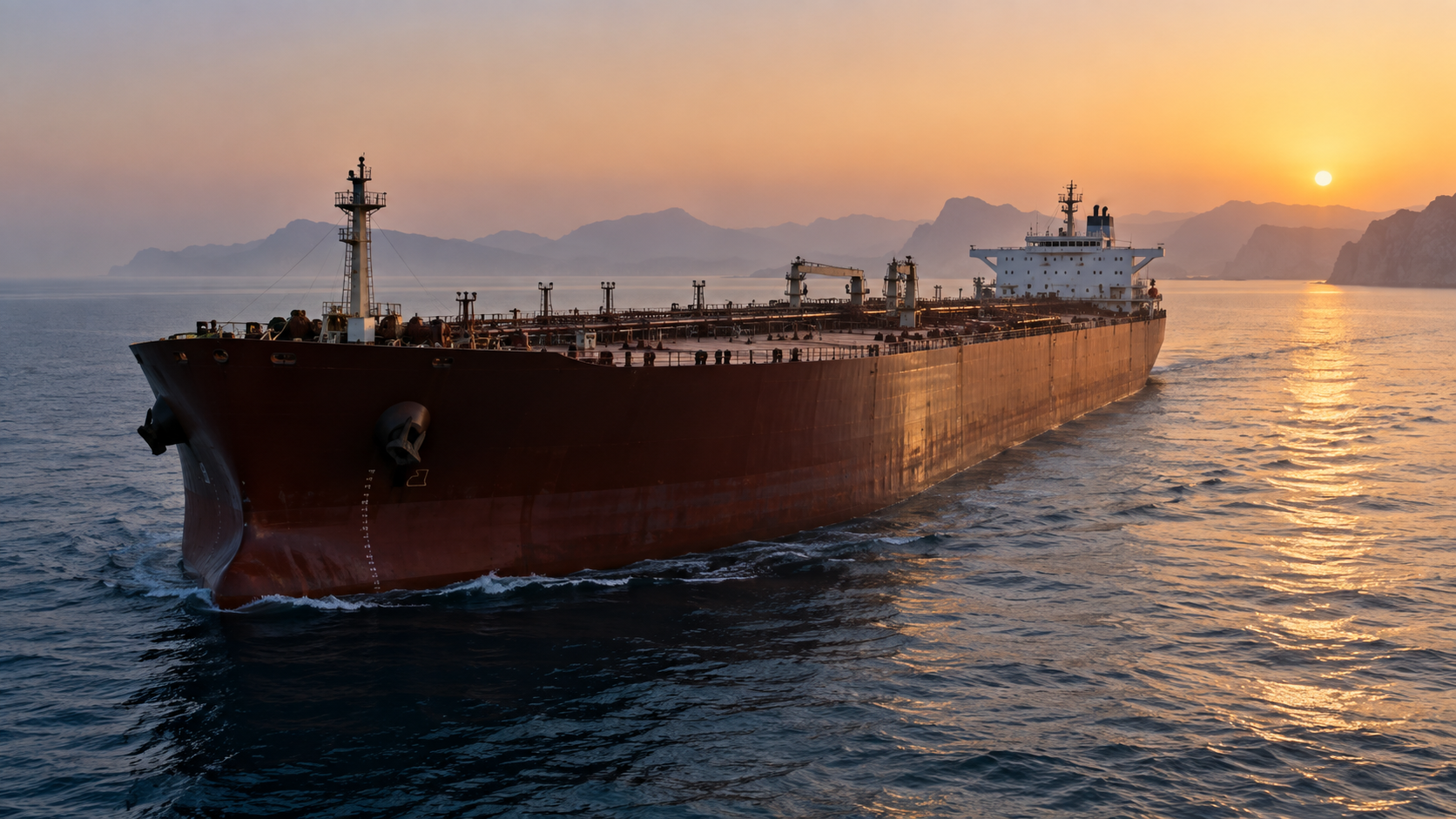
US Central Command struck five named Iranian oil tankers, the Kaviz, Charminar, Horizon 1, Riesco and Derya, in the Gulf of Oman and near Kharg Island on or about September 8 and 9, ordering their crews to evacuate before disabling the vessels. Iran's Revolutionary Guard retaliated with ballistic missiles against the Al-Azraq military base in Jordan and targeted two US Navy destroyers. Jordan's military said it intercepted 18 of 20 missiles, with the remaining two landing in unpopulated areas; no casualties were reported on either side.
Secretary of State Marco Rubio drew a direct line between the two actions: "Iran continues to try to hit US naval ships, and for every time they do that or try to do that, they're going to lose tankers." Iran's Foreign Ministry called the US strikes a violation of the UN Charter.
The market reaction has been broader than the headline event. Brent settled at $101 a barrel on September 9, its first close above $100 since July, and was still trading near $102 a barrel into Thursday's Asia session, essentially unchanged rather than fading. The S&P 500 closed down 0.48% on September 9, the Dow fell 0.77%, the Nasdaq dropped 0.64% and the small-cap Russell 2000 underperformed at negative 1.36%. Treasury yields moved in the same direction: the 2-year note hit a 52-week high of 4.427%, and the 10-year climbed to 4.843%, also a fresh 52-week high.
The reaction spread to Europe the same day. London's FTSE 100 closed down 1.38%, a level one market-commentary source described as a six-week low, while Frankfurt's DAX fell 1.62% and Paris's CAC 40 dropped 1.97%. No outlet named a specific cause for the synchronized European decline, though the timing lines up with the same session's oil move.
What makes this escalation different from the pattern tracked since late August is that it hasn't reversed. Three earlier flare-ups in the same conflict, in late August and early September, produced initial price spikes that partially unwound within days. This one, several sessions old now, has not shown that pattern. That is the actual investor question: whether markets are catching up to a geopolitical risk that has become structural, or simply haven't yet had the catalyst to unwind a shock the same way they did on three earlier occasions since late August.
Neither side of that question is resolved. What is measurable is that oil, rates and now European equities are all leaning the same direction, for longer than they have during this conflict's three prior spikes.