Negotiators in New York are exploring a sequence in which Iran reopens the strait and Washington lifts its blockade, officials in Iran, the Gulf and the West said. No agreement exists, and bonds, stocks and energy shares barely moved.
Brent crude gave up nearly $3 in the minutes around a Thursday headline about U.S.-Iran talks. The ships that would have to move for peace in the Persian Gulf to be real are moving far more slowly.
Brent crude traded near $108 a barrel shortly after noon on Thursday, close to its session high of $108.22. At 12:17 p.m. Eastern, word spread that U.S. and Iranian negotiators were exploring a phased way out of the war. In the five-minute window around it, Brent went from $107.98 to $105.18, a drop of about $2.80, or 2.6%. By 12:42 p.m. it was at $104.37. That still left it $1.29 above Wednesday's settlement of $103.08, and West Texas Intermediate, at $93.45, was up by the same amount.
The plan described by Iranian, regional and Western officials starts with one trade. Ships regain passage through the Strait of Hormuz in exchange for Washington ending its economic blockade of Iran. "One way forward would be to solve the crisis in stages. The first would be to end the blockade and reopen Hormuz," a senior Iranian official said. Access to Iran's frozen assets could come later in the sequence.
The two hardest issues would be parked rather than resolved. Tehran's demand to charge ships for passage would sit in a separate annex instead of the core agreement, regional officials said, and would be a pause on the issue rather than a concession. Gulf states reject any fees. Control of the waterway is a firmer line. Iran "may be willing to defer the toll issue, but they are not going to give up administrative control of the strait," one person familiar with the talks said. Gulf leaders have told President Trump they will not accept Iranian control of Hormuz.
For now it is a framework under discussion, with no signed text and no timetable.
The official who laid out the staged approach was also blunt about its odds. "Our fingers are on the trigger," he said, putting the chance that diplomacy succeeds at "extremely low." Secretary of State Marco Rubio played down Tuesday's round in New York, when Foreign Minister Abbas Araghchi spent about three hours in indirect talks with Special Envoy Steve Witkoff and Jared Kushner through Qatari mediators. "I don't want to mischaracterize this as a major breakthrough," Rubio said, adding that "it was significant that at least there was a conversation." At the United Nations that day, Trump said: "I believe we'll make a deal right after the election."
The core obstacle is sequencing. Each side's leverage is the thing the other wants removed: for Washington it is the blockade, for Tehran the strait. Neither wants to give its up first. An interim understanding signed in June, which the White House said would reopen Hormuz, lapsed without either side carrying it out.
Former officials read the incentives differently. Dennis Ross, a former U.S. negotiator, put the chance of an agreement before the midterm elections at about 30% and argued both sides have more reason to deal before the vote than after it. "The blockade is what's really squeezing the Iranians," he said. Alan Eyre, also a former U.S. negotiator, sees the opposite effect, with pressure making Tehran more likely to escalate. To Danny Citrinowicz, formerly of Israeli military intelligence, nothing said in New York has moved either government off its starting point.
Outside crude, the reaction was faint. At 12:42 p.m. the 10-year Treasury yield was 1.7 basis points higher on the day at 5.132%, off its late-morning high. The S&P 500 was up 0.15% at 7,717.59 and the XLE energy exchange-traded fund up 0.26%. Gold slipped 0.23% to $4,308.30, the dollar index eased 0.19% to 100.90, and the VIX sat at 15.44. A plan that took the war premium out of oil would, if it held, feed into lower fuel prices, softer inflation expectations and less pressure for Federal Reserve rate increases. Bonds showed none of that. The pattern suggests investors treated the news as headline risk in one market rather than a change in the outlook.
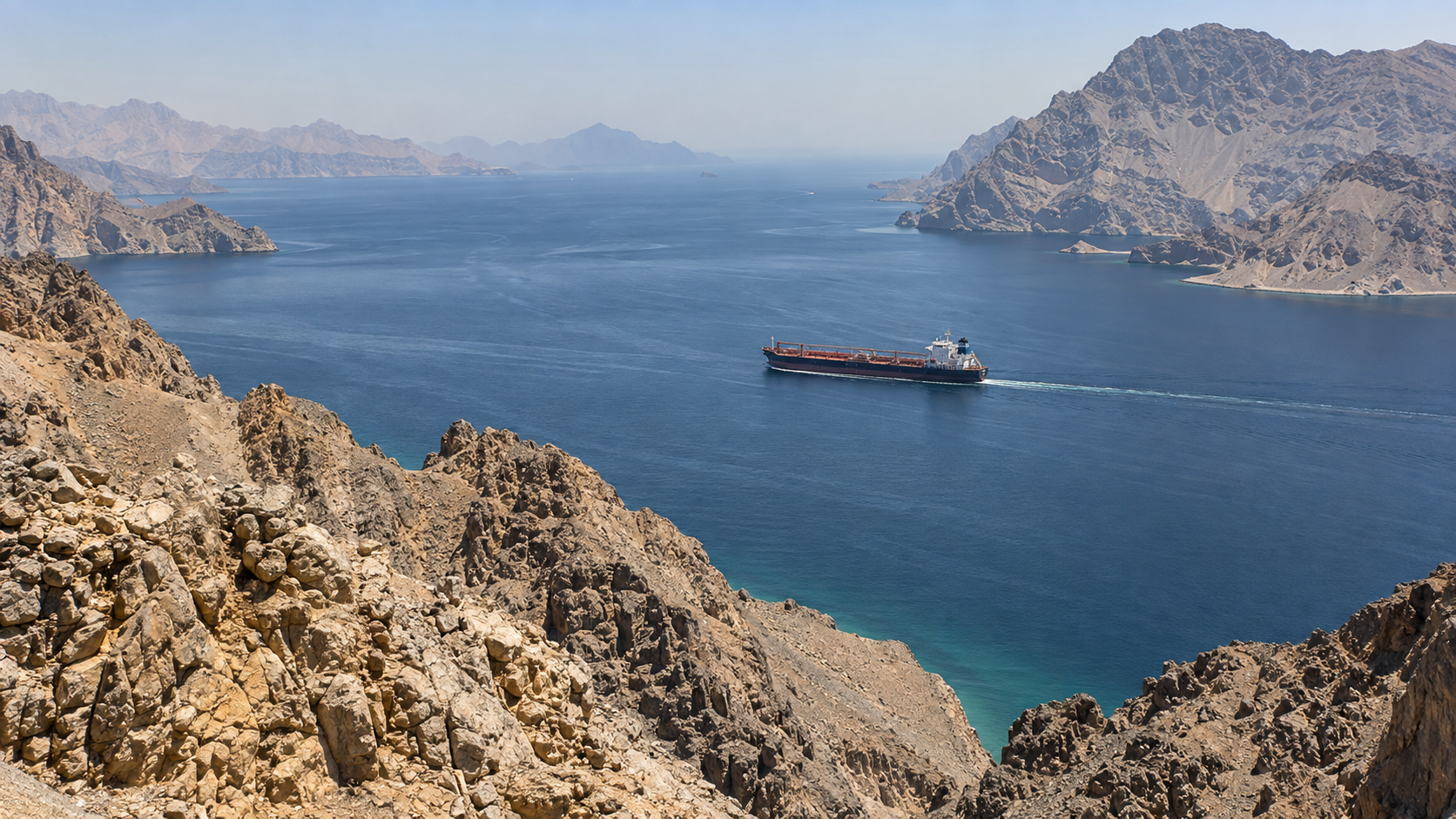
The physical market is the slower gauge. Just 11 vessels crossed Hormuz on Wednesday, nine heading in and two heading out. On Tuesday, 11.12 million barrels of crude left the strait, up 13.9% from the day before, with 54% of it moved through ship-to-ship transfers. By Wednesday, U.S. Central Command had turned back 115 commercial ships under the blockade. Asia's crude imports this month are running at about 23.96 million barrels a day. That is the strongest pace since February and still roughly 13% short of where it was before the war.
Before the news, the futures curve had been pricing a long standoff. Brent for August 2027 delivery closed Wednesday at $80.96, its highest since May.
The next readings come in hours and days. Brent's settlement at 2:30 p.m. will show whether the $2.80 drop holds. An on-record response from Washington or Tehran, or a readout from Qatar, would show whether the phased plan is a negotiating position or a shared one. The earliest sign that a first stage is real would be in the transit counts, since a reopened strait would show up as ships well before it shows up in a signed text.