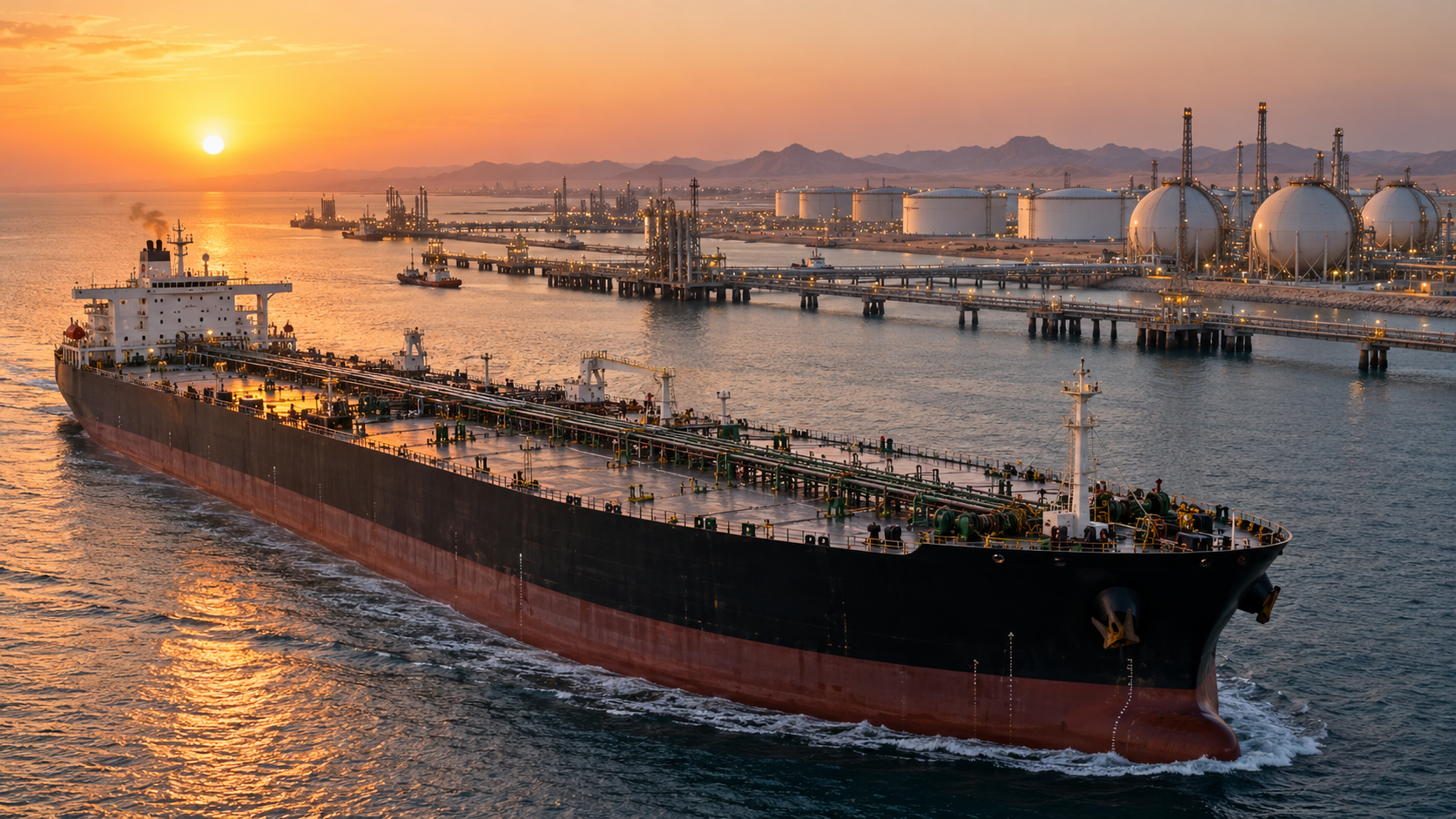
Shipments through Hormuz and the region's bypass routes topped 24 million barrels a day in the week to Oct. 18, according to Kpler, and the Treasury secretary says the flow has "surpassed pre-conflict levels." Over the weekend, the threats moved to the infrastructure that makes those flows possible.
The barrels are moving. The price is paying for the ones that might stop.
Brent crude settled at $116.72 a barrel on Friday, its highest settlement since late April, after rising about 6% on the week. West Texas Intermediate settled at $103.27. Those prices were set just days after the physical data turned in the other direction.
Oil shipments through the Strait of Hormuz and alternate routes averaged more than 24 million barrels a day in the week to Oct. 18, above the prewar average of 23.3 million, according to data firm Kpler. Treasury Secretary Scott Bessent went further on Friday night, after the settlement. "Despite Iran's efforts to disrupt energy shipments, oil exports from the Persian Gulf are roaring back and have surpassed pre-conflict levels," he wrote. He did not say what data he was relying on.
Two explanations for one price
If supply is back to normal, the question is what the market is paying for.
The first answer is a risk premium. Kpler estimates that Middle Eastern crude supplied to international markets is running at about 16.8 million barrels a day in October, against a 2025 average of 16.3 million, and it expects Dubai price structure and regional spot differentials to weaken further. It also says refiners may hold off restocking until landed prices fall to $100 a barrel or lower, possibly not until early 2027. ING has described prices as supported by "a significant geopolitical risk premium" despite strong flows from the Gulf.
The second answer is that the scarcity is real, just not where the export statistics look. Moving the oil has become far more expensive. A supertanker voyage from the U.S. Gulf Coast to Asia cost $65.39 million on Oct. 19, according to RBN Energy, below its early-October record but nearly five times the top of the prewar range. Brent for delivery in December 2027 trades about $30 below the front-month contract, a curve that rewards anyone holding barrels today. And the U.S. emergency stockpile stands at 282.7 million barrels, its lowest since October 1982, which leaves Washington less room to cushion a disruption. On Friday the Energy Department arranged an exchange of up to 400,000 barrels from the reserve to cover a supply disruption at Phillips 66's Lake Charles refinery.
The weekend aimed at the bypass
What changed over the weekend is the target list.
Yemen's Houthis claimed attacks on an Aramco facility in Yanbu, the Rabigh refinery and crude oil pumping stations, and their claims named the East-West Pipeline. Yanbu and Rabigh sit on the Red Sea and are part of the alternate-route system behind the higher export numbers. Neither Saudi Aramco nor the Saudi government had confirmed any damage as of early Sunday. The Saudi-led coalition said it intercepted a Houthi ballistic missile over Riyadh and destroyed a drone near the capital.
Iran, for its part, has warned publicly and through diplomatic channels that if it is attacked it would strike not only U.S. bases and warships but also energy infrastructure, natural gas pipelines and airports in the Gulf, The Wall Street Journal reported. Its army said on Sunday that its air defenses shot down a U.S. drone over the port city of Bandar Abbas. There was no U.S. statement on that claim.
President Donald Trump, speaking to reporters in Florida on Saturday, left both doors open. "We're thinking about doing it, and maybe tomorrow," he said of a new strike. He also said, "There's also a possibility we'll have a nice, big, beautiful agreement."
The diplomatic signals were just as mixed. Iran's ambassador to Pakistan said Tehran had conveyed through Islamabad that it was prepared to reopen Hormuz if Washington lifted its naval blockade of Iranian ports, and accused Trump of rejecting the proposal. An unnamed Iranian source quoted by a state-linked news agency called reports of a new offer "a lie and fabrication." The two statements may refer to different proposals.
On Polymarket, the contract on whether the U.S.-Iran ceasefire holds through Oct. 24 passed its deadline on Saturday afternoon with no qualifying strike reported and traded near 99 cents early Sunday, awaiting settlement. The Oct. 31 contract rose to 82.5 cents from 78.5 cents over the same period.
Why the distinction matters
A premium can disappear in a session if a deal is announced or the threats fade. Scarcity cannot. The flow data support the first reading. The weekend's claims, which aim at the routes that let Gulf oil avoid Hormuz, are the strongest argument for the second, and none of them has been confirmed.
For consumers, the difference is already visible. The national average price of regular gasoline was about $4.30 a gallon on Saturday and diesel about $6.34, according to AAA.
What to watch
The Brent and WTI futures open at 6 p.m. Eastern on Sunday, any Saudi or Aramco statement on Yanbu, Rabigh or the pipeline, Israel's election and the gas exporters' summit in Moscow on Tuesday, the Fed's decision on Wednesday, the OPEC+ meeting on Nov. 1 and the U.S. midterms on Nov. 3.