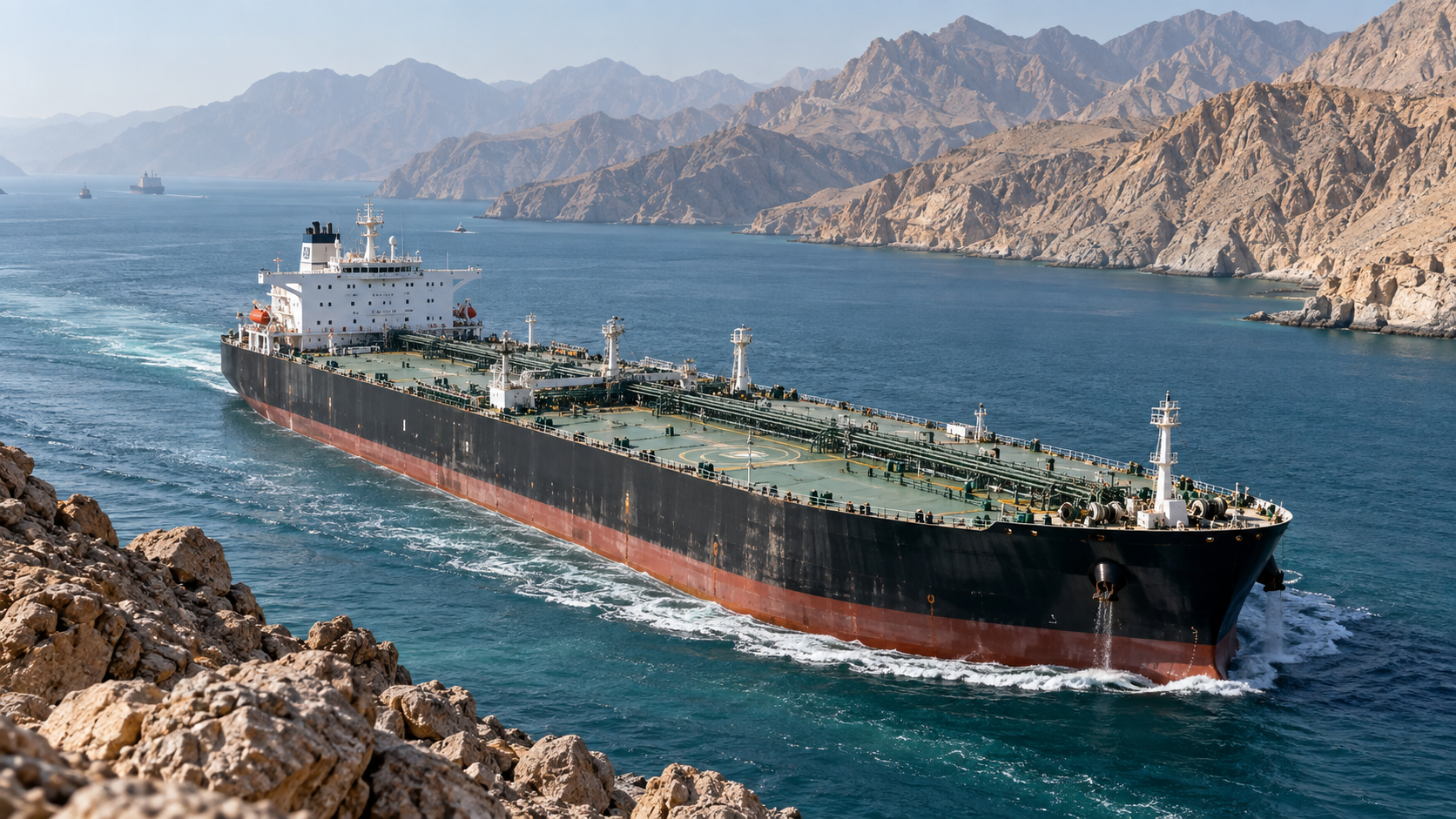
Tanker traffic through the strait is running at about three quarters of prewar levels, and a Saudi pipeline is back in service.
Brent crude fell below $96 a barrel on Wednesday, extending a slide that has taken the global benchmark down nearly 7% from around $103 on Tuesday afternoon.
The drop reflects a physical market that is proving more resilient than the headlines out of the Persian Gulf suggest. Oil and refined-product flows through the Strait of Hormuz averaged 13.1 million barrels a day last week, according to tanker-tracking data, against a prewar baseline of about 17.1 million. That is roughly 77% of normal volume. The strait is constrained, not closed.
Saudi Arabia has also restored a key bypass. Tanker loadings at Yanbu, the Red Sea terminal fed by the kingdom's East-West Pipeline, have resumed after drone strikes damaged the route. Every barrel that reaches Yanbu is a barrel that never has to transit Hormuz.
The spread is telling the story
U.S. crude has moved far less. West Texas Intermediate traded near $89.80, down from about $93 on Tuesday afternoon. That narrows the gap between the two benchmarks from roughly $10 a barrel to about $6.25.
The narrowing spread is consistent with a reduction in the premium investors pay for barrels exposed to Gulf shipping risk. Brent’s steeper decline suggests that easing disruption concerns are contributing to the move, although benchmark spreads also reflect supply, demand and regional market conditions.
Three explanations, one direction
Traders are weighing several forces at once: steadier Gulf export volumes, the restart of the Saudi bypass and continued releases from the U.S. Strategic Petroleum Reserve. They point the same way, which helps explain the speed of the decline.
What the price does not reflect is a diplomatic breakthrough. President Trump has rejected Iran's latest proposal to reopen the strait, and the two countries remain in open conflict. The oil market is pricing logistics, not peace.
What to watch
The weekly federal petroleum inventory report arrives Wednesday morning. Beyond that, the key measure is whether Hormuz throughput holds near 13 million barrels a day. A sustained climb back toward 17 million would erase most of the remaining Brent premium; a new disruption would rebuild it quickly, and the gap to WTI is the first place it would show.