
Senate cloture on the CLARITY Act failed 49 to 50, and three Republicans killed it on the merits. Coinbase fell 10.1% that day and closed Friday above where it started. The SEC opened tokenized stocks two days later, then capped them at a fraction of a percent of daily volume. Bitcoin traded near $81,248 Friday evening.
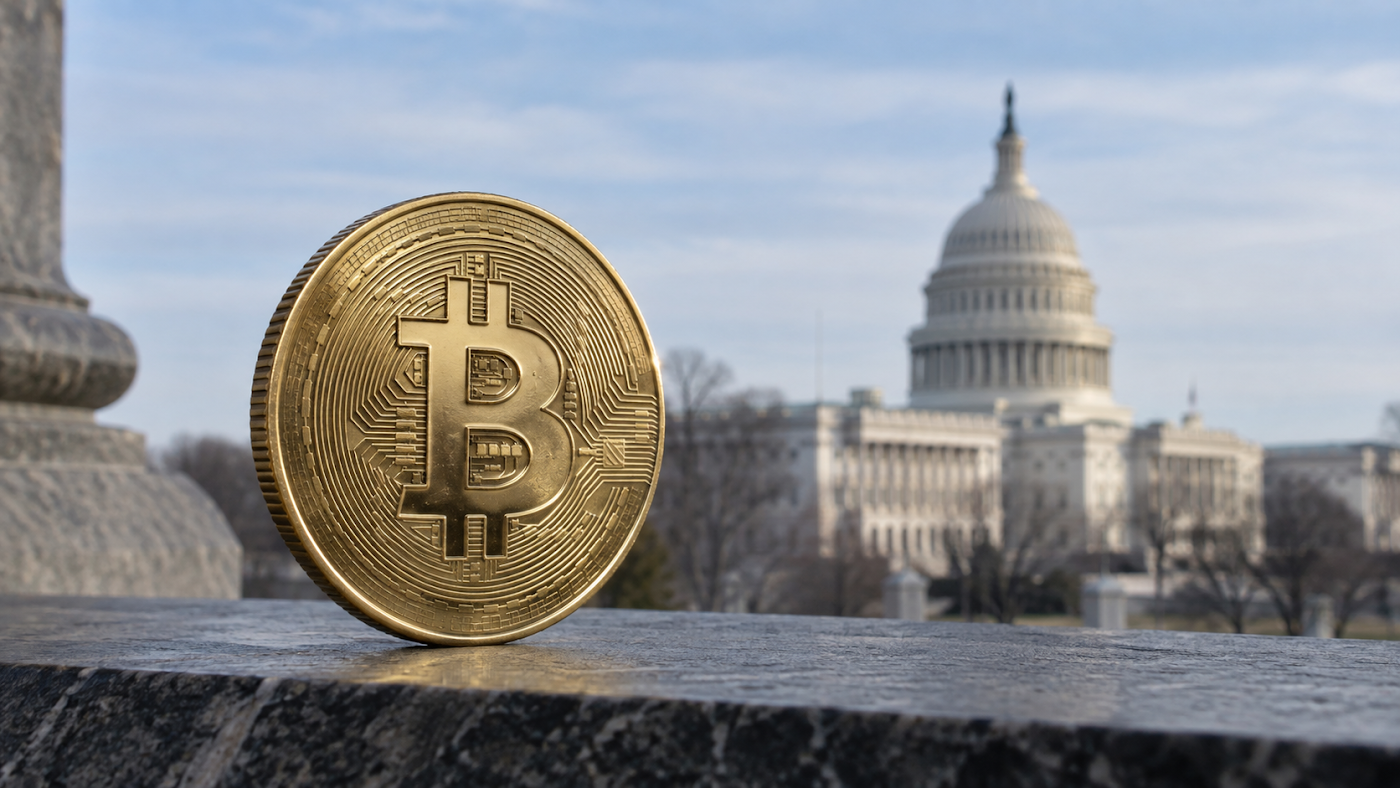
Crypto lost its law on Tuesday.
The Senate failed to invoke cloture on the Digital Asset Market Clarity Act, 49 to 50. Three Republicans voted no on the merits. Their objections were community banks and stablecoin yield. Senator Cynthia Lummis, one of the bill's strongest backers, said afterward: "I think we're done. It's over."
Then the week did something odd.
On Thursday the SEC opened tokenized U.S. stocks without Congress. The CFTC filed its own crypto rulebook with the White House the same day.
Bitcoin traded near $81,248 at 6:30 p.m. Eastern Friday, its highest level this month. The companies that lost most on Tuesday gained most by Friday.
Here are the six things that mattered.
90% of AI Runs Through This Company
The biggest AI wins often come from companies you don’t hear about every day.
Case in point:
The database provider now embedded into the big three cloud platforms - with access to 90% of the market.
You’ll find the name and ticker of this newly-minted giant in our 7 AI Stocks to Invest in Today report, along with:
• The chip giant holding 80% of the AI data center market.
• A plucky challenger with 28% revenue growth forecasts.
• A multi-cloud operator with high-end analyst targets near $440.
Plus 3 other AI stocks set to take off.
The Vote Cost the Companies, Not the Coin
Tuesday repriced the middlemen. It barely touched the asset.
Coinbase (COIN) closed down 10.10% at $172.11. Circle (CRCL) fell 11.41%. Galaxy Digital (GLXY) lost 7.63%. Riot Platforms (RIOT) fell 5.97%. Marathon Digital (MARA) fell 2.26%.
Bitcoin fell about 4% over the same session, trading as low as the $74,900 area.
That gap is the story. The bill would have settled which agency supervises these firms. Their limit is permission, not demand. Miners fell less because their economics run on power cost and hash price, not on who holds the pen.
A fourth Republican, Thom Tillis, voted no for procedural reasons. He filed to reconsider at 3:01 p.m. Eastern. No second vote has been scheduled.
The Takeaway
The Senate did not vote on bitcoin. It voted on the businesses built around it. The prices knew the difference.
The SEC Answered in Two Days, and Capped What It Opened
Congress took months. The SEC took 48 hours.
Chairman Paul Atkins issued a five-year Innovation Exemption for tokenized U.S. stocks. He called it a bridge toward durable rulemaking and tied the timing to Tuesday's defeat.
Then read the limits. Large-cap stocks are capped at 75 symbols and 0.25% of average daily volume. Small caps get 250 symbols at 2.5%. On a stock the size of Nvidia that is roughly 300,000 shares a day.
Tokens must carry dividend, voting and liquidation rights. Purely synthetic tokenized-equity products are excluded. Those are what Robinhood (HOOD) and Kraken sell today.
Securitize (SECZ) rose about 14% on the news and Bullish (BLSH) about 10%.
Circle opened its Arc blockchain the same week. BlackRock (BLK), Intercontinental Exchange (ICE) and the DTCC are among its founding validators. So are Visa (V) and Mastercard (MA).
The Takeaway
The SEC opened a market and capped it at a fraction of a percent. Crypto traded the opening. The size of it is still being written.
AI CEO Issues Code Red: Prepare for Meltdown
The CEO of this AI company (click here to get the name, 100% free) just issued a CODE RED in an internal memo…
Warning his employees that they’re dealing with a critical situation.
Another company executive even implied they might need a government bailout.
And now Jim Rickards is predicting this company is about to go bust, in a full-blown AI meltdown that could be 10 times bigger than Lehman Brothers.
Friday Gave It Back, and Then Some
The turn started Thursday, on the SEC news. Coinbase and Circle each rose 5.8% that day. Robinhood added 5.2%.
Friday went further, and unevenly.
Coinbase closed at $194.25, up 11.66%, above where it traded before the vote. Strategy (MSTR) rose 16.39%. Marathon Digital gained 13.75%. Galaxy Digital rose 10.82%. Robinhood added 9.12%.
Circle rose 7.86% to $91.78 and still finished below its pre-vote level.
Bitcoin traded near $81,248 at 6:30 p.m. Eastern Friday, up about 6.4% on the day. Ether, Solana and Hyperliquid rose further.
Two on-chain trackers say Marathon bought 1,292 bitcoin near $76,347 during the drawdown. The company has not confirmed it. No filing or statement has appeared.
The Takeaway
Losing a law cost these firms one week. The open question is whether a capped market keeps paying after the first rally.
The Money Turned First, and It Picked One Asset
The flows moved before the price did.
U.S. spot bitcoin funds took in a net $159.5 million on September 17. That snapped two days of redemptions. September 15 saw $450.4 million leave, and September 16 another $295.9 million.
Ether funds went the other way. September 17 was their third straight outflow day, at $39.3 million. Across those three sessions they lost about $405.4 million.
So the rebound was not a wave lifting everything. Allocators went back into one asset and kept selling the other. Bitcoin's Coinbase premium had fallen to a one-month low two days earlier, which makes the turn sharper still.
JPMorgan (JPM) put a longer frame on it. Gold funds have won back their 2026 outflows. Bitcoin funds have won back about half. Bitcoin is still down close to 12% this year.
The Takeaway
Fund flows track one channel of buyers. This week that channel turned early, and it drew a line between bitcoin and ether.
Is Elon About to Create a New Generation of Millionaires?

When Elon took SpaceX public, an estimated 4,400 employees became millionaires – with top executives, welders, and even cafeteria workers getting rich overnight. Sources close to Elon indicate that he's about to hatch a new opportunity to create generational wealth – and you don't have to work for Elon to see massive potential profits. Click here for the full details.
This ad is sent on behalf of InvestorPlace Media at 1125 N. Charles Street, Baltimore, Maryland 21201. If you're not interested in this opportunity, please click here.
Two Central Banks Raised, and Crypto Rose Anyway
The Fed lifted rates 25 basis points to 3.75% to 4.00%. The vote was unanimous. It was the first increase since 2023. Sixteen of 18 officials expect at least one more hike this year.
The tape reacted hard. The S&P 500 fell from about 7,609 to a session low of 7,507.77. The 10-year hit 5.006%. Gold dropped roughly $114 from its intraday peak.
Bitcoin rose 0.56% to $76,012.
Crypto derivatives took the damage instead. CoinGlass counted $477 million of liquidations in 24 hours, with $363 million of that on the long side.
The Bank of Japan followed with a move to 1.25%, its highest since 1995. That vote was 7 to 2. The yen still fell past 157 per dollar. Oil eased as well, with Brent down 0.9% to $103.87 Friday.
The Takeaway
Money got dearer in two countries in three days. Spot barely moved. The leverage moved instead.
Nobody Fixed the Part That Actually Broke
Every policy win this week was about venues and permission. The week's real losses were about custody and identity.
Blockstream's Liquid Network still has peg-outs suspended. Circulating L-BTC stood at 4,234.76 against 3,632.23 bitcoin held. The gap is near 602 coins. Adam Back has said the peg will be covered. No funding is confirmed.
Revolut's breach became an extortion campaign. Attackers sent forged government information requests. Those requests passed email authentication checks, and Revolut honored them. No system was broken into.
The leaked files include passports, selfies and full bitcoin transaction histories with wallet references. About 680 customers are affected. The demand started at 10,000 bitcoin. By September 17 it had fallen to roughly $3 million in Monero.
The Takeaway
A passport can be replaced. A published link between a verified name and a wallet cannot. No agency touched that this week.
$50 Billion Says You’ll Want These Names
Wall Street’s big money is already moving, quietly building positions in a handful of stocks before the next rally.
Our analysts tracked the flows and found 10 companies leading the charge.
Some are household names. Others are under-the-radar innovators about to break out.
Together, they form the Post-Rate-Cut Playbook smart investors are following right now.
The week settled one question and opened a better one.
Settled: Congress will not write crypto's rulebook this year. Cloture failed by a single vote. Three of the four Republican defections were about drafting, not timing.
Opened: whether rules written by agencies are worth as much.
The market answered fast. Coinbase finished above its pre-vote price. Bitcoin ended near $81,248. The SEC moved in two days where the Senate could not move in months.
The doubts sit in the size. The SEC capped a large stock at a quarter of one percent of daily volume. It left out the products most people use. The CFTC filing is a prerule, not a rule. Circle has not recovered, and ether funds are still bleeding.
Rates are the quiet part. Two central banks tightened, and crypto rose through both.
That is the new fact.
Last week bitcoin traded on somebody else's decisions. This week it traded on its own again. Those decisions came from agencies rather than lawmakers.
Whether that holds is next week's question.
FREE FINANCIALMARKETS.COM ALERTS
The Next Market Move Could Start With One Alert
Get breaking market developments, trade ideas, analyst signals and upcoming catalysts sent directly to your phone.
Markets move quickly. Now your information can too.