

Treasury sells $119 billion of debt from Tuesday to Thursday. Fed minutes land Wednesday with October hike odds near 17%. A U.S.-Iran meeting contract near 1% expires Monday night.
Last week, traders moved their dates.
This week, several of those dates meet real supply.
The Treasury sells $119 billion of notes and bonds from Tuesday to Thursday. The Fed releases minutes from its September hike on Wednesday. OPEC+ meets Sunday, and Europe still owes Washington an answer on diesel.
Friday reset the backdrop. Payrolls rose just 29,000. Kalshi's contract on September unemployment above 4.1% settled Yes. Its October hike contract traded near 17 cents.
So the week asks one thing. Does that softer read hold once buyers, producers and diplomats have to act?
The data got softer.
The supply did not.
Here are the five tests that matter.
Your Mortgage Rate, Your Car Loan, Your Savings — All Rest on One Assumption.
That the world keeps buying American debt.
They stopped.
China held $1.32 trillion in U.S. Treasuries at the peak. Today: $659 billion. An 18-year low.
That money went into gold.
Beijing's central bank has bought gold 20 months straight — its longest streak in a decade. Goldman Sachs put China's real buying at 4.8 times the official figure.
And the European Central Bank just confirmed what hasn't been true in generations: gold has overtaken U.S. Treasury bonds as the world's #1 reserve asset. 27% gold. 22% our debt.
The world's most conservative money isn't hedging the dollar. It's leaving it.
When foreign buyers stop absorbing our bonds, rates rise, the interest bill eats the budget — and you feel it at the pump and the grocery store.
Washington's counterattack is already signed, funded, and filed — with one small American gold company at the center of it.
Can $119 Billion of Supply Push the 10-Year Back to 5.3%?
The Treasury sells $58 billion of three-year notes Tuesday. A $39 billion 10-year reopening follows Wednesday, then a $22 billion 30-year reopening Thursday. Each result posts at 1 p.m. Eastern.
Polymarket's 10-year ladder priced its 5.3% rung near 80% Friday morning. The rung pays on a Treasury daily par close at or above 5.30%. The best close so far is 5.29%, on Sept. 30. Only about $17,000 has traded on it.
The 5.5% rung is the deeper market, with about $142,000 traded. It sat near 29% after the jobs report.
Timing matters here. The auctions close at 1 p.m., but the ladder reads only the par close Treasury publishes for that day. The new bonds settle Oct. 15, which does not affect the contract.
The issuer may offer less help. Treasury's long-end buybacks have run below expectations, just as long yields sit near their highest since 2002.
Investor Signal: Buyers Get the Vote
Friday's jobs data argued for lower yields. This week's sales test whether buyers agree at these levels. Weak demand at the 10-year or 30-year sale could put a 5.30% close back in reach. Strong demand would hand the ladder back to inflation data.
Can Minutes From a Hike Meeting Revive October?
The Fed releases minutes of its Sept. 15-16 meeting at 2 p.m. Eastern Wednesday. That meeting lifted the target range a quarter point, to 3.75% to 4.00%.
In one sense the minutes are stale. They predate the softer PCE report, Jefferson's call for patience and Friday's weak jobs data.
They still speak to the split. Dallas Fed President Lorie Logan wants 50 basis points or more. Jefferson says the judgment may take time. The minutes can show how many officials sat in each camp.
Kalshi's October hike contract traded near 17 cents Friday morning. Its December hike contract traded near 65 cents, on far less volume. Prediction markets and futures now point to December for the next move.
ISM's services survey lands Monday at 10 a.m. Jobless claims follow Thursday at 8:30. Michigan's consumer survey arrives Friday at 10.
Investor Signal: Old Minutes, New Weight
Minutes cannot undo Friday's data. They can show how firm the hawkish base was before it. Broad support for more hikes would favor December over a long pause. A committee already split in September would support the turn toward waiting. The Oct. 14 CPI report, two weeks before the Oct. 27-28 meeting, remains the heavier test.
A "bloodbath" Is Coming

Silicon Valley billionaires are hoarding guns, gold, and even military grade gas masks... or fleeing the country altogether. What do they know that you don't? This AI insider is stepping forward with this time-critical message: Move your money before October 31st, ahead of the dangerous next phase of the AI market. Here's the one urgent move you need to make with your money immediately.
This ad is sent on behalf of TradeSmith at 1125 N. Charles Street, Baltimore, Maryland 21201. If you're not interested in this opportunity, please click here.
Does OPEC+ Matter When Diesel Sets the Price?
OPEC+ meets Sunday, Oct. 4, to set November output. Reuters sources expect targets to stay unchanged.
That choice may matter less than Europe's. EU officials met Friday on a diesel release under U.S. pressure. No decision had been announced by Friday morning. France has called for a G7 leaders' video call on fuel, with no firm date. China's halt on fuel exports also stands. People in the trade say Beijing tied any restart to rebuilding its own stocks.
Polymarket's October WTI book prices both directions. WTI reaching $100 sat near 34% Friday morning. A drop to $80 sat near 43%. Each pays on any one-minute high or low in ICE WTI futures, not on a daily settle.
The Brent-WTI spread sat near $10 a barrel early Friday. EIA's weekly inventory report lands Wednesday at 10:30 a.m.
Investor Signal: Barrels Versus Diesel
An OPEC+ hold would leave crude supply where it is. A European diesel release would add product supply, the source of recent swings. A release that narrows the Brent-WTI spread would show the reserves working. No release, plus more export curbs, would keep the $100 side alive.
Will Monday Close the Iran Meeting Window?
Polymarket's contract on a senior U.S.-Iran diplomatic meeting by Oct. 5 traded near 1% Friday morning. It expires at 11:59 p.m. Eastern Monday.
The rules are strict. Both sides need senior officials, such as Rubio, Witkoff or Araghchi. Indirect talks count only as a real meeting through authorized mediators. The September 30 version settled No.
Iran is still reviewing a U.S. reply sent through Qatari mediators. Its answer has no date. No meeting is scheduled. Trump has also said renewed bombing after the Nov. 3 midterms is possible.
Later dates carry the real price. The October 31 contract sat near 25%, and December 31 near 54%. A separate contract on a U.S. announcement ending the blockade by Oct. 15 sat near 10%.
Investor Signal: A Reply Before a Room
A Monday expiry near 1% mostly confirms what traders already assume. The month-end price holds more information. A formal Iranian answer, or a named venue, would be the first evidence able to lift it. Silence through the week would push the deal case further toward year end.
Wall Street veteran goes ALL in on Bank of Elon

A 20-year Wall Street veteran – who worked at a $10 billion hedge fund – is putting ALL his money in Elon Musk's new bank. He says he can see the writing on the wall for traditional banks. And he's not the only one. See if you should join him here (not just for the 6% yield).
This ad is sent on behalf of InvestorPlace Media at 1125 N. Charles Street, Baltimore, Maryland 21201. If you're not interested in this opportunity, pleaseclick here.
Can the Courts Move Before the Platforms Do?
The Supreme Court opens its term Monday, Oct. 5. The event-contract petitions are not ready. Nevada's response in the case brought by Robinhood (HOOD) is due Oct. 14. Kalshi's response in New Jersey's case is due Nov. 9. Kalshi's request for a full Ninth Circuit rehearing in Nevada's case is also pending.
Polymarket's contract on the Court taking a sports event-contract case by Oct. 31 sat near 5%, on about $9,000 traded. The December 31 version sat near 35%.
The platforms face nearer dates. Kalshi's volume rebates end no earlier than Oct. 13. CFTC event-contract rules remain under White House review, with no publication date. A Federal Register text would be the first look at what the agency wrote.
Investor Signal: Rules Before Rulings
The Court cannot settle the state-law fight this week. The CFTC's rules could surface sooner, though nothing is scheduled. Until one of them moves, platform value rests on volume. Trading after the rebates end will be the cleaner test of it.
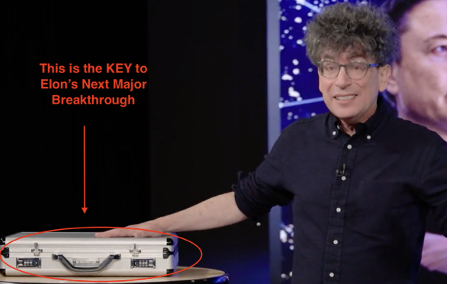
Renowned tech investor James Altucher – the man who called the rise of Nvidia, Apple and SpaceX years in advance – just uncovered Elon Musk’s latest breakthrough idea…
And according to James, it’s going to be even bigger than the SpaceX IPO – creating up to 1.8 million new millionaires over the coming years.
The pieces behind it are inside this briefcase – which he reveals 100% FREE in this video.
Last week the market moved its dates. This week it meets the people who supply what it prices.
The Treasury brings $119 billion of debt. OPEC+ and Europe decide how much fuel to offer. Iran decides whether to answer. The minutes show the Fed before the soft data arrived.
Each test asks whether Friday's softer read survives real supply.
Watch the 10-year sale Wednesday at 1 p.m.
Capital moves early. Coverage catches up. The gap between the two is worth watching.
3 STOCKS OUR SIGNAL ENGINE SAYS TO WATCH CAREFULLY
Three stocks. Three signals. Two weeks later, the story changed.
On September 2, we published three market questions around KLAC, HPE and PG&E.
Two weeks later, every one of them produced new evidence.
One company delivered record revenue and raised its outlook.
Another saw weakness spread across its entire peer group.
And in the third, a market risk that had only been showing up beneath the surface suddenly became explicit.
Yet none of these stories is finished.
That’s why we built Market Tell.
To track the signals that keep moving after the headline is gone — and show you what investors should be watching next.
We’ve put the latest analysis into a new FREE Special Report:
3 Stocks at a Major Turning Point
See what changed… what still hasn’t been resolved… and the signals we’re watching now.