

Markets this morning are not pricing events. They are pricing dates.
Oil jumped back above $100 overnight. Nothing new was confirmed at a Saudi refinery. What arrived was a report with a timetable: a possible U.S. campaign against Iran after the Nov. 3 midterms. The Fed decides at 2 p.m., and the hike bet has fallen to a nickel. The money is on December.
Israel counted most of its votes and still has no winner. One prediction market favors Netanyahu. The other, in a late-Tuesday snapshot, favored "no one." And in New Zealand, a central bank held rates by one vote while saying tighter policy is still likely.
Every one of these trades has a deadline attached. Today brings the first of them.
Let's get into it.
Oil is pricing a calendar, not a crater
U.S. crude was at about $101.70 a barrel at 4:46 a.m. Eastern, up about 1.8%. Brent's January contract was up about 1.5% in early European trading. Two days of falling prices on Iran diplomacy reversed in one night.
Two catalysts are on the table. Neither is confirmed. Yemen's Houthis claimed a missile hit Saudi Arabia's 550,000-barrel-a-day Ras Tanura refinery. Saudi authorities have not confirmed it. That claim surfaced Tuesday, a session in which Brent still fell 1.7%.
Then came the line that mattered. "The U.S. has told several Gulf Arab countries to be prepared for a short, intense military campaign after the U.S. midterm elections, people briefed on the conversations said," the Wall Street Journal reported. President Trump has not made a final decision, according to accounts of the report.
Now read the rest of the barrel. Heating oil futures fell about 3.5 cents a gallon while crude rose. A real hit to Gulf refining would usually push products up, not down. This looks like premium added to the front of the curve, not supply taken out.
Polymarket says the same thing. Its contract on the U.S.-Iran ceasefire holding through Oct. 31 rose to 95.5 cents. The Nov. 15 contract fell 4 points to 50.5 cents. At those prices, traders see about a 4.5% chance of a U.S. strike before October ends and close to even odds by mid-November.
The market signal?
A dated premium is stickier than a headline premium, but it is also easier to unwind. A report helped put it in. Another report can take it out. Watch the 10:30 a.m. inventory data, any Aramco or Saudi energy ministry statement, and the gap between the Oct. 31 and Nov. 15 contracts. If that gap keeps widening while crude holds $100, the market is buying insurance on Nov. 3. That also lands on the Fed's desk at 2 p.m.
Elon Musk's $2.1 Trillion Hit List

The SpaceX IPO made Elon Musk the wealthiest man who has ever lived.
Now he's spending it to complete his dynasty...
He's already acquired a $40 billion AI firm and a $1 billion turbine company.
But a handful of companies still stand between him and total control of the space economy.
Click here to see why early investors could walk away with a fortune.
The Fed decides today. The trade is about December.
The bet on a Fed hike today fell to a nickel. Kalshi's quarter-point contract last traded at 5 cents at 4:34 a.m., down from 7 cents Tuesday afternoon. Polymarket's no-change contract rose to about 95 cents. CME FedWatch put a hold at 92.8% at Tuesday's close.
The tape behind that move is worth a look. Buyers took about 140,000 hike contracts at 7 cents in ten minutes on Tuesday, and the price did not budge. Two hours later, one trade sold about 120,000 contracts at 6 cents, and the price drifted lower.
The real money sits on the next meeting. Kalshi traders put a December hike at about 79%. In CNBC's survey, 76% expect one. That is why the statement and Chair Kevin Warsh's 2:30 p.m. press conference matter more than the decision.
Stocks went in calm. The S&P 500 rose 0.6% Tuesday and the Nasdaq 1.2%, with chips doing the lifting. The 10-year closed at 4.99%, barely moved even as a consumer confidence reading came in far above forecasts. Consumers still expect 5.8% inflation over the next year.
The market signal?
A hold is priced. The December signal is what moves money. If Warsh calls December live, watch the two-year and the December contract in the first hour after 2:30. With crude back above $100, he has a reason to sound firm. A softer tone would undercut the roughly 79% odds Kalshi traders put on a December hike.
New Zealand held rates and still sounded like a hiker
New Zealand's central bank voted 4-3 to hold its cash rate at 2.75%. Markets had priced about 23.5 basis points of tightening, ANZ said. Three members voted to hike to 3%.
Then the committee declined to call it a pause. "All members agreed that tighter monetary policy is likely to be required, but remains conditional on the economic outlook," the summary record said.
Why the words matter: they turned a dovish surprise into a timing question. The kiwi fell about 75 pips right after the decision, and the two-year swap rate dropped about 13 basis points, ANZ said. Within an hour, markets still priced about an 80% chance of a December hike. The majority bet that fuel inflation fades before it spreads, with annual inflation down to 3.7% from 4.1%.
The catch sits in the currency. A weaker kiwi makes imported fuel dearer, and the bank's trade-weighted rate was already down about 3% since September. Waiting can import the inflation the committee chose not to fight.
Half an hour earlier, Australia showed the other side. Monthly inflation rose to 4.3%, above the 4.2% expected. Westpac says that supports a hike when the Reserve Bank of Australia meets Nov. 2 and 3.
The market signal?
Same barrel, different reflexes. Wellington bet on patience by one vote. Australia's data makes that bet harder. The Bank of Canada decides at 9:45 a.m. today. If it hikes and the Fed holds, the split between central banks gets louder. Watch the kiwi. A further slide would suggest traders think Wellington is waiting too long.
People paid $8,000… yours for FREE

Some people have paid $8,000 to be in the room with Luke Lango in Las Vegas. But he believes the new Elon venture he's uncovered (not space or AI) is so big that EVERYONE needs to know about it. See how to get in while we're still early here.
This ad is sent on behalf of InvestorPlace Media at 1125 N. Charles Street, Baltimore, Maryland 21201. If you're not interested in this opportunity, pleaseclick here.
Israel counted the votes. The markets priced two different endings.
With about 72.5% of votes counted, Netanyahu's bloc had 54 projected seats, the opposition 48 and Arab-led parties 18. Neither bloc is near the 61 needed. The figures are unofficial.
The two largest prediction markets read that differently. On Polymarket, Netanyahu's contract rose to 49 cents at 4:46 a.m. from 31.5 cents after the exit polls. Eisenkot's fell to 25 cents.
Kalshi priced the deadlock. In a 9:07 p.m. Tuesday snapshot, its "No one" contract was at 60 cents, up from 20. Netanyahu sat at 28 cents. Those prices are hours apart and should not be read as simultaneous. The gap is partly rules. Kalshi pays only on a government formed from this election. A caretaker period or a repeat vote can resolve the two contracts differently.
Tel Aviv repriced too. The TA-35 fell 1.4% and the broader TA-90 3%. The 10-year yield rose 6 basis points to 4.1%, and the shekel weakened about 1%. The moves match the prediction markets in direction. That does not prove a link.
The market signal?
The Arab parties' 18 projected seats are the swing factor, and most opposition leaders have ruled out governing with them. Watch the final count and whether those parties clear the threshold. A long stalemate matters beyond Tel Aviv. Whoever governs shapes Israel's Iran policy, and oil is already pricing Nov. 3.
Robinhood's record quarter came with a new top earner
Robinhood (HOOD) posted record third-quarter revenue of $1.42 billion, up 12% and roughly in line with forecasts. The stock was quoted around $86.90 early Wednesday, about 8% lower.
The headline is the mix. Event contracts, Robinhood's prediction-market product, brought in $173 million, up more than sixfold. Crypto revenue fell 55% from a year ago to $120 million. The business that defined Robinhood's last boom now earns less than its newest one.
The crypto line has two sides, though. Against the second quarter, crypto revenue rose about 20%, slightly above what analysts expected. Year over year describes a slump. Quarter over quarter hints at a bottom.
The selloff came with weaker profit quality. Net income fell 14% to $476 million. Adjusted earnings of 60 cents a share, a new measure, missed S&P Global's 64-cent consensus, though other forecasts were lower. Net interest revenue fell 9%, and credit-loss provisions nearly tripled to $71 million.
Visa (V) told a similar story from the card side. It beat, with revenue up 13% to $12.14 billion against $12.09 billion expected. But client incentives, what it pays banks and merchants to win business, rose 21%. It also guided to slower growth in fiscal 2027. Shares were indicated about 1.6% lower.
The market signal?
Tuesday's lesson from both reports: the beat matters less than what it cost. For Robinhood, watch how much of next quarter's revenue comes from event contracts, a young product. For crypto, the read-through lands Thursday, when Coinbase (COIN) reports. Bitcoin sat near $81,400 early Wednesday after two straight days of spot ETF inflows. A Coinbase print that matches Robinhood's quarter-over-quarter rebound would support the bottoming case.
Meta's convertible issues the most shares if the stock does worst
Meta Platforms (META) priced stock at $625. One session later, it closed at $620.19, down 1.64%, while the Nasdaq-100 tracker rose 1.27%.
The supply arrived early. Meta sold the common through forward agreements. Affiliates of Morgan Stanley and Goldman Sachs are borrowing 40 million shares and have agreed to sell them to the underwriters, so the shares hit the market this week. Meta takes the cash only when it settles, on or before Nov. 19, 2027.
Here is the detail buried inside. The $12.5 billion of 6.5% mandatory convertible preferred converts around Aug. 15, 2029. If Meta trades below $625 then, holders get the maximum 0.0800 shares per depositary share. Above $734.21, about 17.5% higher, they get the minimum 0.0681. So holders give up the first 17.5% of upside for the dividend. Meta issues the most new shares in the scenario where its stock has done worst.
The bigger piece is still to come. Meta plans an at-the-market program of about $60 billion in non-voting Class C stock, not expected before early 2027. Its size and terms "have not been determined." Meta guides 2026 capex to $135 billion to $145 billion.
The market signal?
The $625 line is now the scoreboard. Every day Meta trades below it, the next dollar of funding costs more stock. Tonight Microsoft (MSFT) and Alphabet (GOOGL) report. If their capex also outruns their cash, the market will ask who raises equity next.
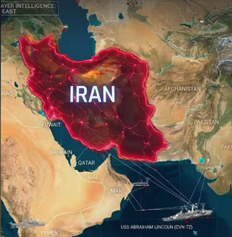
The REAL Reason Trump Is Invading Iran
For a moment…
Forget about Trump’s ties to Israel.
Forget about reports of Iran’s nuclear program.
Because my research has led me to believe we’re risking World War 3 with Iran for a completely different reason.
Click here to find out what it is.
If you have even a single dollar invested in the U.S. stock market, this is going to directly impact you.
- Today stacks the deadlines. The Bank of Canada decides at 9:45 a.m., then the oil inventory report at 10:30 a.m. The Fed statement lands at 2 p.m., with Warsh at 2:30 p.m. Microsoft and Alphabet report after the close. Their capex numbers decide whether Meta's financing math looks normal or early.
- Thursday brings growth and prices together. Third-quarter GDP and September PCE inflation arrive at 8:30 a.m. The ECB decides the same day, after its own survey showed banks tightening credit and loan demand falling on higher rates. Amazon (AMZN), Coinbase and Strategy (MSTR) report too.
- Then the weekend deadlines. Warburg Pincus topped a rival bid for Australia's Ingenia at A$5.45 cash plus up to 5 cents, in a non-binding proposal. It offered more by lining up buyers for two businesses before winning the whole. AVID has until Sunday, Nov. 1, to match. OPEC+ meets the same day. Australia's central bank meets Nov. 2 and 3, and Americans vote Nov. 3.
- The market signal across all three? Every major trade this week has a date stamped on it: oil on the midterms, rates on December, Israel on a count, Ingenia on Sunday. Today's Fed tone sets the discount rate for all of them. A firm Warsh plus heavy capex tonight would test the AI trade and the rate trade at once.
That's it for today's Slate. Canada at 9:45, inventories at 10:30, the Fed at 2, Warsh at 2:30, and Microsoft and Alphabet after the bell. Stay close to the feed.
Today's reply prompt: Polymarket says Netanyahu. Kalshi says "no one." Which market would you trust with your money, and why?
Same Rate Move. Three Different Bills.
The 10-year went from 4.19% to 5.29% this year. Every company on your screen felt that. They don't feel it on the same schedule.
Some earn more when rates rise. Some pay more. The difference shows up in earnings, one report at a time.
We traced three of them: IBKR, WRB and FIS.
FREE Special Report: Rates Just Reset. Who Feels It First?
Who earns it fast. Who earns it slowly. Who pays. One has already reported. The other two report next, and the report tells you the exact line to check.
We'll text the report straight to your phone.
Text Me the Three Names → (free)