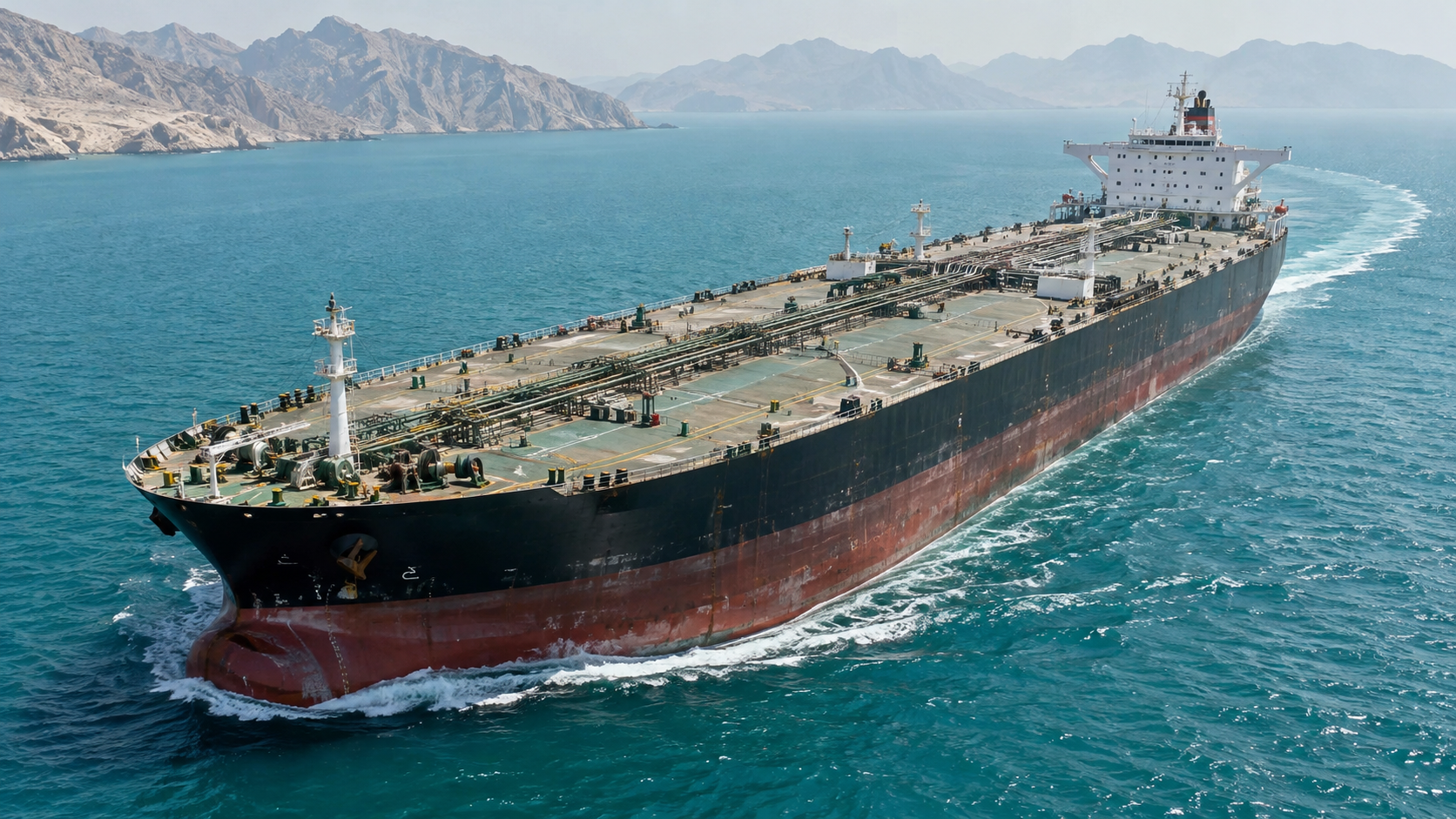
Brent slipped about 2% to near $114.40 on Monday as Saudi, Pakistani and Turkish officials arrived in Tehran to meet Iranian leaders. Iran says the Strait of Hormuz "will no longer be managed as it was in the past," and Houthi forces claimed a new strike on Riyadh's airport.
Oil traders opened the week with two messages from the same region. One said the war might be winding down. The other said the waterway at its center will stay changed either way.
Brent crude traded at $114.42 a barrel early Monday, down about 2% from Friday's settlement of $116.72, which had been its highest close since April 29. West Texas Intermediate was at about $100.84, down 2.35%. The decline extended through the Asian session and into the European morning. Brent had risen 3.1% on Friday and about 6% over the week.
The case for a smaller premium
The diplomatic picture widened over the weekend. Senior officials from Saudi Arabia, Pakistan and Turkey were in Tehran on Monday to meet Iran's leaders. The delegation includes Saudi Defense Minister Prince Khalid bin Salman and Pakistan's army chief, Field Marshal Asim Munir. It is the first high-level contact between the kingdom and Iran since Saudi Arabia became a pressure point in the conflict. A Saudi Foreign Ministry official said the visit supports mediation already under way by Qatar and Pakistan.
Qatari mediators had been in Tehran on Sunday, and President Donald Trump said that day that there would be no strike. Shipments through the Gulf have also recovered above their prewar level by some measures.
The case for a permanent one
Iran's foreign minister offered the counterpoint on Sunday. "The shipping routes through the Strait of Hormuz will no longer be the same as before, nor will the Strait be managed as it was in the past," he said.
That is a statement about structure, not about this week. If Tehran intends to change how the strait is controlled regardless of any truce, a part of the risk premium in oil would not depend on whether fighting resumes.
The near-term threats have also not gone away. Yemen's Houthis claimed a ballistic missile attack on King Khalid International Airport in Riyadh, hours after flights resumed there. The Saudi-led coalition said it intercepted a missile headed toward the capital and destroyed launchers in Sanaa. Neither side's claims about damage have been confirmed. Separately, CNN reported that two U.S. officials said American forces could launch a major attack within 96 hours of an order, though no decision has been made. Trump has said it is "getting to be decision time."
The bypass has little room left
Part of the reason the market has held up is Saudi Arabia's East-West Pipeline, which carries crude about 750 miles from the Abqaiq processing hub to the Red Sea port of Yanbu without touching Hormuz. Aramco Chief Executive Amin Nasser has put its capacity at about 7 million barrels a day, against about 2 million before the war. Energy Minister Prince Abdulaziz bin Salman said it was pumping about 5.8 million barrels a day as of Oct. 6.
Those are different measures, one a ceiling and the other a flow, but together they suggest the line is running at roughly four-fifths of capacity, with about 1.2 million barrels a day of headroom. Aramco is working toward 10 million barrels a day, an expansion Nasser said would take two to three years. Over the weekend the Houthis also claimed attacks on facilities at Yanbu and Rabigh and on pumping stations along the line. Neither Aramco nor the Energy Ministry has commented, and none of those claims has been confirmed.
That makes the market's best supply buffer a single pipeline with little spare room. A ceasefire would ease the pressure on it. A permanent change in how Hormuz is run would not.
What the curve says
The shape of the futures market leans toward near-term tightness. Late Sunday, December Brent traded about $4.90 above the January contract. A premium that steep for the nearest month suggests traders still see a shortage of prompt barrels, even as the headline price eases. Two prices do not make a full curve analysis, but they do not point to a market that thinks the problem is solved.
Gold moved the other way from oil. It retook $4,000 an ounce, trading near $4,030, after a two-day losing streak.
Two readings
One reading is that diplomacy is removing the worst outcome, a renewed U.S. campaign, and that Monday's decline is the start of a deflating premium as more countries press Tehran to settle.
The other is that Monday's move is a partial reversal of a 6% weekly gain, and that the more durable signal is the foreign minister's: the war may end, but the strait it was fought over will carry a permanent cost.
No single development explains Monday's decline. Diplomacy, the Houthi claims, Tehran's statement and a natural pullback after a strong week all arrived together.
What to watch
Any outcome from the Tehran meetings, Israel's election on Tuesday, the gas exporters' summit this week, the Federal Reserve on Wednesday, the OPEC+ meeting on Nov. 1 and the U.S. midterm elections on Nov. 3.