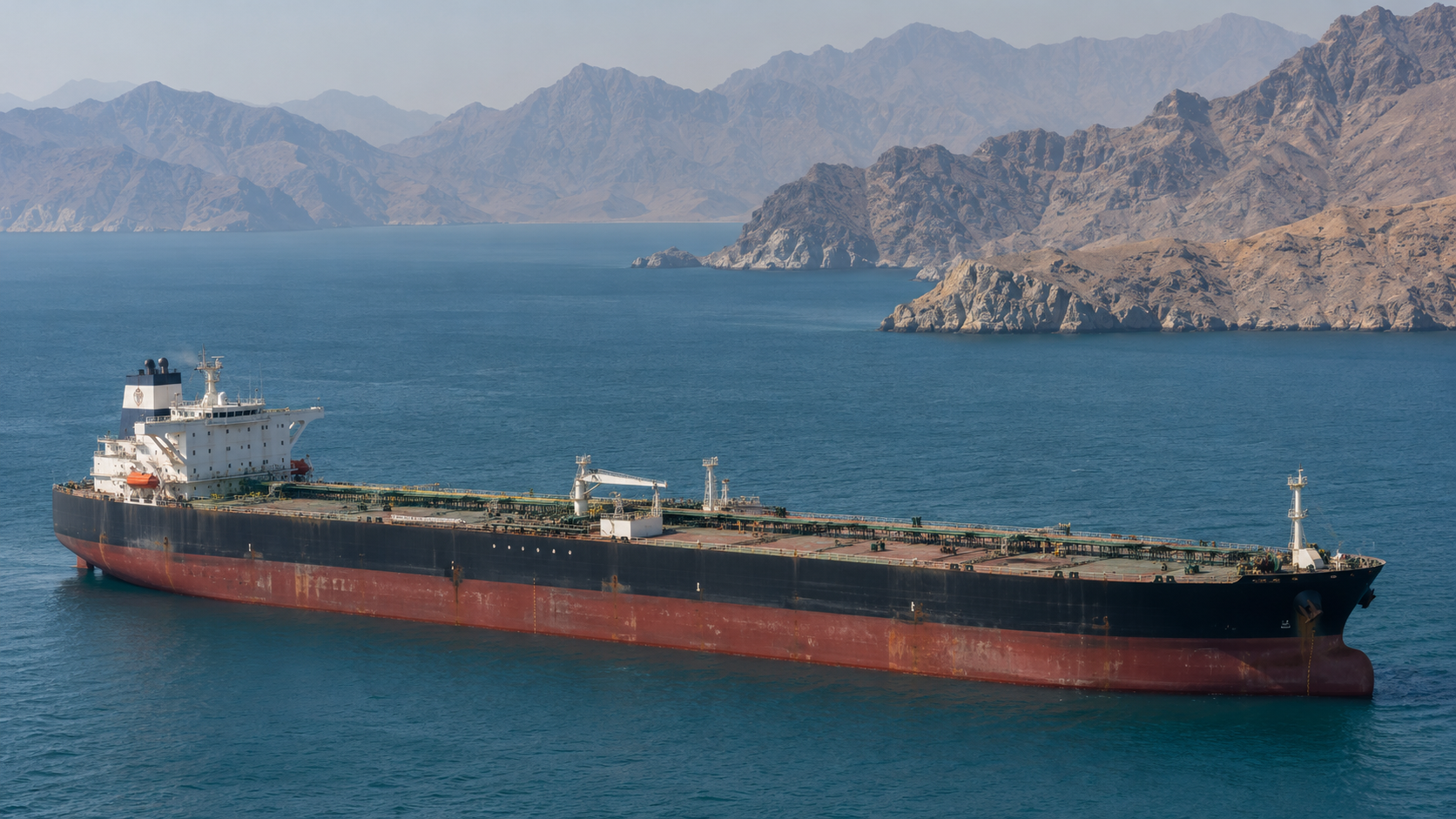
The benchmark hit about $112, fell to about $106 as an unconfirmed report circulated that Qatar and Pakistan had put a compromise to Washington and Tehran, and traded near $108.40 by 2 p.m. after a diplomat said claims of a near deal were wrong. One tracking service recorded no commercial crossings of the Strait of Hormuz on Monday.
Oil traded the diplomacy on Tuesday. The ships did not move with it.
Brent crude rose to about $112 a barrel in the morning, its highest level in five months, then fell as low as $105.96 after reports that mediators had presented a new proposal to end the confrontation between the United States and Iran. By about 2 p.m. Eastern it had recovered to around $108.40, down about 1% from Monday's settlement of $109.55. That is a range of roughly $6 in a single session.
What moved the price
The sequence began with diplomacy that was on the record. Majed al-Ansari, a spokesman for Qatar's Foreign Ministry, said at a security forum in Doha that "the negotiation is ongoing. We are seeing engagement from the parties." Pakistan's army chief, Field Marshal Asim Munir, arrived in Tehran and met President Masoud Pezeshkian.
Then came the part that was not on the record. Al-Araby Al-Jadeed, the London-based Arabic news outlet published in English as The New Arab, reported, citing unnamed sources, that Qatar and Pakistan had submitted a middle-ground proposal to both sides, including interest payments on about $6 billion of Iranian funds held in Qatari banks and confidential access for international nuclear inspectors. Neither government confirmed it. Later in the morning, a diplomat involved in the talks told Bloomberg that reports an agreement was close were inaccurate, and Brent recovered part of its drop.
Iran's own public position stayed firm. Iran's security chief, Rezaei, told Munir there would be "no negotiations until America takes steps to build trust" and said Iran's nuclear material would not leave the country.
What the ships show
Physical flows told a different story. The ship-tracking service Hormuz.now recorded no commercial crossings of the Strait of Hormuz visible on standard transponder data on Monday, and none through late Monday evening Eastern time. Kpler, a data firm, counted 131 crossings in its latest weekly tally, for the week to Oct. 14, down from 176 the week before. The two measure different periods and methods, so the trackers differ on how far flows have fallen, but both show traffic well below normal. The United Kingdom Maritime Trade Operations center logged 12 attacks on commercial vessels between Oct. 9 and Oct. 16.
The futures curve agrees with the trackers more than with the headlines. December Brent traded near $108.94 in the afternoon while the contract for November 2027 was near $87.65, a gap of about $21. A curve that steep says the market is paying heavily for oil delivered now and expects much less tightness a year out, which is how it prices a supply disruption, not a resolution.
The cross-asset footprint
Other markets moved in the same window. The 10-year Treasury yield fell to a session low of 5.075% before trading around 5.12% at 2 p.m., and the 30-year yield was down nearly 4 basis points. The dollar index fell about 0.4%, U.S. natural gas fell nearly 3%, and stocks turned higher in late morning after a weak open. Other forces were at work too, including weak housing data, the expiry of the November U.S. crude contract on Tuesday and Washington's recent sanctions waiver for buyers of Russian energy, so not all of those moves can be laid at the door of one report.
Two ways to price the barrel
If most of the premium is about negotiation, Tuesday's low is the more informative print. Mediation is running through at least two channels, Iran has floated reopening the strait in exchange for an end to the U.S. blockade, and Brent fell about $6 from its high within hours as an unconfirmed report circulated.
If most of it is about missing barrels, the recovery is the more informative print. Transit counts are down on both trackers, attacks have continued, and Brent recovered more than $2 from its low after an anonymous denial. A headline can change what traders expect; it cannot put tankers back in the strait.
The futures curve separates the two. Diplomacy that gains traction should pull the front of the curve down toward the contracts a year out. A front month that stays around $20 above them says traders are still paying for oil that is not arriving.
What to watch
For the next 24 hours: Munir's readout after he leaves Tehran; any on-record word from Washington or Tehran on the proposal; transponder-visible crossings of the strait; inventory figures from the industry late Tuesday and from the Energy Department on Wednesday morning; and United Airlines' comments on jet fuel when it reports this week. A single day of visible tanker traffic would carry more weight than any headline.