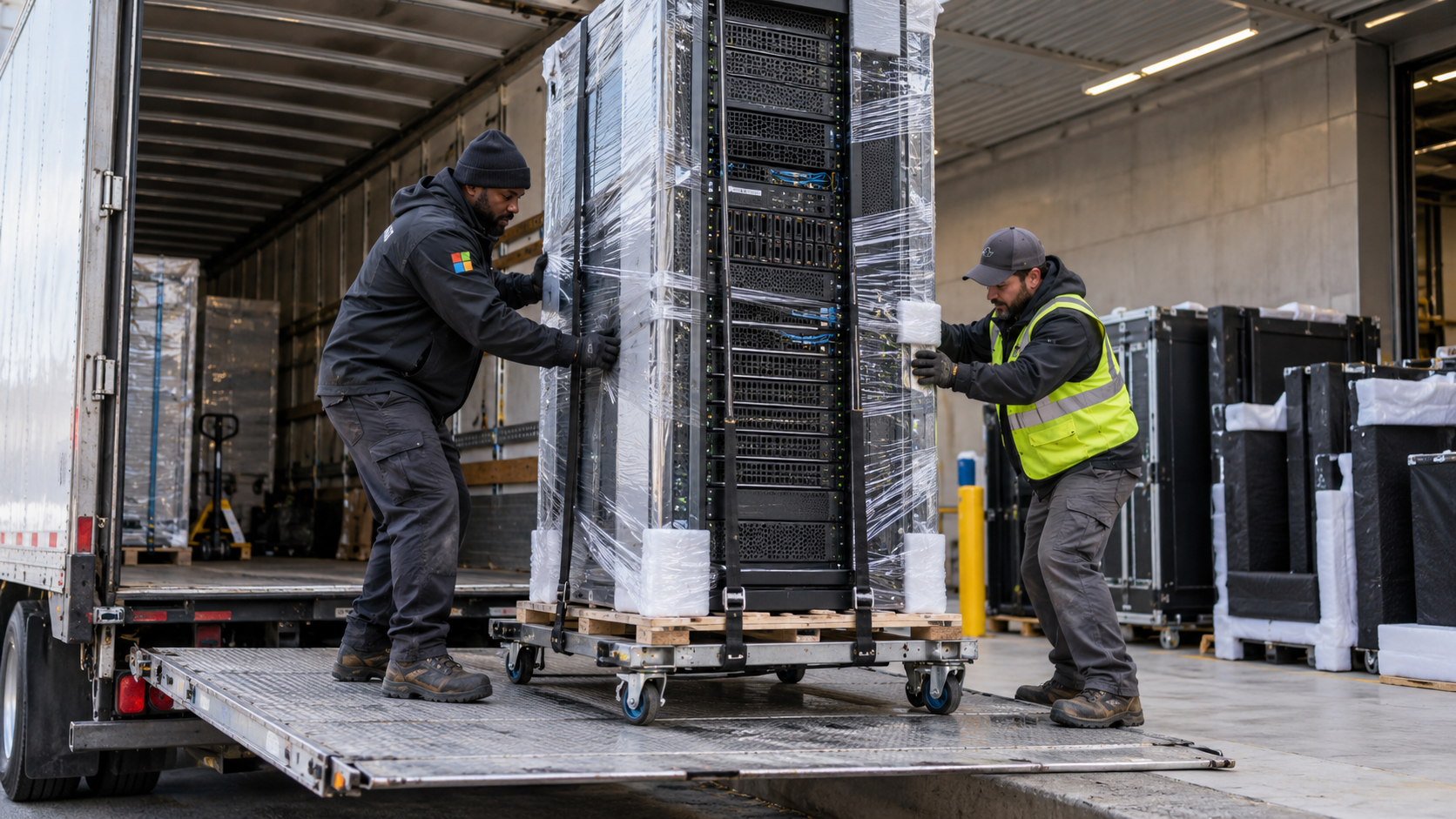
Revenue rose 19% to $92.3 billion and Azure grew 48%, above the company's own guidance. Capital spending of $45.2 billion missed estimates, and Microsoft trimmed its 2026 outlook to about $170 billion. It blamed late third-party data-center capacity for both. The shares were indicated about 3% higher.
Microsoft spent less than expected on AI infrastructure last quarter. The reason matters for every company that sells it equipment.
The company reported fiscal first-quarter revenue of $92.3 billion, up 19%, above the roughly $90.6 billion analysts expected. Operating income rose 21% to $45.9 billion. Excluding the impact of its OpenAI investment, earnings rose 18% to $4.89 a share, against an estimate of about $4.72. On a GAAP basis, earnings were $4.92 a share, up 32%. Microsoft returned $10.2 billion to shareholders.
Azure beat its own forecast
Microsoft Cloud revenue rose 30% to $63.9 billion. Azure grew 48%, above the 44% to 45% the company had guided in constant currency. For the current quarter, Microsoft expects Azure growth of 49% to 50% in constant currency, an acceleration, and total revenue of $96.0 billion to $97.1 billion.
The weak spot was the PC business. Windows OEM and devices revenue fell 22%.
Why spending fell short
Capital expenditures, including $7.4 billion of finance leases, were $45.2 billion, up about 30% from a year earlier but below the $50.7 billion average estimate. Cash paid for property and equipment was $39.4 billion.
The finance chief, Amy Hood, explained the gap on the call: spending was lower "as some third-party capacity deliveries we expected in Q1 were delayed." She guided to capital spending above $50 billion in the current quarter and about $170 billion for calendar 2026, a figure she also tied to the third-party capacity delays. Microsoft's previous view for the year was about $175 billion, according to TheFly and The Tech Capital.
On the company's account, both the quarterly shortfall and the lower full-year figure reflect equipment and capacity that did not arrive on schedule.
Strong cash, mixed signals
Operating cash flow rose 29% to $58 billion and free cash flow was $18.6 billion, a sharp contrast with Alphabet, which reported negative free cash flow the same evening.
Not everyone read the capital spending number the same way. CoreWeave and other so-called neocloud providers, which lease AI capacity to companies like Microsoft, fell after hours as investors weighed what lower-than-expected spending might mean for their order books. CoreWeave was indicated near $59.95 early Thursday, against a $63.93 close.
The reaction
Microsoft closed Wednesday at $531.01, little changed, and was indicated near $548.84 early Thursday, up about 3.4%.
Delay or warning?
The delay view: Azure beat guidance and is expected to accelerate further, spending will exceed $50 billion this quarter, the shortfall has a stated operational cause, and free cash flow remains strongly positive.
The warning view: the full-year spending figure came down, and if capacity from third parties is arriving late, the bottleneck in AI infrastructure may be shifting from demand to supply, and suppliers that depend on Microsoft's spending schedule may see lumpier orders than they expected.
What to watch
Whether second-quarter capital spending exceeds $50 billion as guided, Azure growth against the 49% to 50% forecast, commentary from neocloud providers on delivery timing, and Amazon's capital spending figures after Thursday's close.