Third-quarter revenue rose 161% to $14.58 billion, about 15% above forecasts, as the Super Intelligence segment grew more than ninefold. The company guided first-quarter 2027 revenue to $33 billion to $37 billion and fourth-quarter capital spending to $35 billion to $40 billion. Shares were indicated about 9% higher early Wednesday.
SpaceX reported a quarter in which artificial intelligence, not rockets or satellites, did most of the work. It also told investors how much it intends to spend to keep it that way.
Revenue rose 161% to $14.58 billion in the third quarter, against the Bloomberg consensus of about $12.7 billion. The company reported net income of $4.40 billion, or 35 cents a diluted share, compared with a loss of $1.05 billion a year earlier. Adjusted EBITDA rose 306% to $8.81 billion, against a Bloomberg consensus of about $6.59 billion.
The shares closed Tuesday at $147.79 and were indicated about 9% higher near $161.50 at about 5:40 a.m. Eastern on Wednesday. The gains built through the evening, and the same call carried Elon Musk's disclosure that SpaceX and Tesla have formed special committees to discuss a possible merger, so the move cannot be credited to the quarter alone.
Where the revenue came from
The Super Intelligence segment brought in $7.56 billion, up from $813 million a year earlier, or about 52% of the company's revenue. Connectivity, which includes Starlink, rose 69% to $5.25 billion. The Space segment, the original rocket business, grew 6% to $1.77 billion.
Starlink's consumer business is growing by adding users at lower prices. Subscribers rose to 13.6 million from 7.2 million a year earlier, while average revenue per user fell to $69 a month from $83. ARPU did tick up from $66 in the second quarter.
The spending plan
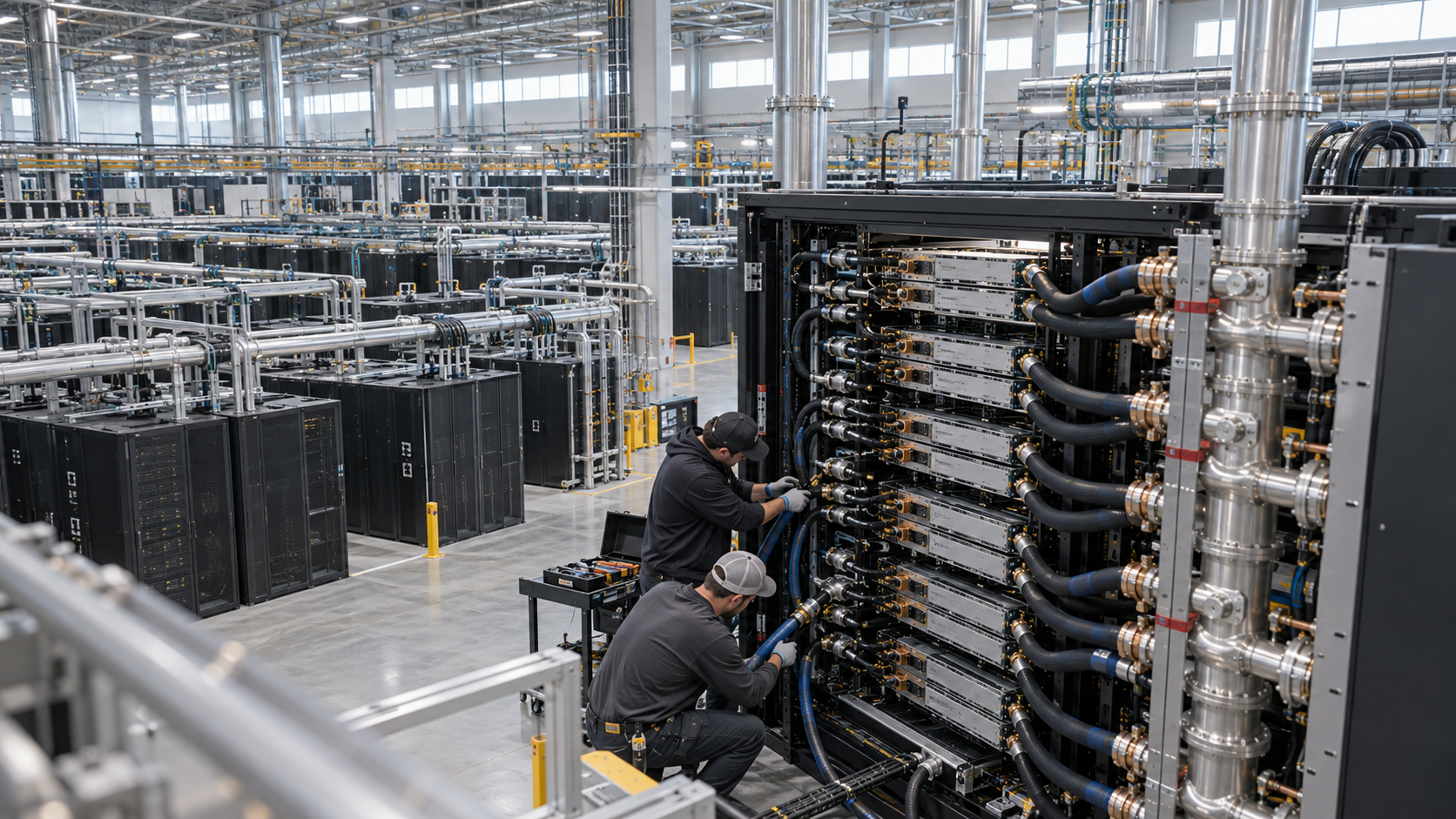
Capital spending in the quarter was about $19.6 billion, of which $16.44 billion went to the Super Intelligence business. That is more than the company's entire revenue for the quarter.
On the call, Chief Financial Officer Bret Johnsen guided fourth-quarter capital spending to $35 billion to $40 billion, roughly double the third quarter. He guided first-quarter 2027 revenue to $33 billion to $37 billion, about 2.4 times the third quarter at the midpoint, and said SpaceX is on track for $100 billion of annualized revenue by year-end, measured on December revenue. Compute capacity is expected to reach 2.5 to 3 gigawatts by the end of the fourth quarter, from 1.7 gigawatts now.
Musk went further, floating annualized revenue of $500 billion to $1 trillion by the end of 2027. That was an aspiration, not guidance.
Funding the build-out has required external capital. Financing inflows totaled $99.8 billion over the first nine months of the year.
The quality of the profit
Net income exceeded operating income of $2.79 billion partly because of $1.03 billion of other income and a $390 million tax benefit. The Super Intelligence segment's operating income of $431 million included $1.2 billion of share-based compensation tied to the Cursor acquisition.
Market implications
One reading is that SpaceX has become one of the fastest-scaling AI infrastructure businesses in the market, with revenue guidance that implies another doubling in two quarters and margins that already support heavy reinvestment.
A second reading is that the quarter's scale rests on capital spending that runs ahead of revenue and on AI contracts whose terms and customer mix investors cannot yet see. With fourth-quarter capex set to roughly double, the questions are how durable those contracts are and how the company will fund the gap.
What to watch
The 10-Q filing for customer concentration and contract terms; December revenue against the $100 billion annualized target; fourth-quarter capex delivery; new financing; and the closing of the company's purchase of 800 MHz spectrum licenses, expected in the first half of 2027. Disclosure that no single customer accounts for a large share of AI revenue would ease the main concern.