Exxon Mobil, Chevron, Shell, TotalEnergies and BP report this week. Galp's results, released Monday, show where the gains, and the gaps, may appear.
A mid-sized European oil company offered investors a preview on Monday of what to look for, and what to read carefully, when the largest companies report later this week.
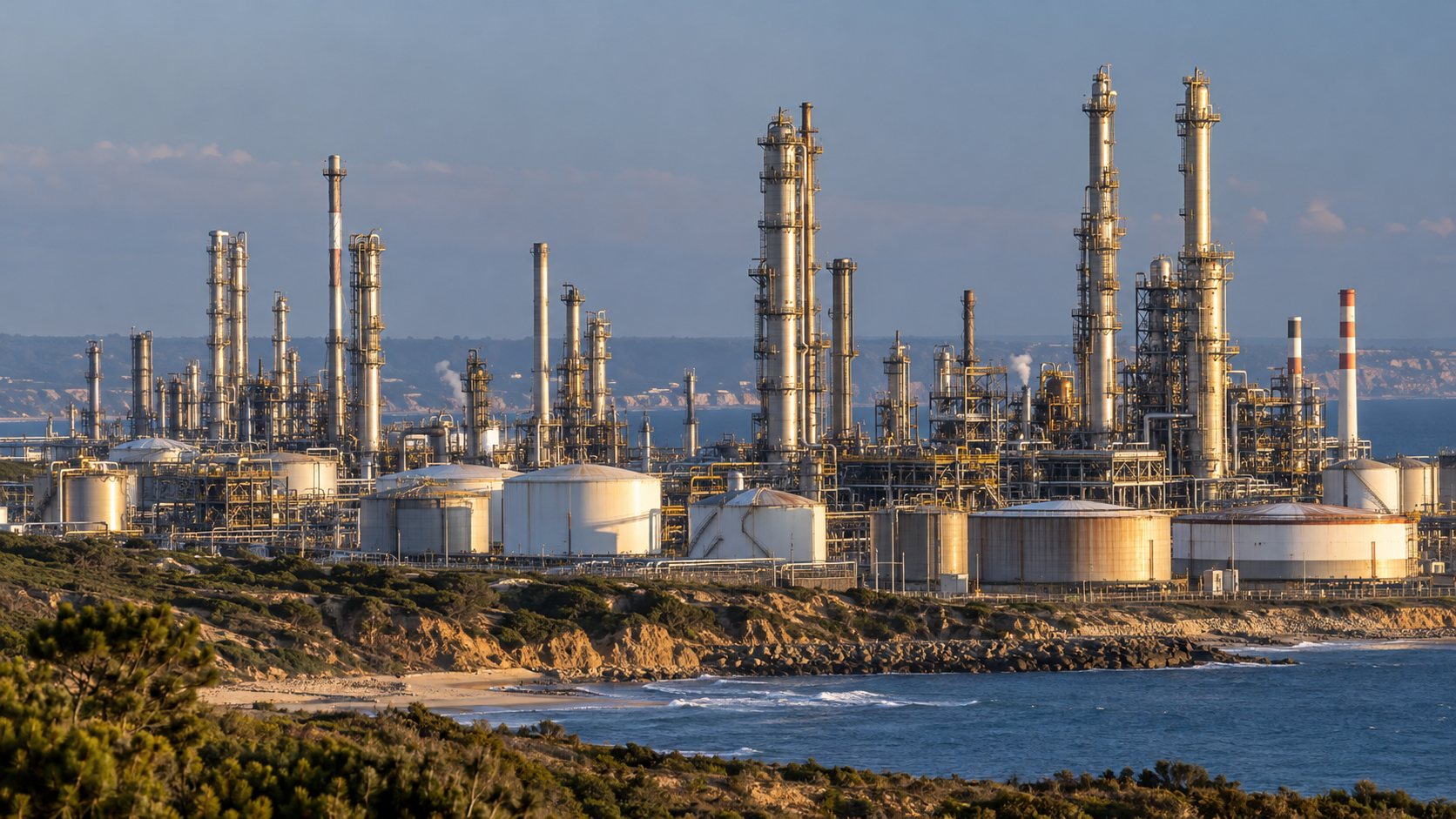
Galp Energia, the Portuguese integrated producer and refiner, reported on Monday a 67% rise in core earnings, measured as replacement-cost-adjusted Ebitda, to €1.522 billion. Adjusted net income rose 68% to €682 million. The company raised its full-year core earnings guidance to about €5 billion from about €4 billion.
Its shares closed down almost 11% in Lisbon, on the same day it said talks to combine its refining business with Moeve had ended without agreement. Exxon Mobil, Chevron and BP report on Friday, and Shell and TotalEnergies report this week as well. Galp's numbers suggest three places investors will look.
1. Refining did the work
The biggest change in Galp's quarter came from processing crude, not producing it. Its refining margin was $34.0 per barrel of oil equivalent, against $9.5 a year earlier and $16.8 in the second quarter. Industrial and midstream earnings roughly doubled to €639 million. Upstream earnings rose 53% to €708 million, a large gain but a smaller one.
Galp's margin more than tripled from a year earlier. If its experience is typical, companies with large refining operations may show a similar pattern, though how much depends on how much of their margin they locked in ahead of time.
2. The hedges cut the other way
Galp's refining hedges cost €172 million in the quarter and €261 million over nine months. More broadly, it recorded €453 million of special items, mostly mark-to-market losses on derivatives that have not yet settled. As a result, net income under international accounting standards fell 24% to €201 million, even as adjusted profit rose by two-thirds.
That divergence will be a recurring question this week. In a quarter of sharp price moves, the adjusted figures companies emphasize and the reported figures under accounting rules can tell very different stories. The size of the gap, and how much of it reverses when contracts settle, is a test of how each company manages price risk.
3. Guidance rests on the price deck
Galp's upgrade relied on higher assumptions. It lifted its Brent forecast for the year to $90 a barrel from $80, and its realized refining margin assumption to about $25 per barrel from $13. That makes much of the raise a function of market prices rather than of higher volumes.
Monday showed how unstable those prices are. Brent traded between $114.00 and $117.42 in a single session as talks in Tehran ended with an agreement to keep talking and Houthi forces claimed attacks on a Saudi pipeline. Any company that raises its outlook this week on the strength of current prices is raising it on a number that moved more than $3 in a day.
Cash is the cleaner signal
Galp's free cash flow halved to €271 million, as capital spending rose and working capital absorbed cash. It bought back only €4 million of shares in the quarter. For investors in the larger companies, the more durable measure of a strong quarter may be how much of it turns into cash and returns to shareholders, rather than the adjusted earnings line.
Saudi chemicals maker SABIC offered a related lesson on Sunday: it returned to profit after a second-quarter loss as margins widened, even as sales volumes fell amid shipping disruption, the Wall Street Journal reported.
Two readings
One reading is that the majors are set for a strong quarter. If refining margins look anything like Galp's, and realized oil prices are higher, the result should be large earnings and room for buybacks.
The other is that Galp's share price is the warning. The stock closed almost 11% lower on a day the company raised guidance. Reuters linked the fall to the end of the Moeve talks, and RBC said the lack of a deal "may call into question Galp's premium valuation relative to peers." Lower oil prices arrived at the same time, so no single cause can be assigned. But the upgrade depended on prices, reported profit fell and cash flow weakened. Investors may apply the same scrutiny to larger companies.
What to watch
Refining margins and hedging results at each company, the gap between adjusted and reported profit, buyback commitments, the oil price assumptions behind any guidance, and Brent's path through the Fed decision on Wednesday and the OPEC+ meeting on Nov. 1.