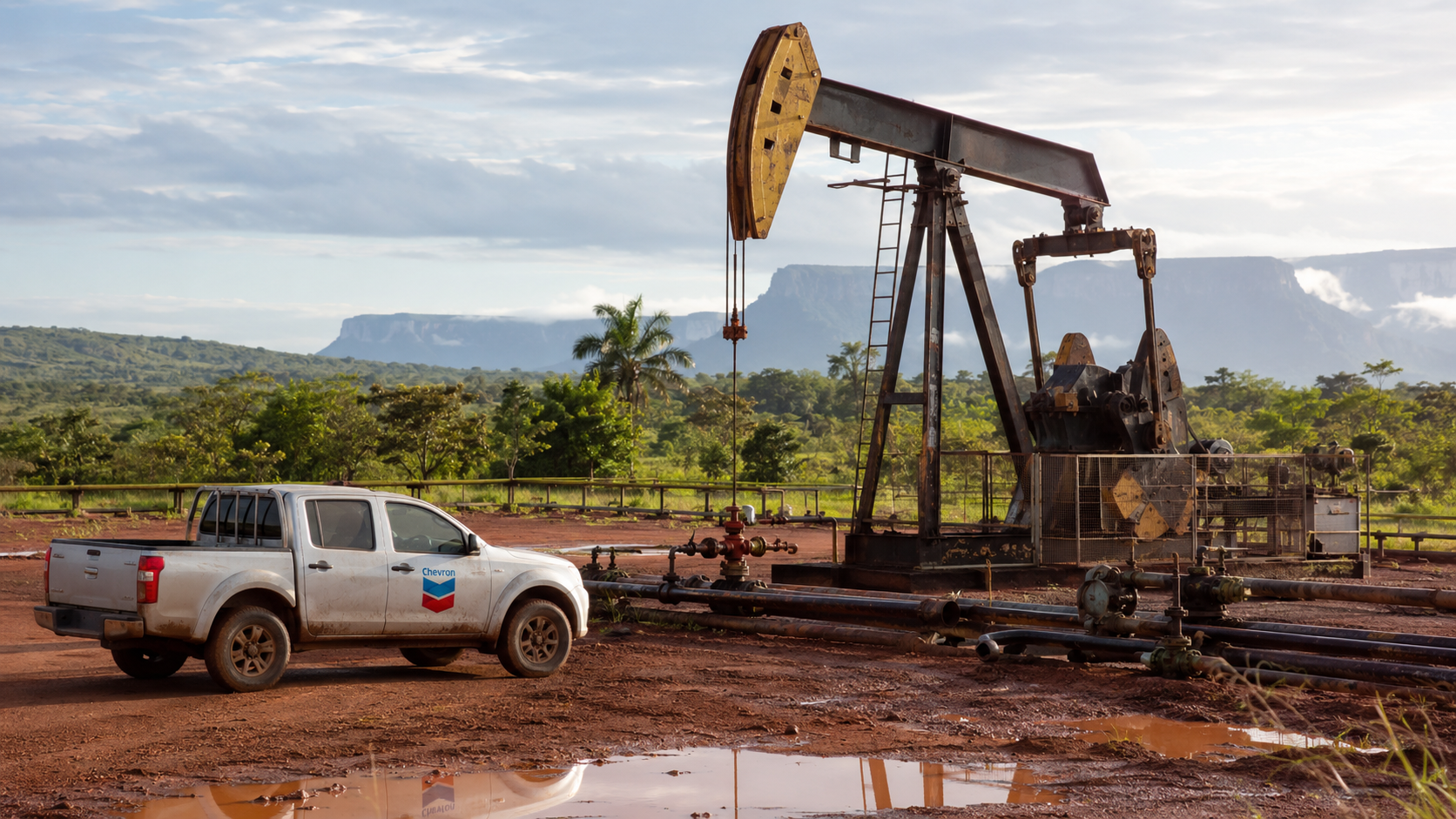
ExxonMobil and ConocoPhillips declined to join a five-company Venezuela oil signing that Chevron entered, citing legal claims from a 2007 nationalization that could apply just as easily to Chevron's own history there.
US Energy Secretary Chris Wright's September 2 visit to Caracas produced a formal signing between the Venezuelan government and five companies: Chevron, Italy's Eni, India's ONGC, Colombia's GeoPark and GE Vernova. US officials described the arrangement as capable of more than doubling Venezuela's total crude production in the coming years. Chevron's own commitment runs through its Petroindependencia joint venture, in which it holds a 49% interest, covering the Carabobo-1 and Carabobo-2-South-A blocks, with a target of operating costs below $20 a barrel.
ExxonMobil and ConocoPhillips both declined to take part, citing unresolved restitution claims stemming from Venezuela's 2007 nationalization of their assets under the Chavez government. That's a considered decision by two of the industry's most sophisticated operators, made with full knowledge of the same legal and political terrain Chevron just signed into.
Chevron has operated continuously in Venezuela since 1923, while ExxonMobil and ConocoPhillips have been shut out since 2007, a difference that could mean Chevron's legal footing is genuinely stronger. It could also mean Chevron is simply accepting risk its peers chose not to take on. Analysts have raised an unresolved question of whether Venezuela's interim government, led by Delcy Rodriguez, has the legal authority to grant the reported 100-year, 17-field arrangement at all, a question that would apply to any of the five signatories.
Chevron shares rose 0.35% to $211.78 on the day of the signing, a smaller gap over ExxonMobil's roughly flat session than the divergence Chevron's stock showed a day earlier, suggesting the market had already absorbed much of the news before the formal signing took place. Venezuela's government has set fiscal terms allocating $19 of every barrel to its treasury, projecting $209.3 billion in government revenue over 25 years at a $65 baseline price, terms that assume the arrangement holds up legally and politically for a quarter century.
Whether Chevron's century of Venezuelan history buys it durable legal cover its rivals lack, or whether it is carrying risk ExxonMobil and ConocoPhillips have just publicly priced at zero, is a question the market hasn't had to answer yet.