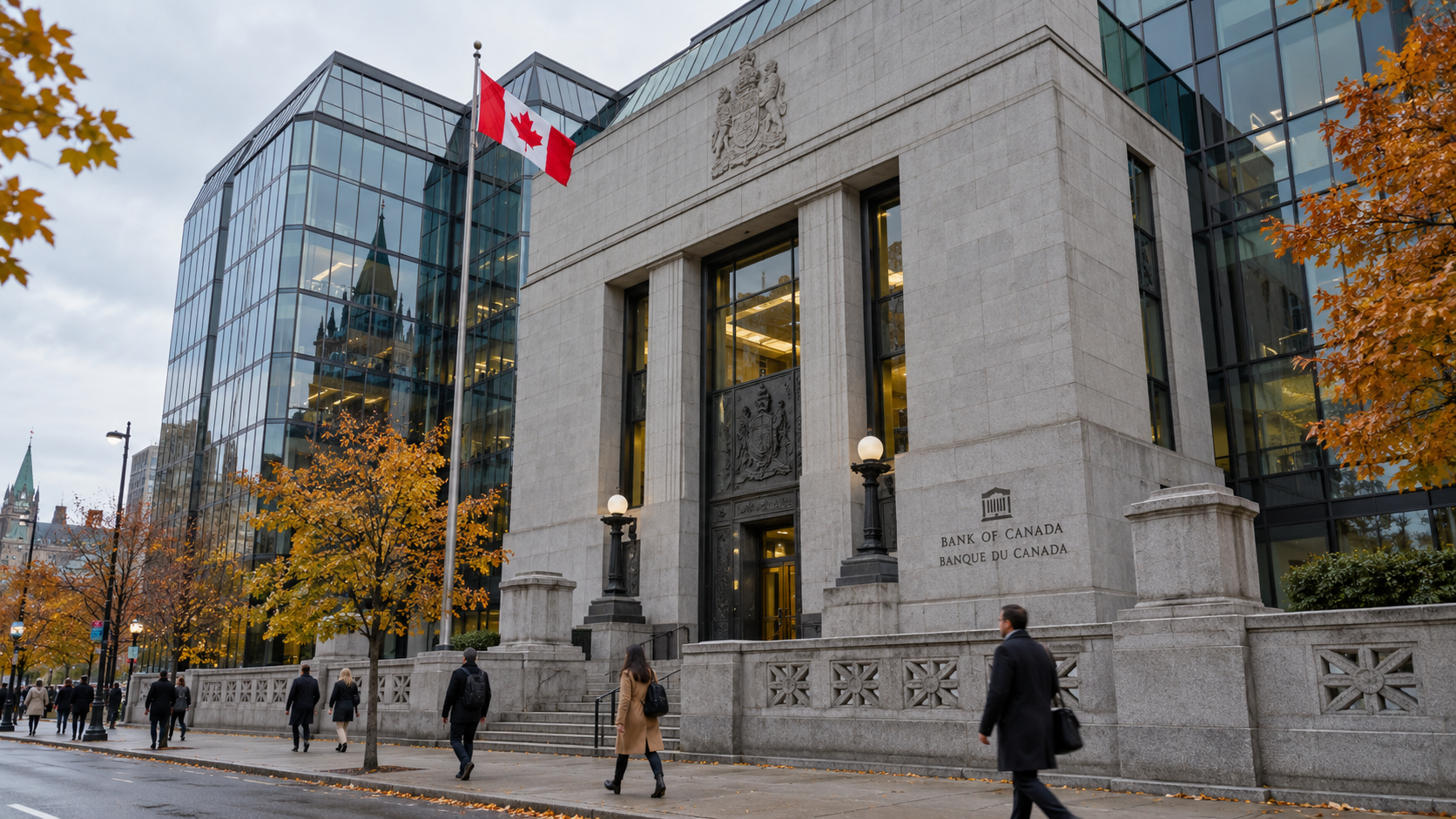
The Bank of Canada lifted its policy rate to 2.5%, its first increase since July 2023, and said another may be needed. It also expects growth to slow this quarter because of new U.S. tariffs.
Most central banks raise rates when inflation they can measure is spreading. The Bank of Canada raised them on Wednesday because of inflation it expects.
The bank increased its target for the overnight rate by 25 basis points to 2.5%, with the Bank Rate at 2.75% and the deposit rate at 2.45%. It was the first increase since July 2023 and was widely expected. "There could be a need to increase the policy rate further, but given uncertainties, Governing Council agreed to proceed carefully," the bank said. The next decision is on Dec. 9.
The numbers it hiked against
On the bank's own figures, underlying inflation is not the problem. Headline inflation has been "around 3% since April," but excluding gasoline it was 2.2% in September, and "measures of core inflation remain close to 2%." Long-term inflation expectations are "well anchored."
The concern is the next step. "Bank surveys suggest cost pass-through will increase over the next year," the bank said, and near-term expectations of households and businesses have risen. It now projects CPI inflation to average 3% in 2027, a percentage point above its July forecast, before returning to 2% in the middle of 2028. The stated aim of the hike is "to reduce the risk that continuing high energy prices spread broadly to the prices of other goods and services."
The source of those prices is not going away soon, in the bank's view. "The conflict in the Middle East is now in its eighth month and there is no clear path to resolution," it said.
The cost side
The same release explains why the decision is not easy. Growth is expected to be 1% this year and 2% in 2027 and 2028. Third-quarter growth was about 2%, stronger than expected, but "owing to new US tariffs, growth is expected to slow in the fourth quarter." Housing is relatively weak.
Raising rates into an economy that its own forecasts say is about to slow is the trade-off Canada has accepted.
A different reflex from New Zealand
The contrast with the Reserve Bank of New Zealand a day earlier is direct. New Zealand held by a 4-3 vote, choosing to wait for evidence that fuel costs were spreading before acting. Canada acted on survey evidence that they will. Both face the same oil shock. They have chosen to manage different risks.
Market response
The Canadian dollar firmed modestly. The U.S. dollar was at about 1.4039 Canadian dollars in early afternoon, down from about 1.4056 early Wednesday, even as the dollar strengthened against most other currencies. Lenders are expected to raise prime rates, which feed directly into variable mortgages and home equity lines.
The argument on each side
The pre-emptive case: pass-through is coming, expectations are rising, growth was stronger than forecast last quarter and the war shows no sign of ending, so acting early limits how much the bank has to do later.
The skeptical case: core inflation is near target, the bank itself forecasts a fourth-quarter slowdown from tariffs, and higher rates cannot lower the world price of oil. Tightening into a supply shock risks deepening the slowdown without much effect on the inflation the bank is targeting.
What to watch
Canadian GDP on Friday, any change in lender prime rates, the bank's December 9 decision, and whether the European Central Bank on Thursday follows the Canadian or the New Zealand approach. The Fed held on Wednesday afternoon, with two members voting for a hike.