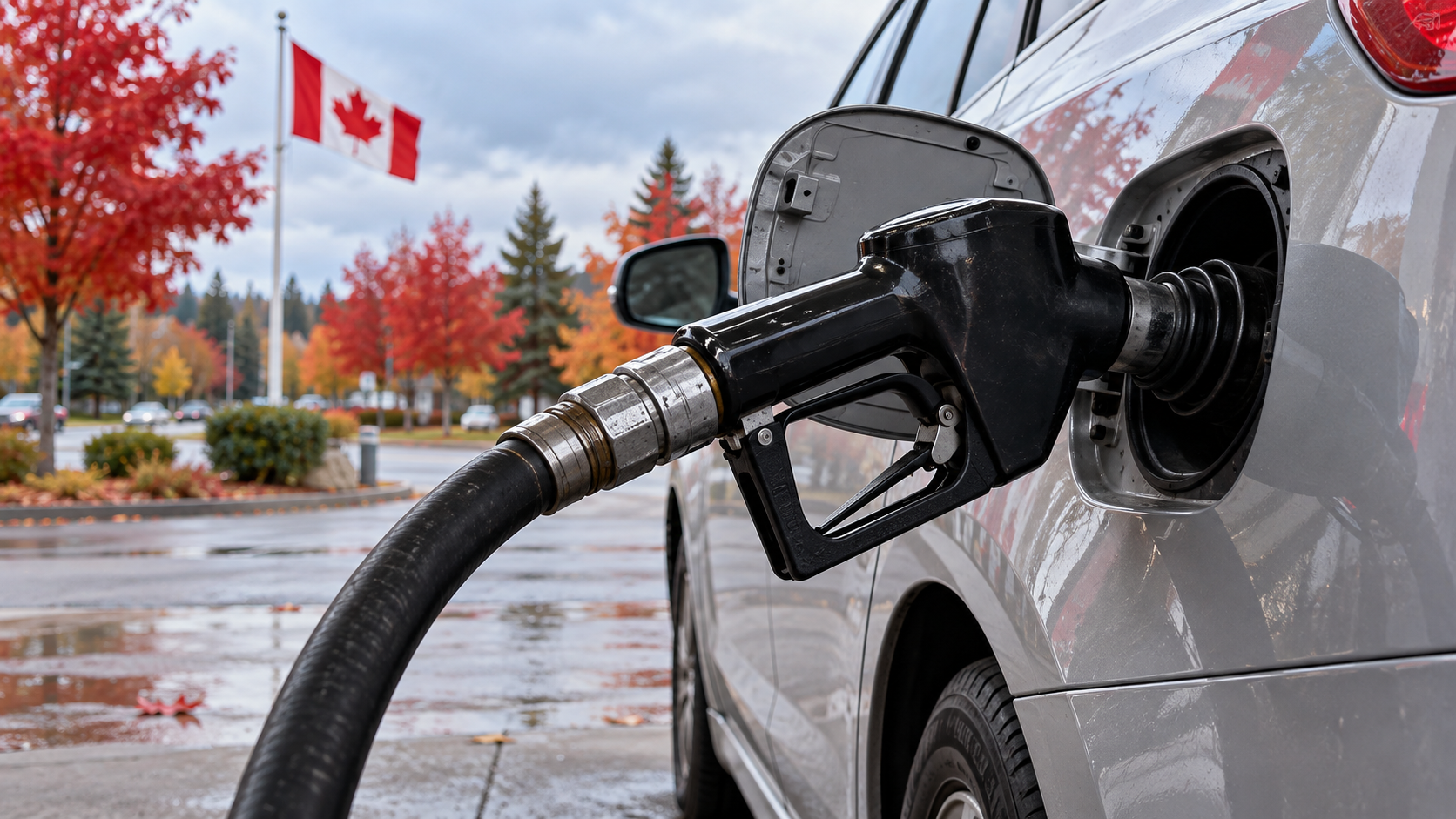
Consumer prices rose 3.1% from a year earlier in September, up from 3.0% but below the 3.2% consensus, as gasoline jumped 27.8%. Excluding gasoline, inflation slowed to 2.2%, and all three of the central bank's preferred core measures eased. Businesses' near-term inflation expectations remain elevated.
Canada's September inflation report is a clean test of the argument that an energy shock can be looked through. The headline rose. The central bank's preferred gauges did not.
The consumer price index rose 3.1% from a year earlier, Statistics Canada said on Monday, up from 3.0% in August and slightly below the 3.2% consensus compiled by Financial Modeling Prep. Prices rose 0.1% from August, or 0.4% after seasonal adjustment. The agency said the acceleration was "led by higher prices for gasoline," which rose 27.8% from a year earlier, up from 22.8% in August. Prices for fuel oil and other fuels rose 57.8%.
Strip out gasoline and the picture reverses. Inflation excluding gasoline slowed to 2.2% from 2.4%. The Bank of Canada's three preferred core measures all eased: CPI-trim to 1.8% from 1.9%, CPI-median to 1.9% from 2.0% and CPI-common to 2.4% from 2.6%. A broader measure, the CPI excluding food and energy, was unchanged at 2.1%. Grocery prices rose 1.7%, the smallest increase since May 2024.
The one exception was shelter, where inflation picked up to 1.8% from 1.5%.
The expectations problem
The Bank of Canada's quarterly Business Outlook Survey, published the same morning, showed why policymakers cannot simply ignore the gasoline effect. Firms' expectations for inflation over the next year "rose again in September following the breakdown in trade talks and the recent increases in oil prices," the central bank said. The bank also said that, compared with the previous quarter, firms' inflation expectations "eased overall but remain elevated," which places the September rise in interviews conducted late in the survey period.
At the same time, business sentiment improved. The share of firms planning for a recession fell to 6% from 17%, the lowest since the bank began asking the question in 2023.
A template for the U.S. debate
The Canadian data offer a version of the argument now being made in Washington. Treasury Secretary Scott Bessent has called the hot U.S. September inflation reading an "energy shock." Canada shows what that looks like in practice: a headline pushed up by fuel while underlying price pressures cool. It also shows the risk, in businesses whose near-term inflation expectations remain elevated as fuel costs persist.
The Canadian dollar firmed slightly, with the U.S. dollar down about 0.3% at about 1.4095 Canadian dollars by early afternoon.
Market implications
One reading is that energy pass-through is contained. All three of the central bank's preferred core measures fell, grocery inflation is the lowest since May 2024, and a central bank can wait for fuel prices to stabilize before acting.
A second reading is that expectations are the channel that matters. Firms' expectations remain elevated, shelter costs are accelerating and fuel oil prices have risen by more than half, so a central bank that waits risks letting the energy shock become embedded in wages and prices.
What to watch
The Bank of Canada's Oct. 28 rate decision; officials' comments on the survey; Canadian two-year yields; oil prices; and U.S. inflation data later this month. A rise in the core measures next month, with gasoline steady, would mark the point at which the energy shock starts to spread.