Talks in Tehran between Iran, Saudi Arabia, Pakistan and Turkey ended with an agreement to keep talking. Houthi forces said they hit pumping stations on Saudi Arabia's East-West pipeline, and Murban crude traded about $3.40 over Brent.
Oil gave investors two prices for the same war on Monday.
Brent crude fell to $114.00 a barrel in the morning, then climbed to $117.42, above Friday's settlement of $116.72. At 1:35 p.m. Eastern it was at $115.88, down 0.72% on the day. West Texas Intermediate traded between $100.34 and $103.13 and stood at $102.15 at 1:46 p.m., down 1.08% from Friday's settlement of $103.27.
A range of more than $3 in a single session, trading close to where it started, is a measure of how evenly the market is split between a settlement and an escalation.
The diplomacy
Iran hosted a four-way security meeting in Tehran with Saudi Arabia, Pakistan and Turkey, held at Pakistan's proposal. The visitors included Saudi Defense Minister Prince Khalid bin Salman, Pakistan's army chief, Field Marshal Asim Munir, and Turkish intelligence chief Ibrahim Kalin. According to Iranian state television, the parties agreed to continue discussions to strengthen cooperation, including on regional peace and security. No concrete de-escalation step was announced.
President Donald Trump framed the choice in stark terms over the weekend. "I have a decision to make: Do I finish it off, which would be very easy to do, or do I make a deal?" he said in an interview with Fox News. He also repeated that crude flows through the Strait of Hormuz have returned to prewar levels.
The attacks
The Houthis said on Monday that they attacked pumping stations on Saudi Arabia's East-West crude pipeline, along with Riyadh's airport. There was no immediate Saudi confirmation. The Saudi-led coalition said it destroyed launchers and storage sites in Yemen. None of the claims about damage has been verified.
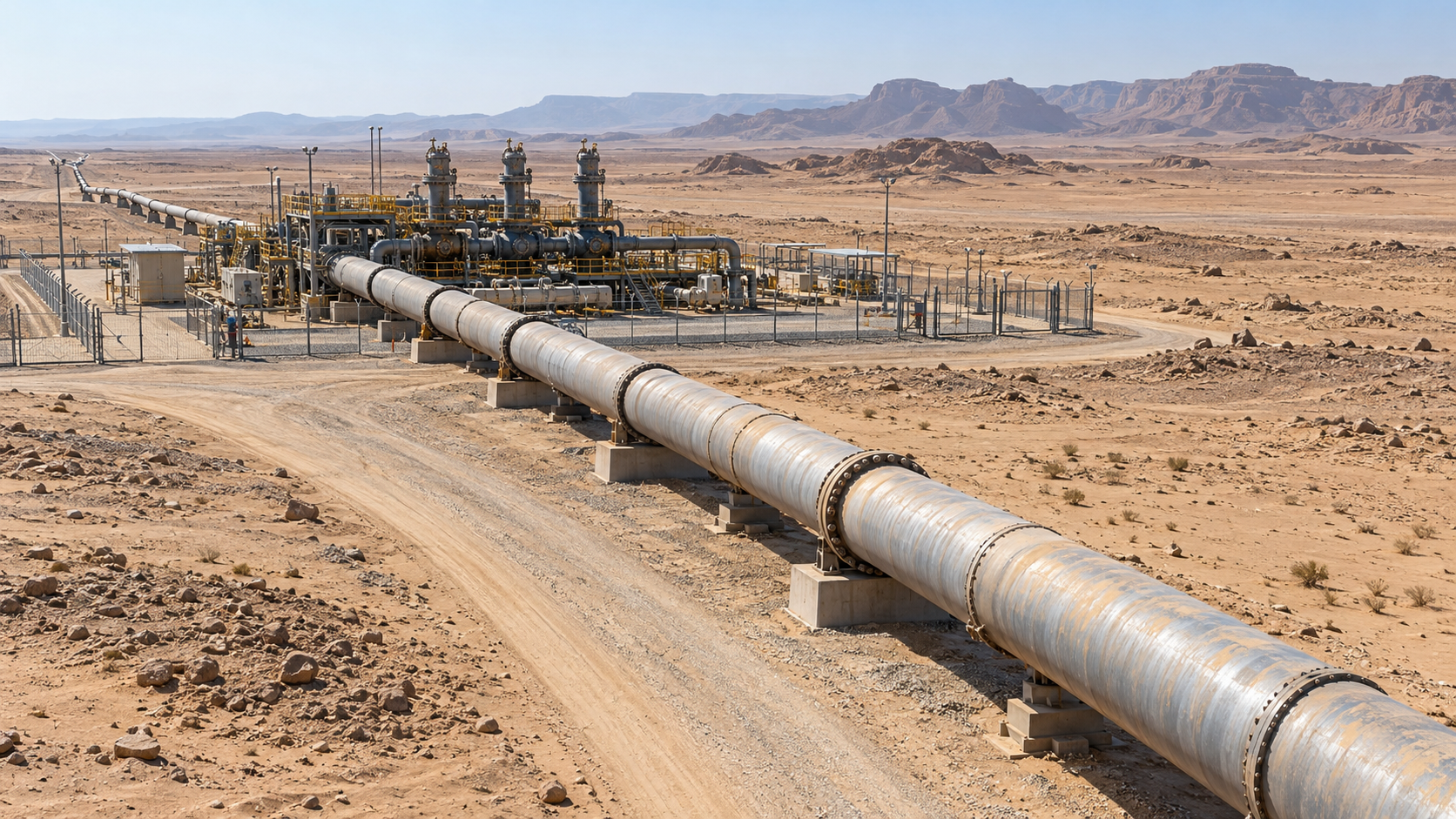
The target matters more than the claim. The East-West line runs about 1,200 kilometers from the Abqaiq processing hub to the Red Sea port of Yanbu, carrying crude that never passes through Hormuz. Saudi Arabia shut it temporarily in September after a drone attack. Aramco has put its capacity at about 7 million barrels a day, and the energy minister said it was carrying about 5.8 million barrels a day in early October, leaving limited room to absorb more.
Where the premium sits
The price of Murban, a grade that moves on a route that also avoids the strait, makes the same point from the market side. It traded above $118 during the Asian morning, about $3.40 over Brent.
If Hormuz flows have recovered, as Trump says, the remaining risk is concentrated in the routes that were supposed to make Hormuz less important. That is a different kind of premium. A ceasefire inside Iran would not remove it if the Houthis can keep reaching Saudi infrastructure.
Cross-asset
Gold rose 0.72% to $4,036.60 an ounce. The 10-year Treasury yield was little changed at about 4.98%. U.S. stocks rose, with the S&P 500 up 0.69%.
No single development explains the rebound from the morning low. The talks, the pipeline claim and Trump's comments all arrived within the same few hours.
Two readings
One reading is that diplomacy is slowly compressing the premium. Oil ended lower on the day, the talks will continue, and Saudi Arabia, Pakistan and Turkey are now pressing Tehran directly, alongside Qatar's mediation.
The other is that the premium is not shrinking but moving. With Hormuz shipping restored, attention has shifted to bypass pipelines and Red Sea terminals, where the Houthis have now claimed repeated strikes, and the U.S. president is openly weighing a military option.
What to watch
Brent's settlement, any Saudi or Aramco statement on the East-West line, the gas exporters' summit and Israel's election on Tuesday, the Fed on Wednesday, the OPEC+ meeting on Nov. 1 and the U.S. midterms on Nov. 3.