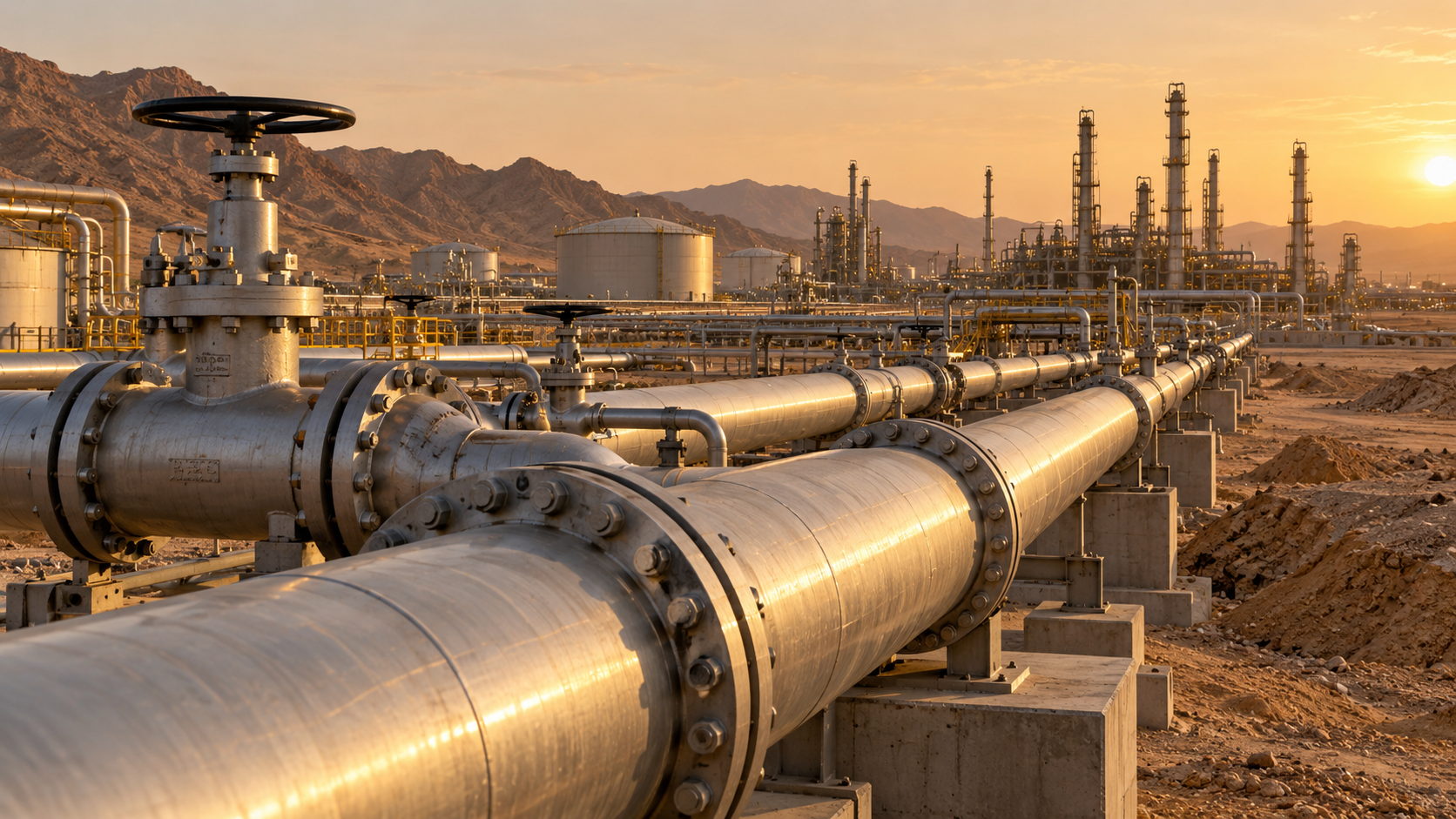
Saudi Arabia says its East-West pipeline is moving 5.8 million barrels a day, yet the government's forecaster just raised its oil price path and heating oil is outrunning crude.
The physical oil market is healing faster than the price of the fuels that truckers, airlines and farmers actually buy.
Saudi Energy Minister Prince Abdulaziz bin Salman said Tuesday that about 5.8 million barrels a day are again flowing through the kingdom's East-West pipeline, which lets crude bypass the Strait of Hormuz on its way to Red Sea ports. The line can carry about 7 million barrels a day, so it is running at roughly 83% of capacity.
The same day, the U.S. Energy Information Administration lifted its outlook. Its October Short-Term Energy Outlook now sees Brent averaging $96 a barrel in 2026, up from $91, and $84 in 2027, up from $74. That 2027 revision is a 14% increase in a single month. The agency also raised its 2026 retail diesel forecast to $5.19 a gallon from $5.07 and gasoline to $3.91 from $3.84. Brent averaged $114 in September, $23 more than in August. The forecast was finalized before the minister's remarks.
Prices show the split clearly. Brent slid to about $97.80 intraday Tuesday before recovering to around $100. By early Wednesday it traded near $101.70, up about 1.1%, while West Texas Intermediate was near $89.90. Heating oil, the benchmark for diesel, jumped 3.4% to about $4.73 a gallon, roughly three times the percentage gain in crude.
That is the pattern to watch. If the shock were fading evenly, refined products would ease along with crude as pipeline volumes return. Instead, the premium appears to be migrating from crude into products and into the later years of the futures curve, which is exactly where the EIA moved its numbers.
The security picture remains unsettled. Maritime authorities have recorded nine incidents in and around Hormuz so far this month. Saudi officials said three people were injured in attacks on airports in Jizan and Najran on Monday evening, and the Saudi-led coalition reported intercepting a ballistic missile aimed at Khamis Mushait.
Industry data showed U.S. crude inventories fell by 2.1 million barrels last week, and the government's weekly figures are due at 10:30 a.m. Eastern Wednesday.
Why it matters beyond energy
Diesel feeds directly into freight costs and, from there, into goods prices. A products market that keeps rising while crude stabilizes makes it harder for inflation expectations to settle, which matters for a Fed weighing another hike. Oil-importing emerging markets feel it too: India's central bank cited crude as it raised rates Wednesday.