Polymarket's contract on a Flávio win slid to 79.65 cents overnight while Kalshi's last traded at 84 cents. Datafolha and Quaest each put him at 51% to Lula's 49% of valid votes.
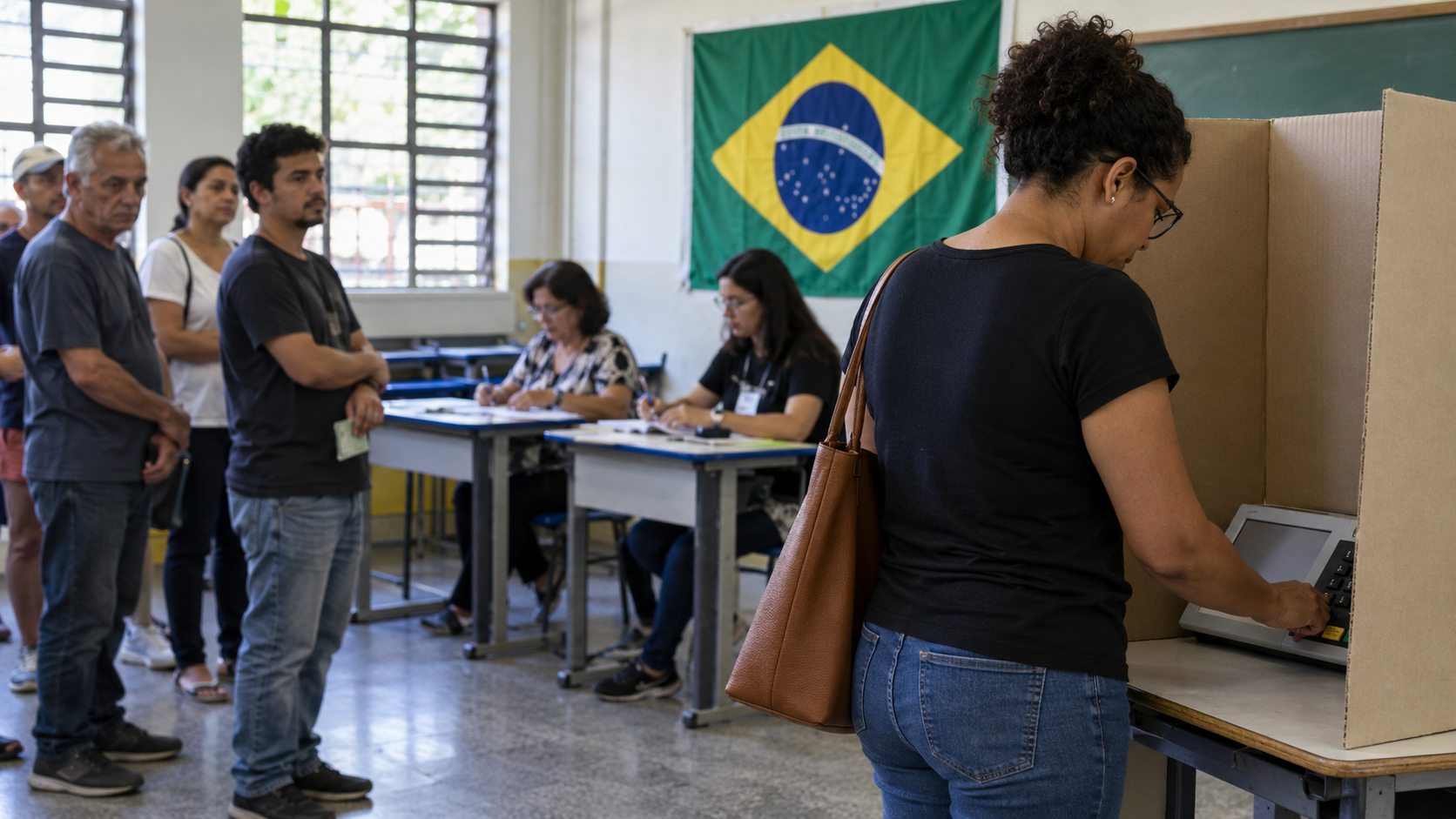
Brazilians vote in a presidential runoff on Sunday. The pollsters say it is too close to call. The prediction markets do not, and they cannot agree on how clear it is.
On Polymarket, the contract on whether Flávio Bolsonaro wins the 2026 presidential election traded at 79.65 cents at 4:47 a.m. Eastern on Sunday, implying about an 80% chance. It was 82.95 cents at 1 p.m. on Saturday and peaked at 83.45 cents at 3 p.m. before sliding. Most of the drop came between 9 p.m. and 11 p.m. Eastern, when the price fell as low as 78.5 cents.
On Kalshi, the comparable contract last traded at 84 cents, with a bid of 83 cents and an offer of 84 cents, about 4.35 points above Polymarket. Kalshi's contract on President Luiz Inácio Lula da Silva last traded at 18 cents. About 332,000 Flávio contracts changed hands on Kalshi over 24 hours.
What the polls say
The final surveys, released on Saturday evening, show a statistical tie. Datafolha, which interviewed 4,050 voters on Oct. 23 and 24, put Flávio at 48% and Lula at 47%, with a margin of error of two points. Quaest, with 3,702 interviews, had 46% to 45%. Both translate to 51% for Flávio and 49% for Lula when blank and spoiled ballots are excluded. AtlasIntel's final poll put Flávio at 50.8% of valid votes.
Every poll gives Flávio a narrow edge inside its margin of error. The markets turn that edge into odds of roughly four in five.
Why the markets may be leaning further
One possible explanation is the first round. Flávio won 47.03% of valid votes to Lula's 45.16%, a result that ran ahead of the final pre-election polls. If traders believe polls are understating Flávio again, they would price him above what the surveys alone suggest.
Nothing clearly explains Polymarket's overnight decline. The Datafolha and Quaest releases came four to five hours before the steepest part of the drop, and the price barely moved when they were published. Possible explanations include position-squaring before the vote and differences in who trades on each platform.
The two contracts are similar but not identical. Kalshi's resolves to yes "if Flávio Bolsonaro has won the 2026 Brazilian presidential election." Polymarket's resolves to the winner as determined by official results, with an "Other" outcome if no result is available by June 30, 2027.
The financial-market angle
Brazilian assets have been trading the race for weeks. Local investors have been hedging against a Lula win while keeping positions that would benefit from a Flávio victory, according to market reports, and the Ibovespa rallied 7.7% on the first trading day after the first round. Brazil's currency, local rates and the U.S.-listed Brazil fund EWZ, which closed Friday at $42.59, will deliver their verdict on Monday.
Two readings
One reading is that the markets are right to look through a tied poll, having watched the first round outperform the surveys, and that the gap between the two platforms is noise in thin overnight trading.
The other is that both markets have moved well beyond what any poll supports, and that Polymarket's overnight slide is a sign that some traders think the race is closer than the prices imply.
What to watch
The official count from Brazil's electoral court on Sunday night. Both contracts will converge on the result. Then the reaction in the real, Brazilian bonds and the Ibovespa when markets open on Monday.