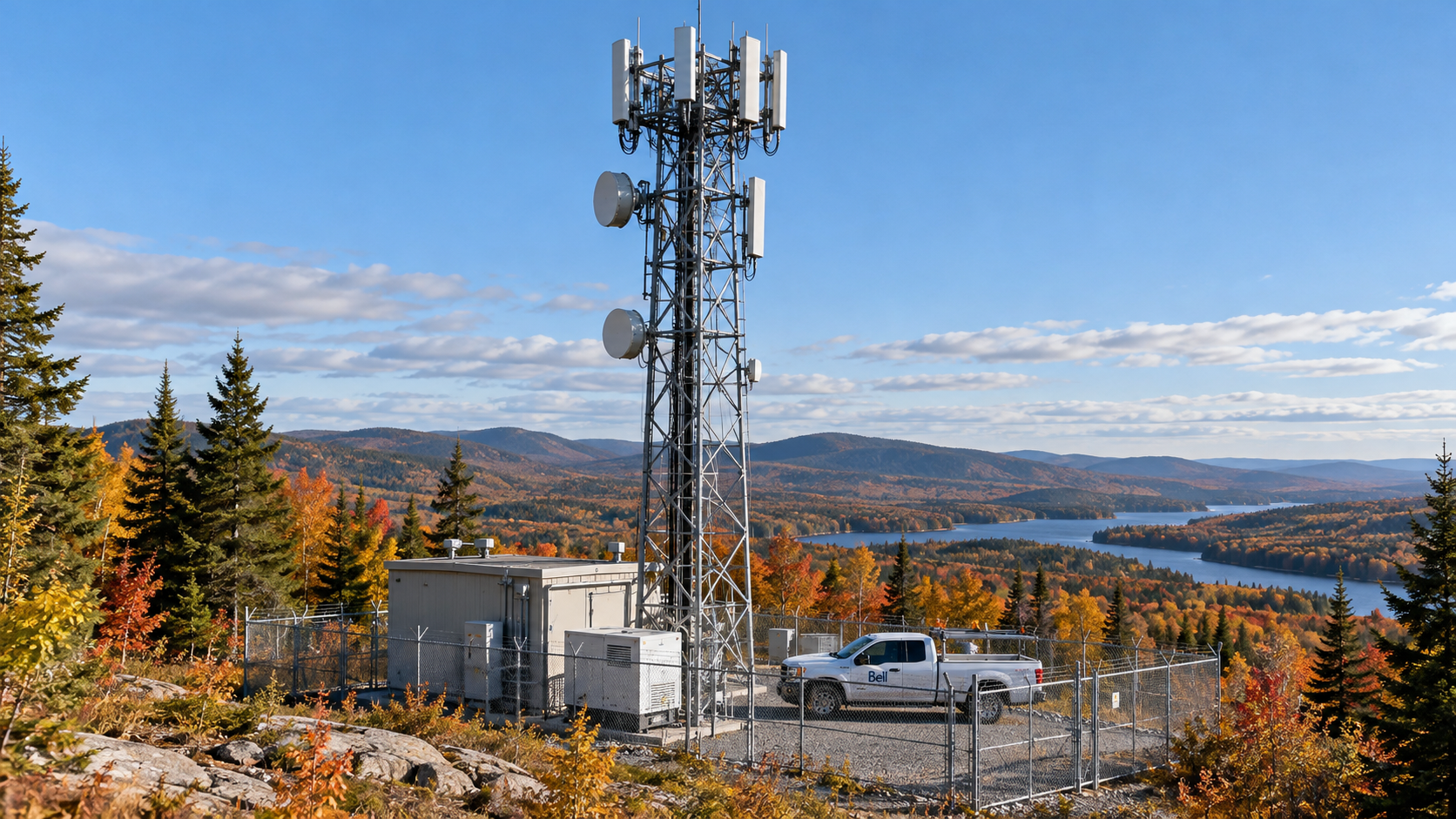
La Caisse will buy 49.9% of a new company that owns more than 5,000 Bell wireless sites. The deal values the tower business at about C$4.9 billion and is expected to close in the first quarter of 2027.
Canada's largest telecom company has found a way to raise billions from its network without giving up control of it.
BCE said on Tuesday that Bell Canada signed a definitive agreement under which La Caisse, the Quebec pension investor, will buy 49.9% of a newly formed tower company for C$2.45 billion, subject to adjustments. The new company will own and operate more than 5,000 Bell wireless sites, which BCE described as making it Canada's largest dedicated tower company. Bell keeps 50.1% and control, and will lease capacity on the towers from the new company.
At that price, the whole tower business is valued at about C$4.9 billion. The deal is expected to close in the first quarter of 2027.
How the trade works
Selling a minority stake in infrastructure is a familiar move for telecom operators. The company turns a portion of a long-lived asset into cash today, keeps operating control and pays rent to use the towers. The buyer gets long-term, contracted cash flows from a tenant with a large network, which is the kind of steady income pension funds look for.
For BCE, the immediate benefit is capital. BCE said the proceeds will support its strategy of strengthening its balance sheet, investing in growth and returning cash to shareholders, without giving a breakdown. A Scotiabank analyst said he does not expect the deal to meaningfully reduce BCE's debt and expects the money to be recycled into growth areas such as AI.
What it costs
The trade is not free. Bell will now pay to use towers it fully owned before, so part of the cash it raises comes back out as lease payments over time. BCE said the tower company is expected to have no financial debt at closing and that Bell will consolidate its results. The lease terms and the exact use of proceeds were not disclosed. Those details decide whether the deal leaves BCE better or worse off over a decade.
Two ways to read the price
The bullish reading is that a pension investor paid C$2.45 billion for a minority stake, which puts a visible value on assets that investors may not have priced separately inside a telecom company, and gives BCE cash without losing control.
The cautious reading is that the company is swapping ownership for a rent bill. Without the lease terms, investors cannot yet judge whether the C$4.9 billion valuation is generous or whether BCE is raising expensive capital through its own network.
What to watch
Disclosure of the lease terms and any future borrowing by the tower company, a breakdown of BCE's use of proceeds, regulatory approvals before the expected first-quarter close, and whether other Canadian carriers follow with similar sales.