
TQ Evening Briefing
Alphabet lost about $500 billion and the Nasdaq fell 1.4% while the Russell 2000 rose 1.0%. Caterpillar beat and sank, and Amazon and Intel fell after the bell.
The Index Fell. The Average Stock Rose.
The S&P 500 slipped 0.3% and the Nasdaq fell 1.4%. The Russell 2000 rose 1.0% and the equal-weighted S&P 500 gained 1.2%.
Alphabet (GOOGL) fell 12.6% and lost about $500 billion of market value, a day after reporting negative free cash flow of $9.1 billion that it covered partly with new debt and stock. ServiceNow (NOW) closed down 27%, deeper than its pre-market loss. Amazon (AMZN) fell 4.2% before its results.
Microsoft (MSFT) opened higher and closed slightly lower. Its $25 billion bond sale, the company's first U.S. investment-grade deal since 2017, drew about $115 billion of orders, Bloomberg reported.
Third-quarter GDP grew at a 3.4% annual rate, beating forecasts, while September PCE inflation of 3.6% and core of 3.1% came in as expected. The 10-year yield eased to about 5%. Homebuilders rose 3.6% and health care 2.4%, though the VIX ended slightly higher at 17.2.
TQ Trade Implication
The selling was concentrated, not broad. Cap-weighted indexes count Alphabet and Amazon at full size, while the equal-weighted S&P 500 and the Russell 2000 count every company the same. That arithmetic let two heavyweights pull the Nasdaq down while rate-sensitive groups gained as the 10-year eased. On this kind of breadth, a falling Nasdaq reads more like a rotation than a retreat.
Before the AI Wealth Gap Widens, See This List
Blue-chip stability meets AI growth in 7 AI Stocks to Invest in Today
Inside: a top-10 dividend payer rolling out AI-powered logistics across 200 countries… a $300B titan embedding AI across its full product stack… and a semiconductor leader still trading 15% below its 52-week high.
All proven operators, all using AI to widen their lead.
See the list for free today – after that, you’ll have to pay.
Two Record Backlogs. Only One Raised the Year.
Caterpillar (CAT) beat on profit and kept its outlook. Revenue rose 17% to $20.7 billion, adjusted earnings of $7.20 a share topped the $7.08 estimate, and its operating margin widened to 20.4% from 17.3%. Its backlog is a record, but it held its forecast for 2026 sales growth in the mid-to-high teens, while analysts expected about 18%. The stock fell 9.3%. Other explanations also circulated, including slightly weaker construction sales and the day's selling in AI-linked stocks.
Quanta Services (PWR) also reported a record backlog, at $63.7 billion. It grew revenue 57%, raised every 2026 target and rose 4.7%.
TQ Execution Bias
A record backlog no longer pays on its own. The clearest difference between Caterpillar and Quanta was the forecast, not the order book. A backlog is revenue without a date, and a raised outlook puts a date on it. On Thursday, the company that held its year was the one that sold off.
Two Takeovers. Two Prices for Time.
DoorDash (DASH) agreed to pay $65 a share for Instacart (CART), at least 75% in cash, valuing Instacart's equity at about $17 billion. The contract gives regulators up to two years, with closing expected by mid-2028, and DoorDash owes Instacart $1.25 billion if antitrust approval fails.
Instacart closed at $57.11, about 12% below the cash price. The stock option adds nothing yet: 0.3372 DoorDash shares were worth about $60 at DoorDash's $179 close. DoorDash rose 5.6%, but it also reported quarterly results the same morning.
ADT (ADT) agreed to a $10-a-share cash buyout by Thrive Holdings, a 45.6% premium to its price on Tuesday. Funds managed by Apollo (APO) are providing all of the financing. ADT can shop itself until Nov. 28, yet it closed at $9.87, about 1.3% below the offer.
TQ Edge Setup
The two spreads price different risks. Instacart's gap mostly prices a review the contract lets run two years, with DoorDash's $1.25 billion fee as the only floor if regulators block it. ADT's gap pays for waiting to close and puts almost no value on a rival bid while the go-shop is open. Instacart holders are paid to carry policy risk; ADT holders are paid only for time. If a second bidder appears before Nov. 28, the ADT spread is the one that was mispriced.
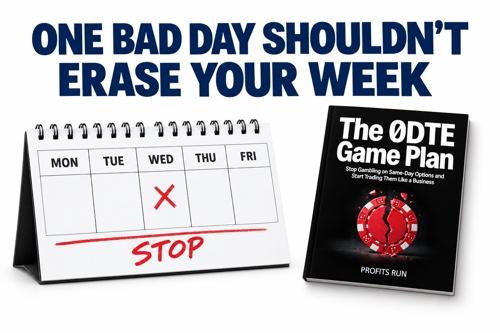
One Bad Day Shouldn't Erase Your Whole Week
With same-day options, one ugly afternoon can undo weeks of careful work.
Unless you have two rules in place: a hard stop on every trade, and a weekly circuit breaker that tells you when to step away.
Both are laid out in this free report, along with the rest of the 3-step plan.
Normally $29.97. Free today.
The NYSE's Owner Rented Hyperliquid. Kalshi Got Its Price.
Intercontinental Exchange (ICE), the NYSE's owner, signed a deal to bring Trade[XYZ]'s Hyperliquid-based perpetual futures to U.S. retail traders. ICE would operate the regulated market and clearing, apart from its institutional business, and is investing in Trade[XYZ]. Regulators still have to approve it, and the announcement does not say how any of the business would reach holders of Hyperliquid's HYPE token.
ICE rose 4.5% and Hyperliquid Strategies (PURR) rose 23%. At the stock close, HYPE was up about 16% near $94, about 4% below its 52-week high, and bitcoin was near $80,700. Within the next hour, bitcoin fell below $79,000.
Kalshi raised $1 billion at a $40 billion valuation, about 1.8 times its May value, in a round co-led by Sequoia and Wellington. The company said the round closed the week before Utah filed criminal charges against Kalshi and its two co-founders, and announced it the day after. The federal government and the CFTC sued Utah on Oct. 26, arguing event contracts are federally regulated swaps.
TQ Edge Setup
What matters now is who holds the license. ICE supplies the regulated market and clearing while Hyperliquid supplies the trading engine, so the U.S. business would run through a licensed operator before anything reaches the token. HYPE's jump prices that access before any approval, and Kalshi's $40 billion mark was set before the criminal case existed. If regulators sign off on ICE's market, the license becomes the scarce asset in crypto derivatives and event contracts alike.
- Lilly sold more for less. Eli Lilly (LLY) grew sales 39% to $24.4 billion as volume rose 53% and realized prices fell 15%. It raised its 2026 revenue forecast to $91 billion to $92 billion, though about $900 million of the quarter was one-time. The shares rose 6.6% to a 52-week closing high.
- Private-markets managers kept raising. Blue Owl (OWL), up 7.7%, said institutions committed a record $8.3 billion to its equity strategies, and redemption requests at its flagship non-traded credit fund fell for a second straight quarter. Ares (ARES) took in $31 billion of gross commitments, while the money it actually invested fell to $34.8 billion from $41.7 billion a year earlier.
- A 2026 contract said yes to a 2027 exit. Christine Lagarde will leave the ECB on Feb. 7, 2027. Polymarket's contract on her being out "in 2026" priced Yes at 100 cents after the announcement, because its rules count an announcement, not a departure.
1 Free Thing American Citizens Can Do to Target More Income
It's not investing in CDs, Treasurys, or even getting a second job. Wall Street insider Rob Spivey has uncovered an income engine hidden beneath Elon's empire. He calls it Elon's "Shadow Trust." It consists of a handful of little-know companies that have paid out a steady stream of income going back 20 years... They've paid out $4 billion in the past 12 months… over $100 million in the past few weeks…and the next payout hits November 4. Details here…
This ad is sent on behalf of Altimetry, 110 Cambridge Street, Cambridge, MA 02141. If you would like to optout from receiving offers from Altimetry pleaseclick here.
The Market Sorted Spenders by Who Pays.
Thursday split the AI trade along two lines: who funds the spending and who raised the year. Alphabet fell on the first and Caterpillar on the second, while small caps, health care and Quanta, which raised its year, took the bid.
Both lines ran again after the bell. Amazon grew AWS sales 39% to $46.0 billion, but its free cash flow over the past 12 months was negative $42.4 billion, and it still plans about $220 billion of capital spending this year. Earnings of $1.89 a share missed the $1.96 expected, and the shares were about 6% lower after hours.
Intel (INTC) beat on third-quarter earnings, then guided fourth-quarter revenue to $15 billion to $16 billion, below the roughly $17 billion analysts expected. The stock fell about 17% after hours.
Neither AWS's fastest growth in nearly five years nor Intel's beat held either stock. The market is still pricing growth by who pays for it and whether the year goes up.
Rates Just Reset. Who Feels It First?
On January 2, the 10-year yielded 4.19%. By September 30, 5.29% — most of it in one quarter.
Some companies earn from higher rates. Some pay. Each runs on a different clock.
We traced three: IBKR, WRB and FIS. One has already reported. The other two report next, and the report tells you the exact line to check.
Free report, texted to your phone.