

The Dow rose 295 points. WTI held near $90. Factory construction fell again. Data centers carried the July gain.
Yields cooled Wednesday, and stocks used the opening.
The Nasdaq rose 0.45%. The S&P gained 0.46%. The Dow added 0.56%. The VIX fell 6.98% to 15.20.
The 10-year yield eased to 4.78%. Oil rose 0.20% to $90.40. Gold gained 0.89%. The dollar traded down slightly.
The market got relief from rates, not from energy.
The 10-year had touched 4.82% before easing. The 30-year stayed near 5.26%. Stocks bounced after three down sessions, but the input stack did not clear.
WTI stayed above $90. Brent closed over $95.
The Beige Book showed modest growth, slight employment gains and moderate price increases. It also kept the same warning around energy prices and international conflict.
Yields gave the tape room. Oil kept the room small.
The Big AI Story Nobody Knows

There's a website called RentAHuman.ai. Its tagline: "Robots need your body."
721,000 people across 100 countries have signed up.
And according to Alexander Green - the man who bought Apple under $1, Netflix at $1.62, Amazon under $2* - this is the clearest signal yet that Phase 2 of the AI supercycle has arrived. (Split adjusted prices)
He's identified three companies set to dominate this next phase.
Construction spending is no longer one cycle.
Total construction fell 0.5% in July. Census could not tell that move from zero. The seven-month number was cleaner. Spending from January through July ran at $1.2446 trillion, down 3.5% from the same stretch in 2025.
Factory construction kept falling.
It dropped for a fourth straight month and now runs at $169.8 billion a year. In March, it ran at $179.8 billion. Against last July, factory construction is down more than a fifth.
That is the CHIPS Act and Inflation Reduction Act cycle running off.
The other buildout is still climbing.
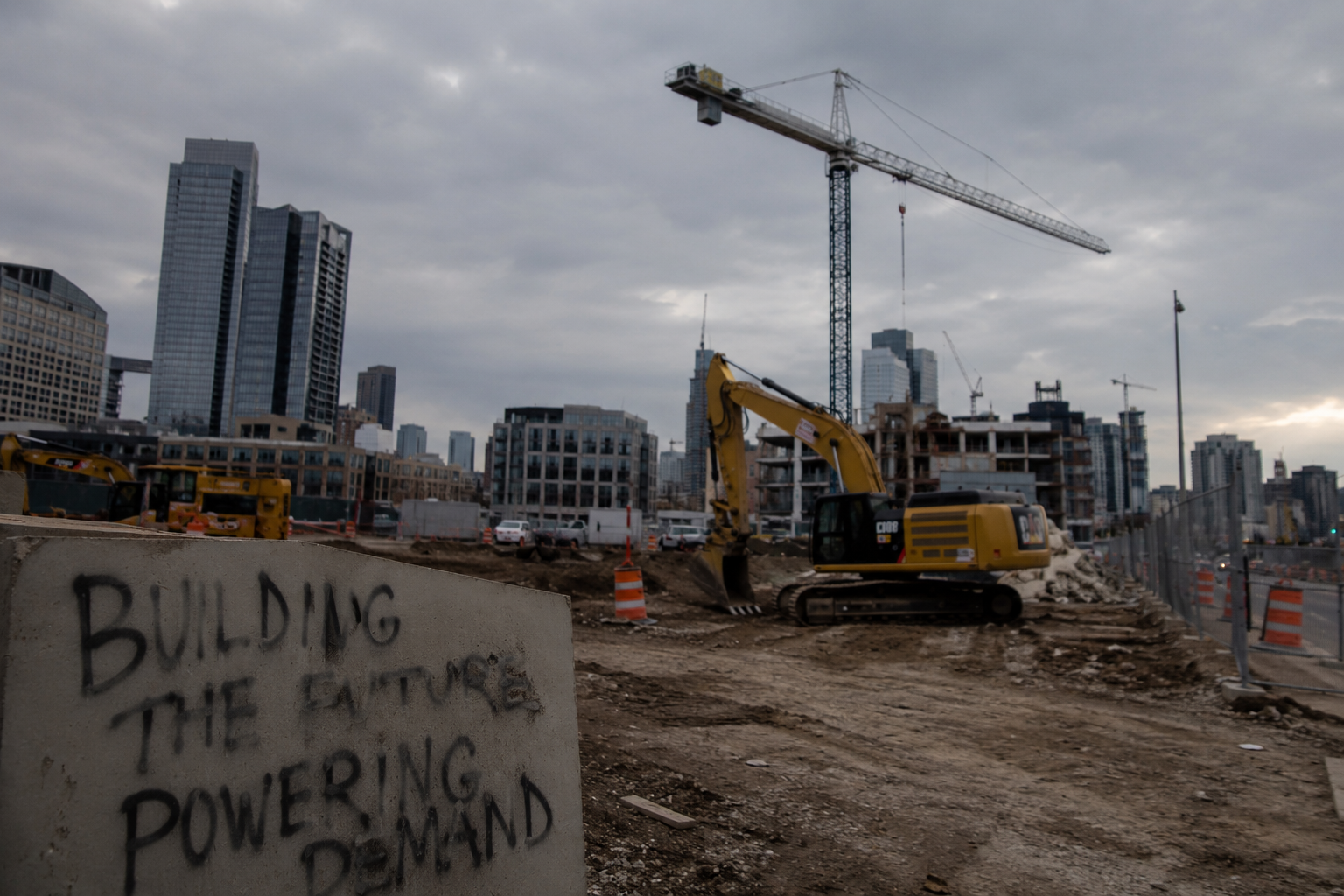
Private nonresidential spending rose 0.4%. It was the only major category to rise. Office construction is up 16.9% from a year ago because data centers now sit inside that line.
Associated Builders and Contractors said July's gain was entirely due to data centers.
The Concrete That Changed Owners
Congress paid for one factory cycle. Private balance sheets are paying for the data-center one. An appropriation runs off on a schedule somebody voted for. A private buildout runs off when the funding gets too expensive. The first had a sunset date. The second has a discount rate.
The AI buildout still needs money, power and parts.
Dell Technologies (DELL) jumped 13% after raising its AI-driven forecast. That told the market demand still exists. It also showed where the construction story is moving.
Factories are slowing. Data centers are not.
That matters because each data center needs servers, power, cooling, substations and land. The construction file sees the shell. The trade file sees the equipment. The utility system sees the load.
The 10-year easing helped the math for one session. It did not make the long end cheap.
Prediction markets still price a live Fed. September shows a 25 basis point hike at 55% and no change at 43%. October no-change is 71%. December is split, with no change and a 25 basis point hike both at 45%.
Payrolls now carry the next test.
The August jobs book prices 50,000 to 100,000 jobs at 30%, 0 to 50,000 at 27%, and a negative print at 17.8%. The unemployment-rate book sits at 4.1% with 36% odds and 4.2% with 33%.
The Rate Behind the Pour
A yield pause changes one session. It does not change what a twenty-year asset costs to finance. Data centers get built against the long end, not the policy rate. The thirty-year sat near 5.23% all day. Neither the rate nor the gate moved.
Elon Musk Calling on Military 'Dark Energy' to Power AI

When it was put inside U.S. tanks, they moved almost silently and produced no smoke. Now, Elon Musk is using this strange technology to jump ahead in the AI race - and possibly change the course of history. Click here to see how this could ignite a $10 trillion boom for the stocks involved.
Hormuz looked better in volume and worse in structure.
Energy Secretary Chris Wright said more than 17 million barrels of oil moved through the Strait of Hormuz by ship on Monday. He said that was the highest level since the Iran war began in late February.
Before the war, about 20 million barrels a day of crude and refined products moved through the Strait.
That sounds like relief.
The route says otherwise.
The corridor is protected by the U.S. and runs along Oman’s coast. Some tankers move at night with transponders off. Iran has attacked tankers using that route and wants ships to use a northern corridor through Iranian waters.
So the barrels are moving, but the route is now militarized.
Prediction markets agree with that split. A U.S. announcement ending the Iranian blockade by September 30 sits at 19%. October 31 is 38%. December 31 is 61%. A U.S. invasion of Iran before 2027 sits at 16%.
The Flow That Needs Protection
Hormuz is open enough for barrels. It is not normal enough for the premium to leave. A protected corridor is a cost, not a fix. Somebody pays for the escort, the dark transit and the insurance. Volume can recover while the route stays expensive.
Prediction markets moved closer to both exchanges and the Supreme Court.
New Jersey asked the Supreme Court to review whether states can regulate sports event contracts. The Third Circuit said sports contracts fall under CFTC control. The Ninth Circuit said sports contracts can fall under state gambling law.
That split is now the industry’s main legal question.
Kalshi is pushing in the other direction too.
It is preparing to file for a regulated WTI crude oil perpetual contract with the CFTC. The product would trade 24 hours a day, five days a week, and would not expire.
That is not a sports contract.
It is an energy derivative.
The timing matters. Oil is near $90. Hormuz is militarized. Businesses now have real exposure to energy shocks. A regulated crude perp would push Kalshi closer to market infrastructure and further from the gambling fight.
The Venue Split
Sports contracts are heading toward court. Oil contracts are heading toward the exchange stack. One fight asks whether the product is legal. The other asks whether the product is useful. A platform that wins the second argument does not have to win the first.
WARNING: A Major Market Shift Could Hit Stocks in 2026
If you have any money in the stock market, you may want to pay attention.
New research points to a massive market-moving event that could send hundreds of popular stocks into a sudden free fall.
Holding the wrong stocks when this hits could erase years of gains.
That’s why analysts have now identified a list of stocks investors may want to avoid as this event unfolds.
If you want to see what’s coming — and which stocks could be most at risk —
Wednesday tied the week together.
Construction showed the old factory boom slowing. Data centers showed the new buildout still rising. Dell showed AI demand still has buyers. The Beige Book showed growth, hiring and prices still moving, but not fast enough to settle the Fed.
Oil kept the harder answer.
A 17 million barrel Hormuz flow sounds like normalization. A protected corridor with dark tankers does not. That is why oil held near $90 even on a stronger stock day.
The same split sits in construction.
The headline month is noise. The seven-month fall is not. Factory building is slowing. Data centers are rising. Labor has not broken. Rates are still high.
The market can rally on a yield pause.
It still has to price what gets built next and who pays for it.
The Number That Needs Seven Months
One month of construction data cannot be told apart from zero. Seven months can. The same is true of the buildout underneath it. A single strong session says the AI trade is alive. Only the run rate says who is still paying for it.
Wednesday answered the morning with a bounce, not a release.
Yields eased. Stocks rose. Dell restored part of the AI bid. Oil stayed near $90. Construction kept shifting from factories to data centers.
What is priced: a live September Fed meeting, payrolls below 100,000 as the main jobs range, data centers carrying private construction, and no quick formal end to the Iran blockade.
What is not priced: the 30-year staying near 5.2%, factory construction falling further, Hormuz flows needing military cover, or Kalshi’s crude perp turning prediction markets into full energy-market infrastructure.
Congress paid for one pour.
AI is paying for the next.
Capital moves early. Coverage catches up. The gap between the two is worth watching.