

Futures split as the 10-year reached 5.33%, Brent topped $100, and October no-change odds rose to 64%.
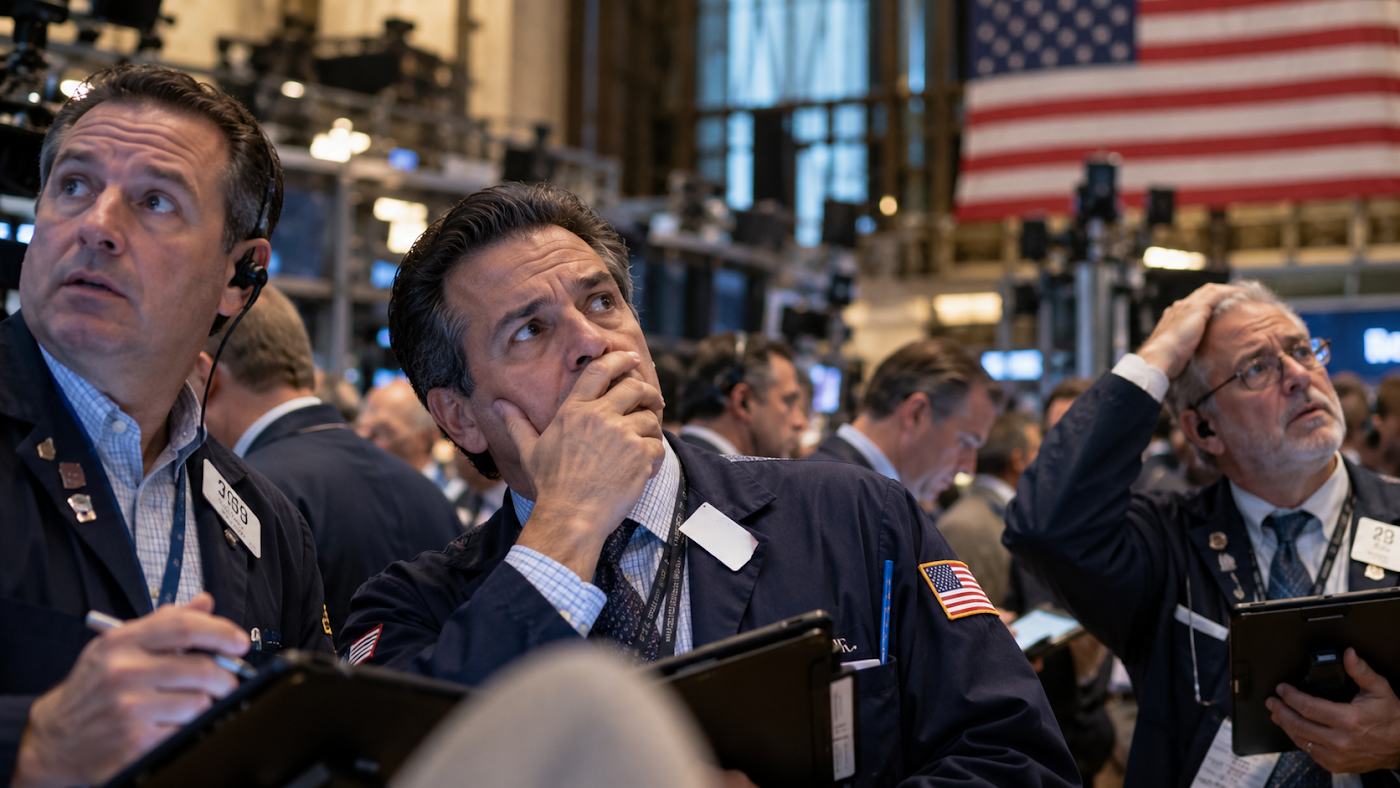
Thursday opens with tech trying to lift a tape that bonds keep tightening.
The split is familiar.
The 10-year Treasury yield traded near 5.30% before moving higher. The 30-year sat around 5.64%. September showed the same divide. The S&P 500 fell 0.5%, the Dow lost 4.3%, and the Nasdaq gained 1.9%.
Oil brought back the fuel problem. Brent moved back above $100, and WTI traded near $93 after reports that Chinese refiners suspended some October fuel exports.
Prediction markets show the same collision. October now prices no change at 64%, with a 25 basis point hike at 36%. But the 10-year ladder kept rising. A 5.3% touch sits at 92%. A 5.4% touch sits at 80%. A 5.5% touch sits at 59%.
Traditional markets are buying lower Fed risk. Prediction markets are still pricing long-end stress. This is where prediction markets offer a lens traditional indicators do not.
The Big AI Story Nobody Knows

There's a website called RentAHuman.ai. Its tagline: "Robots need your body."
721,000 people across 100 countries have signed up.
And according to Alexander Green - the man who bought Apple under $1, Netflix at $1.62, Amazon under $2* - this is the clearest signal yet that Phase 2 of the AI supercycle has arrived. (Split adjusted prices)
He's identified three companies set to dominate this next phase.
The lead signal is that the October meeting softened while the long end got worse.
Wednesday’s evening letter said measured inflation cooled, but the system stayed tight. Thursday turns that into the central problem.
The Fed book now leans toward a pause. No change in October sits at 64%, while a quarter-point hike is 36%. That is a major shift from the start of the week, when hike odds carried the tape.
But the 10-year book moved the other way. The 5.4% contract jumped to 80%, and 5.5% rose to 59%. Even 5.7% sits at 27%, while 6.0% holds at 8%.
That is not a Fed-meeting trade.
It is a long-money trade. The market is saying the next policy decision can wait, but the cost of borrowing cannot.
The Curve Break
The front end got patience. The long end priced no relief.
The bond selloff is now global, not local.
U.S. yields moved to levels last seen in 2002. The 10-year rose about 4 basis points to 5.33%, while the 30-year moved near 5.67% as the global bond selloff intensified.
The pressure is not only American. Japan’s 10-year reached about 3.13%, its highest in three decades. Germany’s 10-year climbed near 3.62%. France approached 4.95%. The U.K. moved near 5.48%.
That matters because global yields feed each other.
Higher long rates raise mortgage, auto and credit costs. They also make equity multiples harder to defend, even when earnings are solid. That is why Nasdaq futures could rise while Dow futures fell.
Corporate news can still create pockets of support. Alphabet (GOOG) rose after launching Gemini 4 Argon, and Micron (MU) stayed in focus after stronger guidance. But those are stock-level offsets, not macro relief. They help explain the split index screen. They do not answer the global bond move.
The Global Ceiling
The U.S. long end is not alone. A global selloff makes relief harder to hold.
Major Buy Alert Issued

Keith Kaplan has invested $17 million into his own AI research and tools. He's built a platform that 180,000 people worldwide use in the stock market. Now he says there's a handful of stocks you need to buy asap, to set yourself up for 1,000% potential returns in the near future. Here are the stocks you need to buy for the chance to profit.
This ad is sent on behalf of TradeSmith at 1125 N. Charles Street, Baltimore, Maryland 21201. If you're not interested in this opportunity, please click here.
Fuel risk returned through products, not crude supply.
Crude flows have improved, but refined markets remain tight. On Thursday, Chinese refiners suspended October fuel exports to preserve domestic supply. Brent moved back above $100, and WTI traded near $93.
That connects back to Wednesday’s Hormuz split. Crude flows through the strait are near normal, but refined-product flows remain far below prewar levels. Now China is adding another constraint on fuel availability.
Kalshi’s CPI book reflects that risk. September CPI above 3.5% sits at 83%. Above 3.6% is 45%. Above 3.7% is 16%.
The Fed book can price a pause, but the inflation channel is not closed if fuel stays tight.
That is the key change from last week. The market no longer needs crude to spike for energy to matter. It only needs product shortages to keep pump and freight costs high enough to slow the inflation decline.
The Fuel Channel
Crude supply improved. Product supply is where inflation pressure still lives.
Prediction markets are useful today because they separate Fed timing from macro pressure.
The Fed contract says October can wait. No change at 64% shows traders are responding to softer August PCE, which came in at 3.4% headline and 3.0% core.
The jobs book says the Fed cannot relax yet. Kalshi prices more than 90,000 September jobs at 57%, more than 100,000 at 48%, and more than 125,000 at 36%. That matters after ADP showed 90,000 private jobs, above the 68,000 estimate.
The AI book gives the equity market a cushion. Google leads the October model book, with Polymarket at 71.8% and Kalshi’s Gemini contract at 74%. Anthropic or Claude sits near 24% to 28%, while OpenAI and ChatGPT sit near 1.5% to 3%.
That is why the Nasdaq can hold up.
It also shows why equity leadership is getting thinner. AI can pull capital into a few names while the rest of the market trades the cost of credit. That helps the index, but it does not broaden the move.
AI leadership does not lower the 30-year yield. It only narrows where buyers show up.
The Timing Split
Prediction markets cut October risk. They did not cut the macro risk behind it.
Porter Stansberry's Critical New Warning:
Trump Is Replacing The U.S. Dollar
"The last time America reset its money, it created 1,300 millionaires every day. This could be bigger."
Thursday begins with a split tape and a higher ceiling.
Tech is trying to lead. Dow futures are lower. Brent oil is back above $100. The 10-year is near 2002 levels, and the 30-year is close to 5.67%.
What is priced: no October hike at 64%, a 5.4% 10-year at 80%, a 5.5% touch at 59%, September CPI above 3.5% at 83%, and more than 100,000 September jobs at 48%.
What is not priced: fuel stress lasting through October, global bond selling feeding U.S. rates, jobs beating after softer PCE, or AI strength failing to offset higher long-term borrowing costs.
The Fed got time.
The long end did not.
Capital moves early. Coverage catches up. The gap between the two is worth watching.
3 STOCKS OUR SIGNAL ENGINE SAYS TO WATCH CAREFULLY
Three stocks. Three signals. Two weeks later, the story changed.
On September 2, we published three market questions around KLAC, HPE and PG&E.
Two weeks later, every one of them produced new evidence.
One company delivered record revenue and raised its outlook.
Another saw weakness spread across its entire peer group.
And in the third, a market risk that had only been showing up beneath the surface suddenly became explicit.
Yet none of these stories is finished.
That’s why we built Market Tell.
To track the signals that keep moving after the headline is gone — and show you what investors should be watching next.
We’ve put the latest analysis into a new FREE Special Report:
3 Stocks at a Major Turning Point
See what changed… what still hasn’t been resolved… and the signals we’re watching now.