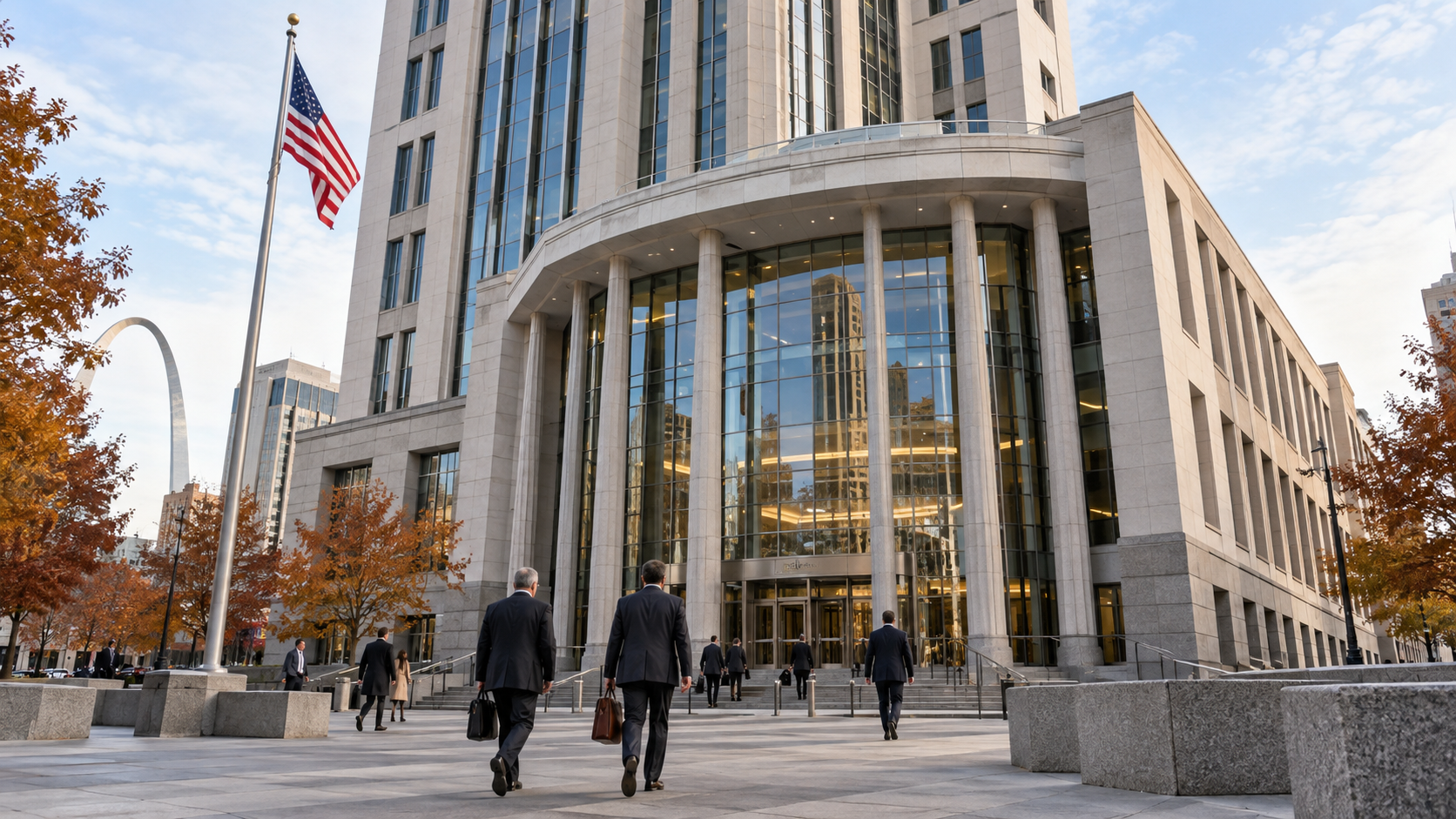
Crypto.com's derivatives exchange and Novig filed suits on Oct. 16 to block the state attorney general from enforcing cease-and-desist letters over sports event contracts, as the letters' 30-day deadlines lapsed. The largest venues have so far stayed out of court.
Missouri's attempt to stop sports betting through prediction markets is now in federal court. The biggest names in the business are not the ones fighting it.
Two operators sued Missouri Attorney General Catherine Hanaway on Friday, Oct. 16, seeking to block enforcement of cease-and-desist letters she sent last month over sports event contracts. North American Derivatives Exchange, the exchange owned by Crypto.com, filed in the U.S. District Court for the Western District of Missouri. Novig, through Ludlow Exchange, filed in the Eastern District. The suits came as the 30-day deadlines in the letters ran out.
Kalshi, Polymarket, Robinhood and Underdog have not sued, according to a review of federal court records in Missouri by The Block as of Sunday.
The arguments
The exchange owned by Crypto.com argues that the letter was misaddressed to a different Crypto.com entity, that federal law preempts the state's action, and that it could not obtain a Missouri license because both of the state's mobile sports-wagering licenses are taken. Novig asked for a preliminary injunction to preserve the status quo while the U.S. Court of Appeals for the Eighth Circuit, which covers Missouri, decides Kalshi's appeal in a case against Iowa officials.
That appeal points to the larger issue. Prediction-market operators argue that their contracts are derivatives regulated by the Commodity Futures Trading Commission, which would preempt state gambling laws. States argue that a contract paying out on the result of a football game is a sports bet, whatever it is called. The question is now before several appeals courts.
Why the big venues are waiting
Staying out of court is a strategy too. Kalshi is already litigating the core question in other circuits, including the Iowa case before the Eighth Circuit. A favorable appellate ruling there would bind federal courts in Missouri without a separate suit. Filing a new case risks an adverse ruling that could be cited elsewhere.
The smaller venues may have had less choice. A company facing a lapsed deadline and possible enforcement may need a court order to keep operating in the state.
The calendar
The fight is moving on several tracks at once. New York's brief in a Second Circuit appeal is due Oct. 30. A response is due Nov. 9 in Supreme Court case No. 26-299. In Illinois, where a federal judge granted Kalshi, Coinbase and the CFTC preliminary injunctions against the state on Oct. 2, the parties must file a proposed injunction order by Oct. 29.
Market implications
One reading is that the industry is managing state challenges efficiently. The largest venues are letting test cases in the appeals courts set the rules, while smaller players seek narrow relief.
A second reading is that the patchwork is widening. Each new state action and each new suit adds legal cost and uncertainty, and a single adverse appellate ruling could close several states at once to sports contracts, which drive much of the industry's volume. Illinois shows the courts can also cut the other way.
For listed companies with prediction-market businesses, such as Robinhood, and for sportsbooks competing with them, the direction of these cases determines the size of the opportunity.
What to watch
Any temporary restraining order in either Missouri case; whether Kalshi or Polymarket join or file separately; the Eighth Circuit's ruling in the Iowa case; the Oct. 29 deadline for a proposed injunction order in Illinois; and the Supreme Court response on Nov. 9. An injunction against Missouri would give every venue there room to operate.