
SATURDAY RECAP
Consumer and producer prices both beat forecasts, and the 10-year still ended Thursday at 5.10%. Kalshi's October hike bet ran from 18 cents to 55, then fell to 13. CoreWeave's default swaps passed 1,000 basis points.
Last week, buyers paid 5.3% for long Treasurys.
This week they kept buying through two hot inflation reports.
September consumer prices rose 3.7% from a year earlier. Producer prices jumped 1.3%, the most since March 2022. The 10-year yield still fell to 5.10% by Thursday's close, from 5.24% a week earlier.
The rate scare faded. The money scare did not.
Chipmakers with record order books kept falling. Korea's Kospi tripped a circuit breaker. CoreWeave's bonds fell below 80 cents, and an AI loan priced at the wide end of talk. The banks beat and got sold.
Through Thursday, the S&P 500 was down 0.9% for the week and the Russell 2000 1.4%. The VIX closed Wednesday at 16.87, up from 15.21 on Monday.
Brent was up only about 0.5% on the week by Friday morning. A drone strike at Oman's Sohar anchorage, missiles aimed at Aramco's Dhahran headquarters and a broken energy truce swung diesel harder than crude.
The market made its call, for now. The Fed is not the tight constraint. The price of money for AI is.
Six themes made the week.
The markets are in a dramatically different place than they were in January.
The Fed is raising rates. Geopolitical instability and energy prices are pushing inflation up.
But S&P 500 earnings growth is still expected to continue — and our analysts have identified 10 stocks well-positioned to perform through Q4 and into year-end.
From tech powerhouses to fuel cell makers to reliable dividend growers — all 10 vetted by MarketBeat's analysts and featured in our just-updated 10 Best Stocks to Own: Fall 2026 report.
Tickers, trends, and growth potential. Yours free.
Two Hot Prints. Long Bonds Bought Both.
September CPI rose 3.7%, against a 3.6% forecast. Core prices rose 0.3% for a second month. Gasoline jumped 9.1% and made up more than half the monthly gain.
The 10-year touched about 5.33% after the report. It still finished lower, at 5.19%.
Thursday's surprise was bigger. Producer prices rose 1.3%, against 0.6% expected. Goods prices jumped 2.6%, the largest rise since the series began in 2009. The 10-year fell 9 basis points to 5.10%, more than 20 basis points below Wednesday's high.
Spending gave bonds cover. Retail sales rose 0.8%, but the control group that feeds GDP rose just 0.1%, against 0.3% expected. The Beige Book found higher oil prices in every district and flat consumer spending in most.
Governor Christopher Waller had made the case on Tuesday. The overnight rate is "not driving the 10-year yield much," he said. He cited research that losing Treasurys' safe-haven premium could cost "50 to 70 basis points."
The long end traded weaker growth, not hotter prices. That is two weeks in a row that buyers showed up near 5.3%.
The October Hike Bet Went 18, 55, 13.
Kalshi's October hike contract started the week near 15 cents. On Tuesday, about $10,000 of buying lifted it to 22 cents.
It traded at 18 cents before CPI. It hit 55 cents at 9:06 a.m. Wednesday, and CME FedWatch closed the day near 37%, from about 22%. By Thursday morning the contract was back at 23 to 24 cents.
The producer-price spike lasted minutes. The contract peaked at 37 cents about three minutes after the report and was below 30 cents six minutes later.
Then Fed Chair Kevin Warsh declined to preview the meeting. "I don't prejudge meetings," he said in Bangkok, Reuters reported. The contract fell from about 29 cents to 13 cents by Friday morning.
Officials gave both sides material. John Williams sees one more hike and none in 2027. Beth Hammack said the Fed "might need to move even more." Michelle Bowman said she feels no "urgency."
The venue is also getting a rival. The SEC approved Cboe options that pay on single company metrics, with 23 companies on the first list.
Two hot prints added spikes and nothing that stuck. The quiet period starts Saturday. The bet now sits for 12 days before the Oct. 28 decision.
Louis Navellier: My #1 AI stock for 2026 (name & ticker inside)

"I want to give you a free stock pick today. This company's sales are up 28% year over year. It holds over 30,000 patents in wireless and video technology. And it just earned an A-rating in my proprietary Stock Grader system. That's the same system that helped me flag Nvidia back in 2005 — before its 82,000% run. In fact, this system has identified the top-performing S&P 500 stock for 12 years running. Over the years, it has cost me $9 million to build and maintain. And right now, it's flashing its highest possible rating on this AI play." — Louis Navellier Click here to see which AI stock my $9 million system is flagging right now, free.
This ad is sent on behalf of InvestorPlace Media at 1125 N. Charles Street, Baltimore, Maryland 21201. If you're not interested in this opportunity, pleaseclick here.
Sold Out Into 2029. Sold Off Anyway.
AI's suppliers reported strong demand all week. The stocks fell through it.
Lumentum said its optical parts are sold out into early 2029. It fell 9.8% Monday. ASML (ASML) said supply for 2027 and 2028 "will not fully meet the demand" of customers. Its U.S. shares fell 3.9%.
TSMC beat the top of its own range with $46.72 billion of revenue. Gross margin slipped to 66.4% from 67.7%. The ADR (TSM) fell 1.8%.
Seoul took the hardest hits. The Kospi fell 3.65% Monday and 5.46% Tuesday. On Thursday it fell 7.6% and tripped a circuit breaker. Friday's 2.05% bounce won back about a quarter of that.
Memory led the losses. Micron (MU) lost 7.4% in two sessions. The Philadelphia chip index fell seven straight days, down about 12.4% over that stretch.
Saxo's Charu Chanana called the Asian selloff a repricing of the cost of capital. Demand is in the price. The market is now pricing how long it lasts and who funds it.
Credit Charged the Builders.
CoreWeave (CRWV) fell 15.5% Wednesday. Its 9.625% notes due 2032 dropped below 80 cents, a yield near 15%.
The selloff reached default swaps overnight. Five-year protection on Oracle (ORCL) rose 26 basis points to a record 288. CoreWeave's passed 1,000.
The stocks bounced Thursday. Oracle rose 3% and CoreWeave 5.9%. Nvidia's Jensen Huang said CoreWeave's "cost of capital is actually decreasing." Nvidia is a CoreWeave shareholder.
The loan market disagreed. JPMorgan and Goldman Sachs backed only $1.3 billion of Volta's $5 billion AI loan. It priced at 6.5 points over the base rate and 95 cents, the top of talk, Bloomberg reported. The yield ended above the roughly 11% first floated.
AirTrunk put off a $1.5 billion listing after weighing a 6% payout to win buyers. The 10-year had closed at 5.21% the day before.
Equity paid up for a renter instead. Modal raised $750 million at a $15.75 billion valuation, more than triple its May mark. It sells computing time on other firms' clouds.
Lenders set these spreads, not the Fed. Lower hike odds trim the base rate. They do not change the terms.
He predicted the 2008 financial crisis…
He predicted Trump’s election in 2016….
He even predicted the rise of COVID-19 writing:
“The chance we don’t have something on the scale of a national pandemic in the next few years is near zero”
That was three months before the first reported case.
If he’s right again, God Bless America…
Because this crisis will be tectonic in scale…and it's going to begin with the bubble popping in AI.
Beats Got Sold. Then Rates Picked the Winners.
Citigroup (C) posted its best third-quarter revenue in a decade and fell 5.6%. Goldman's 4% pop was gone by the close.
JPMorgan (JPM) cut net buybacks to $664 million, from $6.2 billion. "We're tightening up a little bit on credit," Jamie Dimon said. Bank of America (BAC) fell 4.8% after admitting willful money-laundering violations. Morgan Stanley (MS) beat and fell 2.7%.
Wednesday did the broad damage. The S&P 500 lost 1.1%. The Nasdaq and Russell 2000 each fell 1.9%. The Russell closed at 2,729.53, below the 2,761.58 correction line it was near last week.
Thursday flipped the map as yields fell. The homebuilder ETF rose 4%, and the bank and regional-bank ETFs gained 1.7% and 1.8%. The Russell rose 1.4% and closed back above the line. Energy shares fell 1.6% even as U.S. crude rose 3% to $97.97. Vertiv (VRT) lost 3.6%.
Leadership moved toward lower long yields and away from AI spending. That tilt is only as strong as the 10-year rally.
The Costliest Leverage Kept Growing.
About $803 million of positions were wiped out on crypto exchanges in the 24 hours to early Tuesday. Bullish bets were 86% of it. SanDisk perpetual futures lost $19.1 million, more than XRP.
Ether fell to a two-month low Thursday. About $286 million of ether bets were liquidated, against $197 million for bitcoin, in a futures market little more than half the size. U.S. bitcoin funds lost $261.4 million Wednesday.
Broker margin shrank. Interactive Brokers' margin loans ended the quarter at $105.2 billion, about 3% below June, though the quarter's average was higher. Customer cash rose.
The expensive end kept borrowing. Strive priced a 15% preferred at $90, about 16.7% on money partly for bitcoin. The same night, MSCI adopted rules that bar "non-operating companies" from its global indexes. Its earlier test flagged Strategy (MSTR). The final list comes Nov. 11.
Private credit's doors stayed tight. Fitch said redemption requests averaged 9.8% of shares at the funds it tracks. Nine are still above the 5% cap.
Cheaper leverage shrank. The costliest kind kept growing.
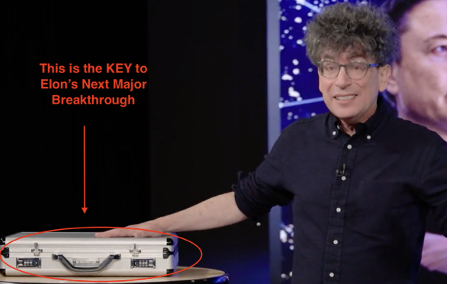
Renowned tech investor James Altucher – the man who called the rise of Nvidia, Apple and SpaceX years in advance – just uncovered Elon Musk’s latest breakthrough idea…
And according to James, it’s going to be even bigger than the SpaceX IPO – creating up to 1.8 million new millionaires over the coming years.
The pieces behind it are inside this briefcase – which he reveals 100% FREE in this video.
Rates Just Reset. Who Feels It First?
On January 2, the 10-year Treasury yielded 4.19%. By September 30, it was 5.29%. Most of that move landed in a single quarter.
The bond market repriced and companies are starting to report it.
Some companies earn from higher rates. Some pay for them. And each one runs on a different clock.
We traced three of them, IBKR, WRB and FIS, in a new FREE Special Report:
Rates Just Reset. Who Feels It First?
Who earns it fast. Who earns it slowly. Who pays. One has already reported. The other two report next, and the report tells you the exact line to check.
We'll text the report straight to your phone.