

The S&P 500 closed at a record. The 10-year eased only to 5.27%. Hormuz traffic back to normal by year-end still trades near 19%.
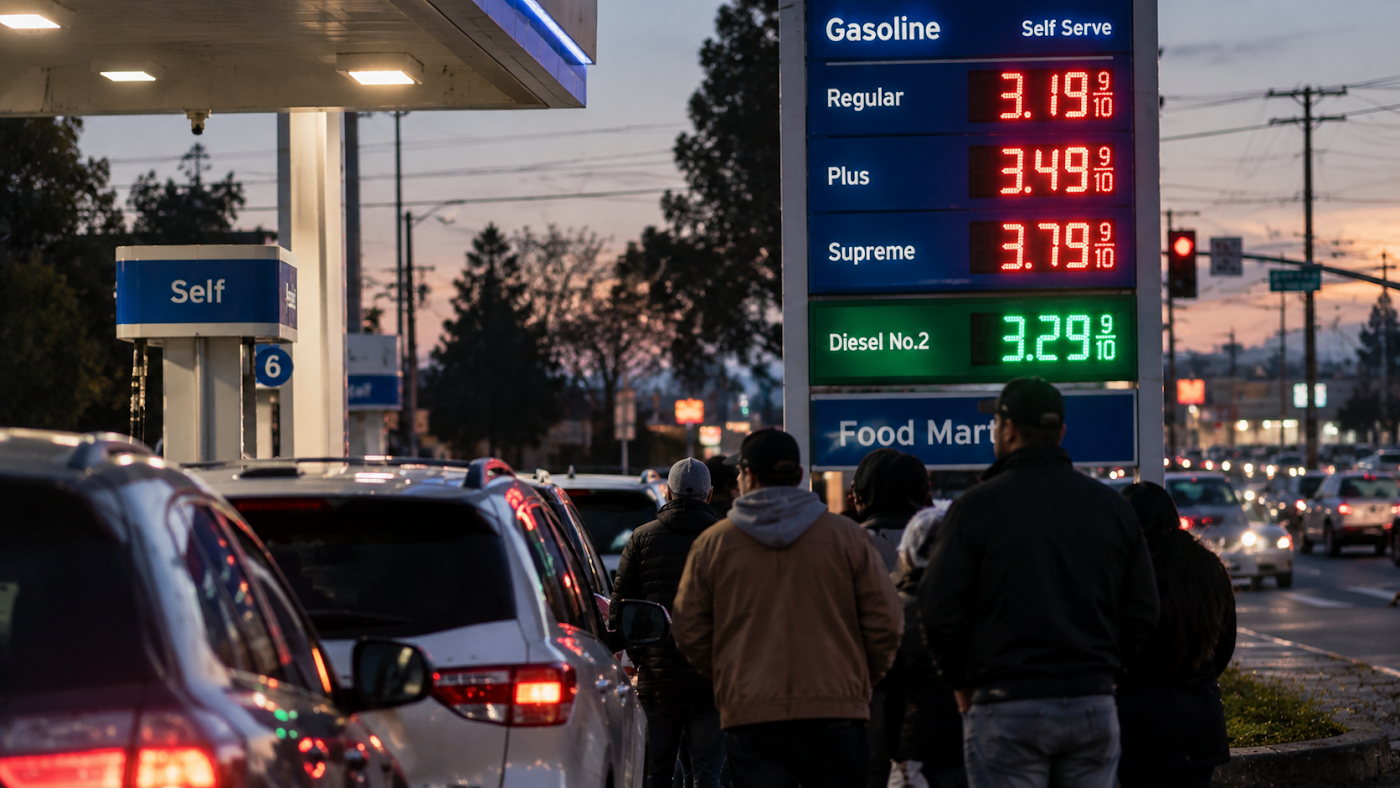
Tuesday gave stocks records and bonds only a small concession.
The S&P 500 rose 0.58% to 7,818.93, its first close above 7,800 and a record. The Nasdaq added 0.45% to a second straight record. The Dow gained 253 points, or 0.49%. The Russell 2000 fell 0.57%, and the VIX slipped to 15.01.
The 10-year yield fell about 4 basis points to 5.27%, a day after its highest close since 2002. The 2-year fell 5 basis points, to 4.79%.
Oil gave little. WTI ended little changed below $90 after trading under $87 in the morning. Gold rose to near $4,190.
The screen set records. The long-rate problem stayed in place.
The markets are in a dramatically different place than they were in January.
The Fed is raising rates. Geopolitical instability and energy prices are pushing inflation up.
But S&P 500 earnings growth is still expected to continue — and our analysts have identified 10 stocks well-positioned to perform through Q4 and into year-end.
From tech powerhouses to fuel cell makers to reliable dividend growers — all 10 vetted by MarketBeat's analysts and featured in our just-updated 10 Best Stocks to Own: Fall 2026 report.
Tickers, trends, and growth potential. Yours free.
The Fed meeting got easier to price. The funding path did not.
Kalshi's October hike contract slid from 21 cents at the open to a 17-cent low at 1:44 p.m. The slide began before any Fed official spoke. A hold now trades near 83%, close to what futures imply.
The funding path gave far less. Polymarket gives a 10-year close at 5.4% or higher before 2027 a 63% chance. It puts 5.5% near 45%, 5.7% near 21% and 6% near 7%.
Debt is the long-horizon version of the same question. In thin Kalshi trading, peak federal debt under the Trump administration above $45 trillion sits near 87%. Above $47.5 trillion sits near 62%, and above $50 trillion near 22%.
Treasury sells $39 billion of 10-year notes Wednesday, when minutes from the Fed's September hike also land.
The Pause Premium
The October decision is easier to price than the debt path. A hold can lift stocks without saying who buys long bonds at these yields. Traders are separating the next rate decision from the cost of funding the next several years. A weak 10-year sale would show that gap widening.
Diesel relief moved from campaign talk into tax policy.
President Trump signed an order Monday evening letting truckers and farmers use red-dyed diesel on highways through year-end. It defers the 24.4-cent federal diesel tax on that fuel through Dec. 31.
The White House says truckers could save more than $100 per fill-up where states match the relief. Diesel hit a record $6.53 a gallon on average late last month.
The order cuts tax, not scarcity. It brings no more diesel through Hormuz.
The CPI book still sees pressure. Kalshi prices a September monthly CPI gain above 0.4% near 92%, above 0.5% at 60%, and above 0.6% near 17%.
The Diesel Pass-Through
Tax relief can lower the bill before it lowers inflation. It helps truckers now, but it does not rebuild inventories. The September CPI, due Oct. 14, predates the order. If later prints stay firm after the tax break, bond traders could treat it as fiscal relief with an inflation floor.
AI CEO Issues Code Red: Prepare for Meltdown
The CEO of this AI company (click here to get the name, 100% free) just issued a CODE RED in an internal memo…
Warning his employees that they’re dealing with a critical situation.
Another company executive even implied they might need a government bailout.
And now Jim Rickards is predicting this company is about to go bust, in a full-blown AI meltdown that could be 10 times bigger than Lehman Brothers.
Oil flows improved, but the route stayed armed.
Vitol's chief said about 14 million barrels a day, mostly crude, left the Middle East in the past 7 to 10 days. Saudi Arabia said its East-West Pipeline flows reached 5.8 million barrels a day, against capacity of 7 million. The G7 agreed last week to release 100 million barrels of diesel and crude from emergency stocks.
The cost story is different. The Joint Maritime Information Center counts nearly 20 ships attacked near Hormuz and Oman in the past month. Supertanker hire from the Gulf to China still tops $1 million a day.
Polymarket's Hormuz contract can stay low while volumes recover because it counts ships, not barrels. It needs a 7-day average of 60 transits a day. The barrels move through bypass pipelines and on a few large tankers with U.S. naval support. Smaller ships stay away. Normal traffic by Dec. 31 trades near 19%.
Polymarket's WTI book shows the range. A $100 print in October sits near 30%, and $95 near 57%. A drop to $85 sits near 71%, and $80 near 40%.
The Route Toll
Supply is moving, but through a war premium. Pipelines and a few protected supertankers can cap crude, while attacks keep freight and diesel tight. That is how oil can sit below $90 and still leave inflation risk in the system. Until smaller ships return, the ship count and the barrel count will keep telling different stories.
The venues fought on two fronts, with state regulators and with their own design.
Ohio ordered 10 platforms, including Polymarket, Coinbase and Robinhood, to stop offering sports contracts at once. They must confirm in writing by Oct. 16. Kalshi, already in court, was left off.
In Illinois, a federal judge on Friday blocked parts of the state's gambling rules against Kalshi and Coinbase for now. She found many of the contracts are likely swaps under federal law.
Kalshi added low-volume tags, Brier accuracy scores and more visible live trade feeds to its midterm election markets. Polymarket began testing Protocol V2, with new markets set to move to it on Nov. 2.
The Infrastructure Turn
Prediction markets are trying to prove they are markets, not only prices. Court wins help the legal frame, and transparency tools help users read thin books. The Oct. 16 responses will show whether brokers fight Ohio or simply block users there.
The Closest Thing to a Virtual AI Monopoly Wall Street Is Ignoring
A little-known company is building what may be the closest thing to a virtual monopoly the AI era has ever seen.
Only 3...
Yet it beat Apple, Amazon, and the S&P 500 combined...
While paying out $146,000 in total dividends on a 1,000-share stake.
Kevin O'Leary calls what it controls a "unicorn."
Right now, it's trading at a rare discount.
>>>Whitney Tilson reveals the name, completely free.<<<
This ad is sent on behalf of Stansberry Research, 1125 N Charles St, Baltimore, MD 21201. If you would like to optout from receiving offers from Stansberry Research please click here.
Tuesday's contracts priced relief in one place and pressure in three others.
The Fed book eased, with a hold near 83%. The rate book kept 5.4% at 63%. The fuel book kept CPI above 0.5% at 60%. The route book held Hormuz normal by year-end near 19%.
The Four-Part Split
Stocks traded the Fed pause. Bonds traded supply and debt. Oil traded flow, and routes traded risk. The record still needs the long end to agree.
Tuesday closed with records on the screen and the same tests underneath.
The 10-year eased, but the rate ladder stayed firm, route risk stayed armed, and the CPI book kept a hot September print in play.
What is priced: a hold near 83%, a 5.4% 10-year close near 63%, CPI above 0.5% at 60% and Hormuz normal near 19%.
What is not priced: diesel relief missing CPI, attacks lifting freight again, or a weak 10-year sale reviving Monday's high.
Stocks got their records. The system kept the tolls.
Capital moves early. Coverage catches up. The gap between the two is worth watching.
3 STOCKS OUR SIGNAL ENGINE SAYS TO WATCH CAREFULLY
Three stocks. Three signals. Two weeks later, the story changed.
On September 2, we published three market questions around KLAC, HPE and PG&E.
Two weeks later, every one of them produced new evidence.
One company delivered record revenue and raised its outlook.
Another saw weakness spread across its entire peer group.
And in the third, a market risk that had only been showing up beneath the surface suddenly became explicit.
Yet none of these stories is finished.
That’s why we built Market Tell.
To track the signals that keep moving after the headline is gone — and show you what investors should be watching next.
We’ve put the latest analysis into a new FREE Special Report:
3 Stocks at a Major Turning Point
See what changed… what still hasn’t been resolved… and the signals we’re watching now.