The AI chip startup raised $620 million in a Series D at a post-money valuation of about $2.9 billion, against about $735 million previously. Korea's National Growth Fund was the largest investor, and the Export-Import Bank of Korea made its first direct startup investment.
The biggest check in FuriosaAI's new funding round came from the South Korean state.
FuriosaAI, a South Korean developer of chips for running AI models, said it raised $620 million (820 billion won) in a Series D round at a post-money valuation of about $2.9 billion. Its previous valuation was about $735 million, which makes the new mark about 3.9 times higher, by our arithmetic.
Who paid
Korea's National Growth Fund was the largest investor, putting in about $280 million (370 billion won), according to Bloomberg. That is about 45% of the round. International investors contributed about $110 million, with Infinitum the largest of them. Other investors named by the company include Cisco Investments, Jericho Capital, NeoFort Holding, QUDA Capital and Worldline Capital. Korea Development Bank, Naver and DSC also invested again. The Export-Import Bank of Korea made its first direct investment in a startup.
What the company sells
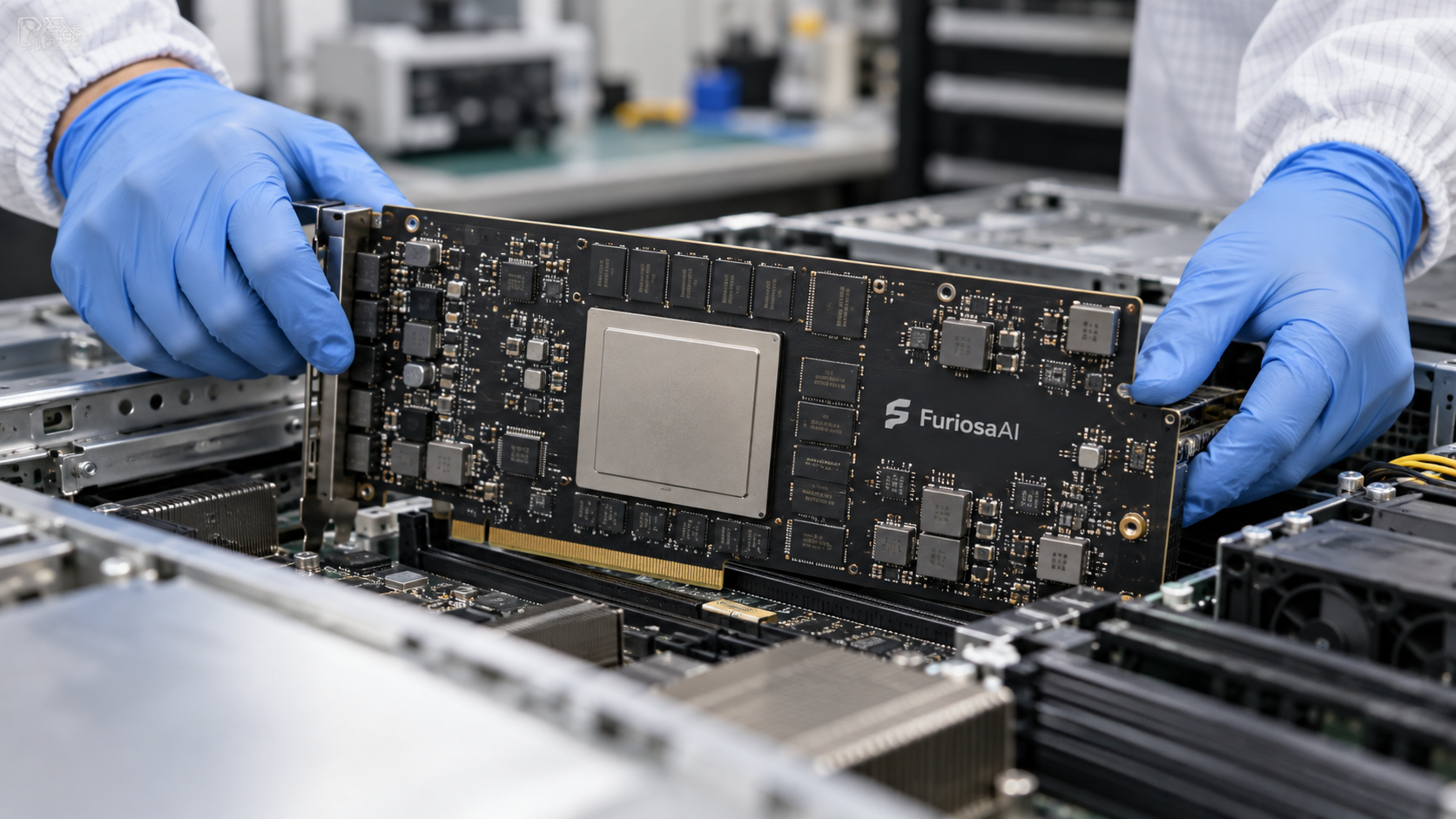
FuriosaAI's RNGD chip, designed for inference, the work of running trained AI models, is in mass production. The company says it expects to ship 20,000 cards this year. It has not disclosed revenue.
State capital and the AI chip race
The round's structure is the story for private-market investors. A government fund supplying close to half the money in a late-stage round turns a venture investment into something closer to industrial policy.
State-anchored rounds can give a company patient capital and access to domestic customers. They can also make the valuation harder to read, because the lead investor's goals may include national strategy as well as financial return.
A real step-up or a policy price?
The bullish reading: a chip in mass production, a credible international investor base including Cisco, and a market for inference chips that is growing as AI moves from training to everyday use.
The cautious reading: the valuation nearly quadrupled with the largest check coming from a state fund, revenue is undisclosed, and competing in AI chips requires heavy, sustained spending that $620 million may not cover.
What to watch
Customer announcements and shipments against the 20,000-card target, any revenue disclosure, follow-on state funding, and whether other Korean AI startups raise on similar terms.