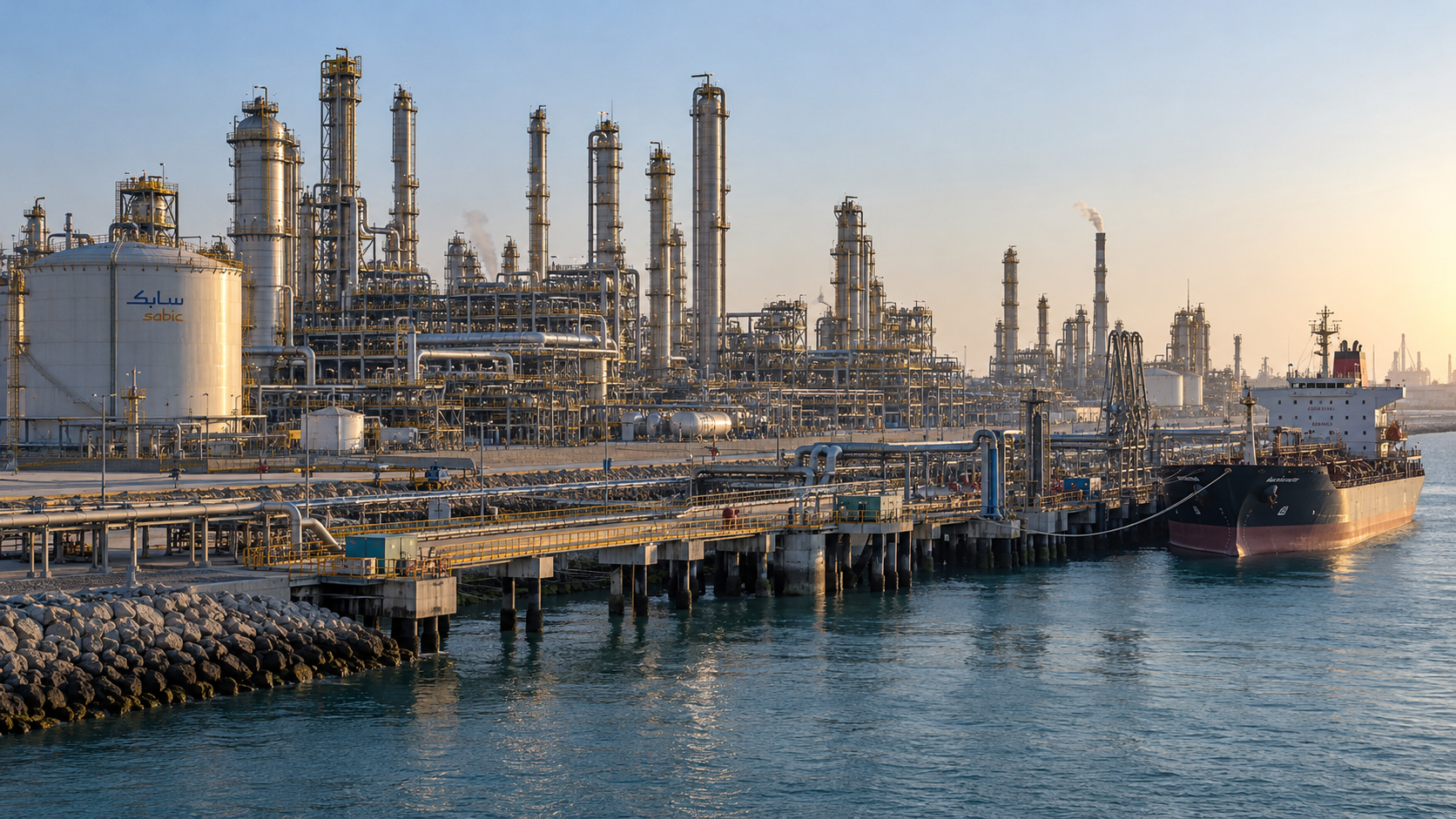
Saudi Arabia's chemicals giant reported adjusted net income of 0.84 billion riyals after a second-quarter loss. Revenue rose 14% from the prior quarter, and adjusted Ebitda rose 40%, even as sales volumes fell.
SABIC is back in profit. The way it got there says more about the region's war than about chemical demand.
SABIC reported third-quarter revenue of 28.17 billion riyals, up 14% from the second quarter. Adjusted Ebitda rose 40% to 4.75 billion riyals. Adjusted net income was 0.84 billion riyals, or 0.28 riyals a share, compared with an adjusted net loss of 0.38 billion riyals in the second quarter.
On a reported basis, net profit attributable to shareholders was about 500 million riyals, against 434 million riyals a year earlier, according to published accounts of the results. Revenue was about 3% lower than a year ago.
Earning more on less
The volumes fell. Lower sales volumes, linked to shipping disruption across the region, were a drag on the quarter, but prices and margins more than made up for them.
The arithmetic shows the shift. Adjusted Ebitda was about 17% of revenue in the third quarter, compared with about 14% in the second, implied by the reported changes. A company selling less product while widening its margins is benefiting from tighter supply and higher prices in the markets it can still reach.
The war's two effects
For a Gulf petrochemicals producer, the conflict cuts both ways. Disruption to shipping limits how much SABIC can deliver. The same disruption tightens global supply and raises prices for the product that does get through.
That balance is fragile. A durable settlement that reopens shipping would restore volumes but could also compress the prices that rescued this quarter. A renewed escalation would do the reverse.
Two readings
One reading is that SABIC has turned the corner. A swing from an adjusted loss to an adjusted profit in a single quarter, with Ebitda up 40%, shows the business can earn through disruption.
The other is that the recovery is borrowed from the war. Lower volumes and year-on-year revenue decline point to a company whose profit depends on prices staying high, which is the part of the picture least within its control.
What to watch
The full regulatory filing for the reported-basis comparison, any guidance on fourth-quarter volumes, the outcome of the Tehran diplomatic talks this week, and shipping conditions through the Gulf.