

Stocks rebounded as the 10-year fell to 4.94%, but October sits 50/49 and overheating trades at .736.
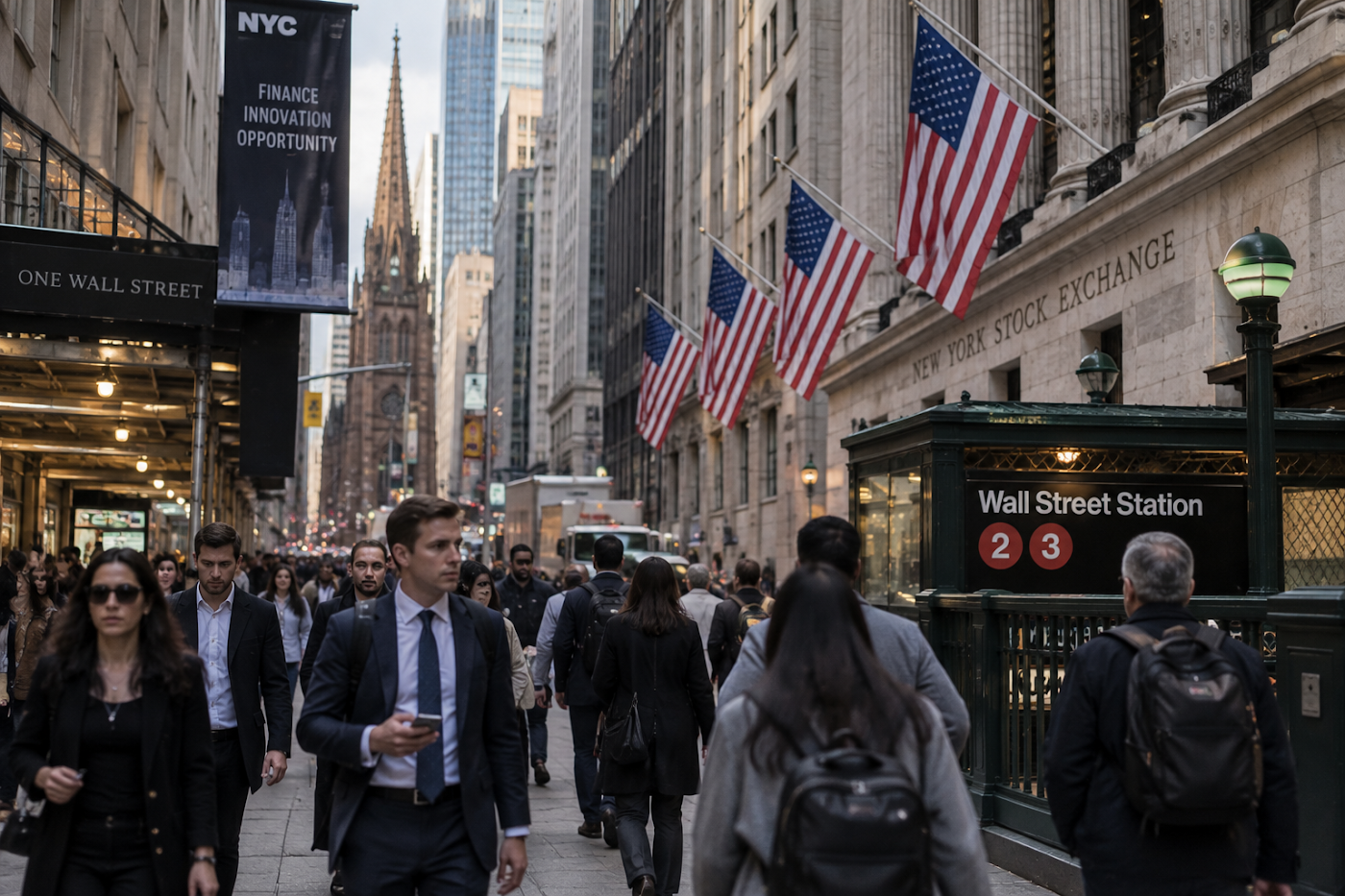
Thursday gave the market relief, not release.
The Dow rose 0.6%. The S&P gained 1.1%. The Nasdaq climbed 1.7%. Technology led the move after the Fed-day selloff.
Nvidia (NVDA) and Amazon (AMZN) rose over 2%. Microsoft (MSFT) gained 1.5%. Qualcomm (QCOM) added 2%. Intel (INTC) jumped 7.7%.
The 10-year yield fell more than 8 basis points to 4.94%. That put it back under five. Oil eased too. WTI settled at $101.91. Brent closed at $104.
Jobless claims came in at 196,000, below expectations. Housing starts fell 2.6%. Building permits dropped 2.7%. About half the S&P 500 still trades below its 200-day moving average.
The screen bounced because yields and oil cooled. Prediction markets did not close the cycle. October now prices a 25 basis point hike at 50% and no change at 49%. December prices a hike at 68%.
This is where prediction markets offer a lens traditional indicators do not.
Wall Street Owns 88% — Yet Most Investors Don’t Know the Name

Institutions already control 88% of this little-known company.
BlackRock owns roughly 32 million shares. Vanguard owns about 48 million.
And management authorized a 40-million-share buyback.
One man believes Wall Street may see something Main Street has missed.
Wednesday closed the September decision. Thursday opened the next one.
The Fed raised rates to 3.75% to 4.00% and said inflation was still too high. The market sold first, then bounced when oil and yields eased. That makes sense for one session.
It does not answer the next meeting.
Polymarket prices October almost even. A 25 basis point hike sits at 50%. No change sits at 49%. December is not even. A 25 basis point hike sits at 68%. No change sits at 31%.
That shape matters because the economy did not give the Fed a weak tape.
Claims stayed low. Retail sales were firm yesterday. Oil is still above $100. The 10-year only moved from above five to just below it.
The Bounce With a Clock
Relief can trade for a day. The next Fed book decides whether it lasts.
Oil gave the rebound its fuel and kept the risk alive.
Saudi Arabia moved more crude through ship-to-ship transfers near Oman’s Sohar port. Transfers in the Gulf of Oman rose to about 2.7 million barrels a day from 1.5 million in August.
That helped offset damage to the East-West pipeline.
It also explained the oil drop.
WTI fell to $101.91. Brent fell to $104. But WTI is still up nearly 2% for the week and more than 18% this month.
The route problem did not clear. Saudi Arabia had halted Yanbu loadings and cancelled some European shipments after drone damage. U.S. officials say the outage could last days. Independent analysts warn it could take weeks or months. Rapidan Energy says exports could fall by about 400,000 barrels a day in September.
The Workaround Price
A transfer route can ease a spike. It cannot remove the war premium.
Is Elon About to Create a New Generation of Millionaires?

When Elon took SpaceX public, an estimated 4,400 employees became millionaires – with top executives, welders, and even cafeteria workers getting rich overnight. Sources close to Elon indicate that he's about to hatch a new opportunity to create generational wealth – and you don't have to work for Elon to see massive potential profits. Click here for the full details.
This ad is sent on behalf of InvestorPlace Media at 1125 N. Charles Street, Baltimore, Maryland 21201. If you're not interested in this opportunity, please click here.
The long end still has the whole economy under review.
The 10-year fell below five. The 30-year stayed near 5.35%. A mortgage rate above 7% still tests housing, and Thursday’s data showed it.
Starts fell 2.6%. Permits fell 2.7%. That is the rate-sensitive side.
The labor side did not crack. Claims at 196,000 keep the tight-labor story alive. That is why the Fed’s global impact matters. Higher U.S. rates support the dollar, raise the local cost of dollar-priced fuel, and make it harder for other central banks to ease.
Kalshi’s economy book reads the same split. Overheating, defined as unemployment below 5% and inflation at least 3.5%, trades at 73.6¢. Soft landing, defined as unemployment below 5% and inflation below 3.5%, trades at 26.8¢. Stagflation is 4.6¢. Slack and disinflation is 2.5¢.
The Economy With Two Speeds
Housing is bending. Labor is not. That keeps the Fed path alive.
Prediction markets are becoming both data and evidence.
BMLL added Kalshi’s historical prediction-market data to its institutional platform. The point is not a headline contract. It is backtesting. Hedge funds and macro desks can now compare Kalshi event data with other market data around Fed decisions, inflation prints and GDP reports.
That makes prediction-market prices part of research workflow.
South Korea showed the other side. Police charged 26 Polymarket users with illegal gambling and referred 18 to prosecutors. The users placed about 17.6 billion won, or $12.7 million, in wagers. The largest account was about 5.7 billion won.
That fight is about classification. Users argue Polymarket looks like a derivatives market because positions can trade before settlement. Police argue the contracts are illegal gambling because users stake assets on events outside their control.
Clarity remains stuck. Polymarket puts the 2026 law at 8%. Kalshi prices any qualifying crypto market-structure bill before January 1, 2028 at 18%.
The Data That Needs a Rule
Institutions want the signal. Regulators still decide what the signal is.
Elon's audacious plan to double U.S. energy,
without building a single new power plant…
People think he's crazy.
But Adam O'Dell says he's already deployed 4,000 units of his solution across 14 states — and used them to power the largest supercomputer on the planet.
With Microsoft, Amazon, Google and Facebook set to spend $680 billion this year on AI data centers that can't get enough power to run, Elon's solution is about to be in extraordinary demand.
Go here now to see how he's going to do it — and get one of Adam's top picks to play it absolutely free.
Thursday answered Wednesday with relief, not closure.
Stocks rose. The 10-year slipped below five. Oil fell but stayed above $100. Claims stayed low. Housing starts and permits fell. Prediction markets kept October open and December tilted toward another hike.
What is priced: October at 50% hike and 49% hold, December at 68% hike, the 5.1% 10-year line at 73%, and overheating at 73.6¢.
What is not priced: the Saudi workaround failing, housing weakening faster than claims, the 10-year holding near five, or prediction-market data becoming institutional while courts and police treat parts of the same market as gambling.
The rebound traded the easier price.
The path kept the harder one.
Capital moves early. Coverage catches up. The gap between the two is worth watching.
THE MARKET WON’T WAIT FOR YOUR INBOX
Get the Alerts That Could Move Your Money
Breaking market news, actionable trade ideas, analyst signals, and major catalysts—sent straight to your phone when they matter.
Join FinancialMarkets.comFREE market alert list today.
SEND ME THE NEXT ALERT → (free)