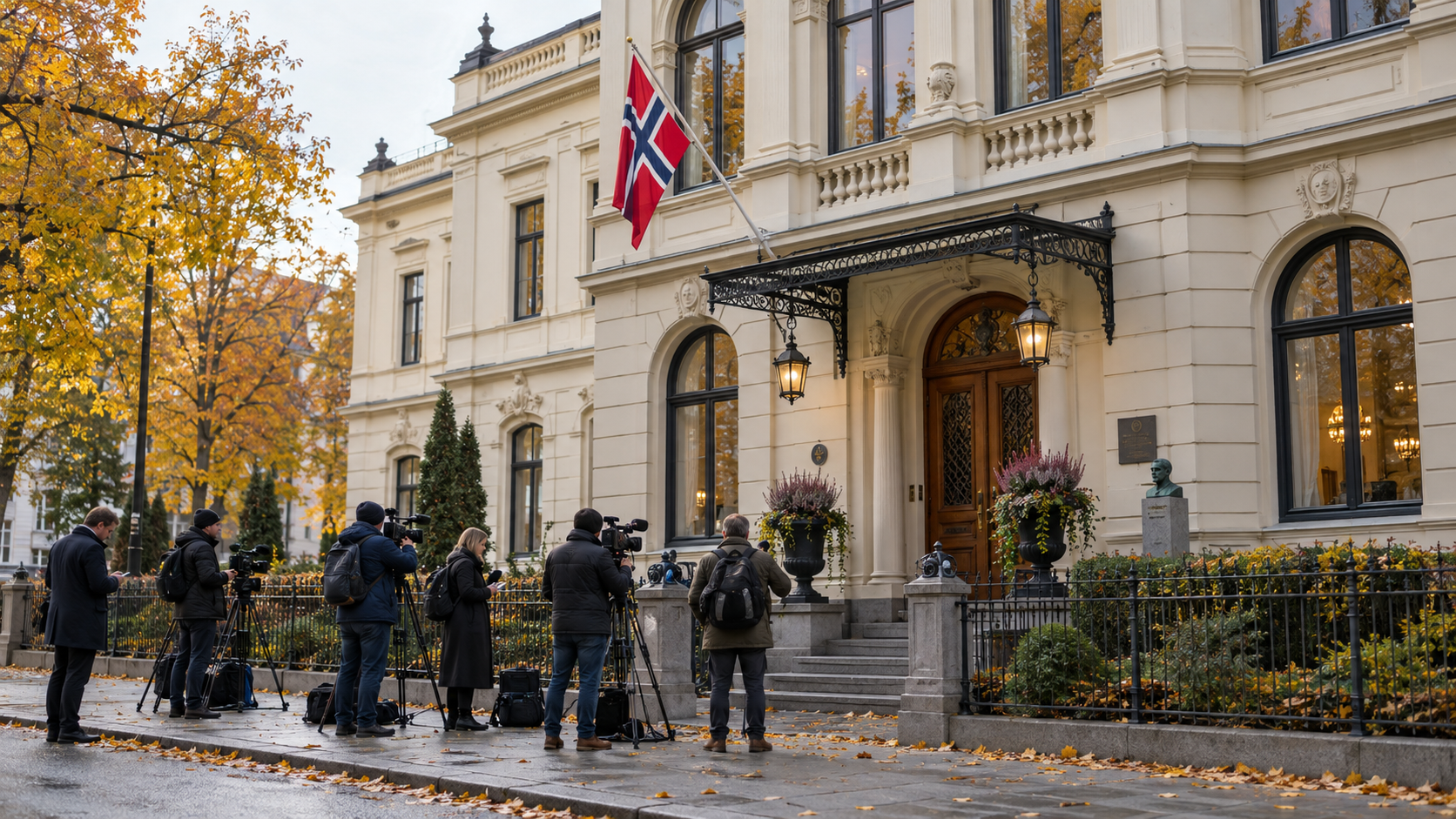
Navi Pillay, the South African jurist and former UN human-rights chief, was honored for work that helped bring war crimes and genocide to trial. The four leading names on Polymarket, priced at a combined 72%, all settled at zero.
Event traders put tens of millions of dollars behind a handful of names for this year's Nobel Peace Prize. The committee picked someone else.
The Norwegian Nobel Committee awarded the 2026 prize on Friday to Navanethem "Navi" Pillay "for her efforts to promote peace and international law." The committee said she "has been instrumental in ensuring that war crimes, crimes against humanity and genocide are prosecuted," and described her as someone "who with exceptional courage and integrity has led the way towards a more comprehensive global legal order."
Pillay grew up under apartheid in Durban, in a family of Indian Tamil descent, and trained as a lawyer. She later served as the United Nations High Commissioner for Human Rights from 2008 to 2014. The prize carries 12 million Swedish kronor, about $1.2 million.
The board before the announcement
More than $30.7 million changed hands on Polymarket's market for the prize. Shortly before the 5 a.m. Eastern announcement, its four highest-priced outcomes were the International Court of Justice at 6.8%, Sudan's Emergency Response Rooms at 17.8%, Yulia Navalnaya at 23.3% and Mykola Kuleba, the Ukrainian children's advocate, at 23.8%. Those four alone carried about 72% of the implied probability. Pillay was not among the front-runners.
Kalshi priced Navalnaya at about 19%, Kuleba near 15% and the Sudanese aid network at 10%.
A week earlier, the Sudanese aid network had led both venues at about 14 to 17 cents.
The overnight swing
The market also moved sharply overnight. On Polymarket, the price on Navalnaya briefly jumped from about 5% to nearly 68% before falling back to the low 20s by the time of the announcement. The contract settled at zero.
Interest in this market had risen after questions about a suspected leak ahead of last year's announcement, when Venezuelan opposition leader María Corina Machado won.
The categories on the board
The International Court of Justice, at 6.8%, was the closest the board came to the legal work the committee cited. The other front-runners were humanitarian groups and campaigners.
The investor debate
One reading is that a secretive committee is close to impossible to forecast, so a deep market can still miss without anything being wrong with how it prices. Prices reflected public speculation because there was nothing else to price.
A second reading is that the overnight swing shows how vulnerable thin information markets are to rumor. A contract moved more than 60 points in a short span on a candidate who did not win, and anyone who bought near the top lost almost everything.
What comes next
Both venues settle on the committee's announcement, so every listed name other than Pillay's resolves to zero. The Nobel Memorial Prize in Economic Sciences is announced on Monday, and its markets will be the next test of whether traders adjust how they price committee decisions.