

WTI closed at $99.32, the 10-year ended above 5%, and October hike odds rose to 55%.
Friday gave the market lower oil and a higher rate.
The Nasdaq rose 0.40%. The S&P gained 0.17%. The Dow slipped 95 points. The VIX fell 4.08% to 14.81.
Oil fell 2.54% to $99.32. Gold gained 0.41%. The euro rose slightly to 1.149.
The problem was the 10-year.
It rose 5.5 basis points to 5.002%. That put the five handle back into the close, even as crude broke below $100.
That is the surface.
Underneath, the relief trade did not loosen the path.
The Dow lost 1.7% for the week. The S&P slipped about 0.1%. The Nasdaq gained 0.7%. The market ended stable, but not clean.
Prediction markets moved the same way. October now prices a 25 basis point hike at 55%. No change sits at 44%. December still prices a hike at 68%.
Oil gave relief. Rates took it back.
There's a Strategy Behind the Iran War.
I know because I've seen the evidence firsthand.
On March 2nd — three days after the first missiles hit — I sat across from two U.S. Congressmen in back-to-back private meetings.
Those meetings pointed me toward something I spent weeks verifying.
The real purpose behind the strikes. The real objective. And the single company at the dead center of all of it.
This isn't random. It's a calculated Two-Front Economic War.
And there's one company positioned right at the heart of it.
See the strategy behind the Iran war — and the company at the center of it
The sooner you understand what's really happening — the better positioned you'll be before
— Dylan Jovine, Founder, Behind the Markets
The market got lower crude and still priced tighter money.
That is the gap.
The morning letter asked whether falling oil would soften the Fed path. By the close, the answer was no.
Warsh’s phrase that the Fed removed “a dose of accommodation” kept the policy door open. If the Fed sees the hike as taking away support, not as moving into deep restraint, then another move remains easier to justify.
Prediction markets followed that logic.
October flipped to a 55% chance of a 25 basis point hike. No change fell to 44%. December stayed firmer, with a 68% chance of a 25 basis point hike and 31% for no change. January is the first pause book, with no change at 57% and a 25 basis point hike at 34%.
The Fed path did not ease with oil.
It extended.
The Rate That Took the Relief
Lower crude helped the screen and changed nothing underneath it. Warsh framed the hike as removing a dose of accommodation rather than entering restraint, which leaves the next move easy to justify and the one after that available. A path described that way does not close on a single barrel print. October flipped to a hike the same session oil broke $100. The Fed did not price the barrel. It priced its own language.
The long end made the same point in price.
The 10-year closed at 5.002% after slipping below five on Thursday. That move matters because it happened while WTI fell under $100.
The bond market did not treat one lower crude close as a full inflation break.
Polymarket still prices two total Fed hikes in 2026 at 59%. Three hikes sit at 23.3%. One hike sits at 17%. Four hikes sit at 1.6%.
That is not a cuts market.
It is a tighter-for-longer market.
The 10-year book stayed live too. A 5.1% touch before 2027 sits at 74%. A 5.2% touch sits at 33%. A 5.5% touch sits at 8%.
The first rung is back in the tape. The next rung still trades.
The Yield That Would Not Leave
Oil broke under $100 and the long end still closed with a five. That pairing says one cheaper session is not an inflation break, because what is holding the ten-year there was never only crude. A book that prices more hikes than cuts is not waiting for relief. It is waiting for evidence. Watch what the ten-year does on the next lower barrel, not on this one.
AI CEO Issues Code Red: Prepare for Meltdown
The CEO of this AI company (click here to get the name, 100% free) just issued a CODE RED in an internal memo…
Warning his employees that they’re dealing with a critical situation.
Another company executive even implied they might need a government bailout.
And now Jim Rickards is predicting this company is about to go bust, in a full-blown AI meltdown that could be 10 times bigger than Lehman Brothers.
The oil market shifted from price relief to repair risk.
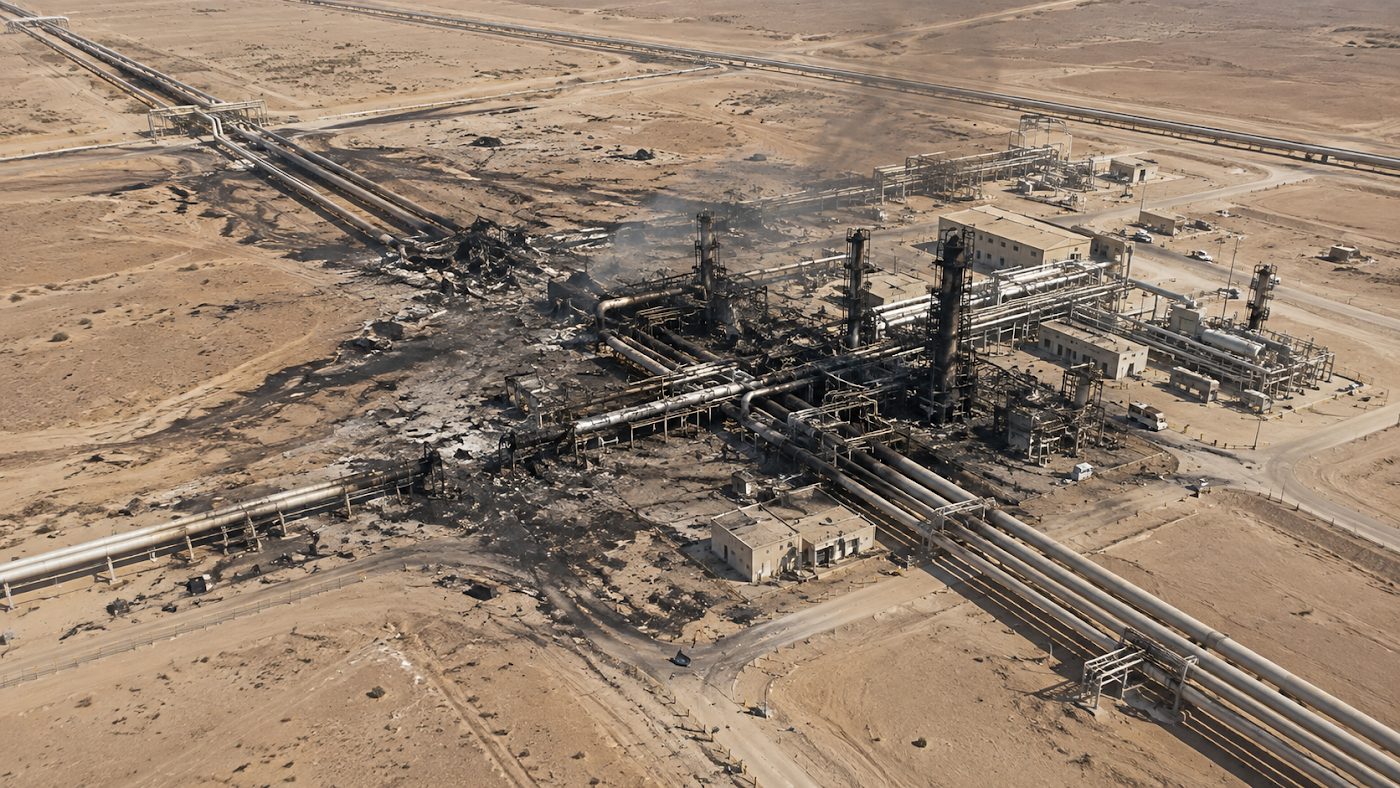
Saudi Arabia found better ways to move crude to Asian buyers through Oman. That helped WTI close at $99.32 and pushed some war premium out of the barrel.
But the East-West pipeline is still the key clock.
Polymarket prices a restart by September 22 at only 12%. A restart by September 30 sits at 54%. A restart by October 31 sits at 84%.
That ladder explains the oil tape.
The market believes the route likely returns this fall. It does not believe the route is back now.
Saudi Arabia and the Houthis also exchanged fresh attacks across the border. Traders are still watching Hormuz, export terminals and the pipeline repair timeline.
So the oil price fell. The route risk stayed.
The Repair Clock
A lower barrel needs a working route, and the route is still broken. The price fell on a workaround rather than on a repair, which means somebody is paying to move those barrels and the arrangement stops the moment the escort does. Delayed risk is cheaper than realized risk. It is not the same as removed risk.
Three contracts priced the same day and only one of them said relief.
The crude contract said the immediate supply scare eased. WTI closed below $100 for the first time since the pipeline went down.
The pipeline contract disagreed. A restart by September 22 sits at 12%. The market does not think the route comes back this month, which means the barrel fell on a workaround rather than on a repair.
The Fed contracts sided with the pipeline. October flipped to a hike at 55%. December held at 68%. Lower crude did not buy a softer path.
So the tape got its relief from the one contract with the shortest memory. Oil reprices every hour. A pipeline reprices when someone welds it. A rate path reprices when the committee meets.
The Relief With the Shortest Clock
A price that moves hourly will always look like the news. The contracts underneath it move on repair schedules and meeting dates, and neither one moved Friday. That is why a $99 barrel closed alongside a 5% ten-year rather than instead of it. When the fastest-moving price is the only one easing, the relief is a timing difference, not a change.
Free Stock Pick: The Company First in Line
for America’s New Super Fuel
The U.S. Army and Department of Energy are about to flip the switch on a revolutionary new fuel — and one obscure defense contractor has a five-year head start on every competitor.
This joint, high-priority initiative — ordered by President Trump — is called Project Janus.
And the first powerplant to run this new fuel is expected to go live before December 18, 2026…
When it does, this company’s name will be everywhere.
Full details — including the name and ticker symbol — are being revealed for free.
Click HERE to get the stock name, ticker, and the full Project Janus story for free.
Friday answered the morning with a mixed tape.
Oil broke below $100. Stocks held up. The VIX fell. But the 10-year closed above 5%, and the Fed path tightened into October.
What is priced: an October hike at 55%, a December hike at 68%, two total 2026 hikes at 59%, a 5.1% 10-year touch at 74%, and a September 30 pipeline restart at 54%.
What is not priced: the pipeline missing September, oil bouncing back above $100, the 10-year staying above five, or the Fed treating one cheaper barrel as the start of a trend.
The screen got crude relief.
The path got rate pressure.
Capital moves early. Coverage catches up. The gap between the two is worth watching.
FREE MARKET ALERTS
Know What’s Moving the Market Before You Miss the Move
Get market-moving news, analyst trade ideas, and key catalysts delivered directly to your phone so you can spot opportunities faster.