

WTI closed at $93. China’s exports rose 25%. Canada’s tariffs went live. September hike odds held near 54%.

New York reopened to the price it could not trade Monday.
The Dow fell 622 points. The S&P lost 0.5%. The Nasdaq slipped 0.2%.
Oil carried the day.
Brent closed at $97.92 after touching $99.46. WTI settled at $93. Oil is now up more than 8% in September.
China’s trade file expanded. Japan’s upgrade missed. Canada’s counter-tariffs went live.
Then the Gulf widened again. Iran-backed Houthis attacked Saudi energy sites. The U.S. and Iran had already traded strikes. The Strait of Hormuz still has no clean end date.
The tape did not sell because growth vanished. It sold because the cost of growth rose again.
There's a Strategy Behind the Iran War.
I know because I've seen the evidence firsthand.
On March 2nd — three days after the first missiles hit — I sat across from two U.S. Congressmen in back-to-back private meetings.
Those meetings pointed me toward something I spent weeks verifying.
The real purpose behind the strikes. The real objective. And the single company at the dead center of all of it.
This isn't random. It's a calculated Two-Front Economic War.
And there's one company positioned right at the heart of it.
See the strategy behind the Iran war — and the company at the center of it
The sooner you understand what's really happening — the better positioned you'll be before
— Dylan Jovine, Founder, Behind the Markets
China’s trade file did not show a weak world.
Exports rose 25% in August from a year earlier. Imports rose faster, up 28.2%. The import number still missed the 30% forecast.
That is the split.
Activity grew. Expectations were still higher.
The surplus widened to $119.09 billion from $112.50 billion in July. Cars, semiconductors and high-tech goods led exports.
The receiving end is the question.
Kalshi’s book on the New York and New Jersey port gives low odds to a strong volume year. The port handled 8.89 million TEUs last year. Odds of topping 9.1 million this year sit near 10%.
That level is only a little more than 2% above last year.
China’s sellers accelerated. The U.S. gateway is not priced for much more.
The Buyer Test
A customs file says goods moved. A port book asks whether buyers take many more of them.
Japan’s upgrade had the same shape.
Second-quarter growth was revised to 1.4% annualized from 1.1%. Economists wanted 1.6%.
So the headline improved and still missed.
Capital spending fell 0.9%, but less than first reported. External demand added half a point. Domestic demand subtracted a tenth. Private consumption was flat.
That is not a household-led quarter.
The Bank of Japan meets September 17 and 18. Its policy rate sits at 1%, a 31-year high. Prediction markets put a 25 basis point hike at 97.7%.
That is close to priced.
The risk is not whether Japan tightens. The risk is what it tightens into.
A quarter carried by trade can support a hike. A flat consumer makes it harder to repeat.
The Upgrade That Did Not Spread
Japan’s growth was revised higher. The household still did not carry it.
Hidden in Tesla's Filing: A $12 Billion "Super Startup"
Pull up Tesla's most recent SEC filing. Page 5.
And you'll see a single line showing $12 billion in revenue from a brand-new "super startup" Elon Musk has been quietly incubating inside Tesla.
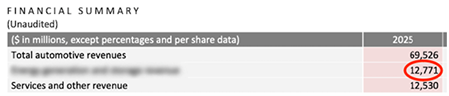
This new "super startup" has nothing to do with cars or robots or space or AI…
But it sits at the center of what Blackstone calls "a $23 trillion investment opportunity."
And on Oct 21st, Elon is expected to pull back the curtain and reveal exactly what he's building.
But Adam O'Dell already knows… and he reveals it all in this urgent video.
Canada turned the tariff file into a live cost.
Ottawa’s counter-tariffs took effect at 12:01 a.m. They cover more than 700 American product lines and about $20 billion of U.S. goods.
The duties answer Washington’s earlier 50% tariff move. The list reaches real firms and real supply chains.
That matters because Friday’s CPI now carries more weight.
The Fed book still leans hike. September shows a 25 basis point increase at 54%. No change sits at 45%. October no-change is 68%. December no-change is 49%, with a hike at 44%.
Oil makes the hold case harder.
Brent near $98 feeds gasoline, freight and inflation expectations. Canada’s tariff schedule feeds margins. Neither waits for CPI to confirm it.
Semiconductors kept the Nasdaq from falling harder. SMH rose 1.5%. Intel (INTC) jumped more than 9%. Advanced Micro Devices (AMD) gained more than 6%. Broadcom (AVGO) rose 3%.
The split stayed clear.
AI could catch a bid. The macro tape could not.
The Cost Schedule
A bid can fade. A tariff stays written. A barrel reprices every hour.
Prediction markets are becoming distribution and macro plumbing at once.
Robinhood (HOOD) struck a multiyear deal with Crypto.com to add yes-or-no event contracts from OG.com to its brokerage app. Robinhood will also take minority stakes in Crypto.com and the prediction-market unit.
That puts event contracts inside a retail brokerage, not just on a standalone site.
Kalshi showed the other side of the shift. It said monthly commodities trading volume has topped $400 million. That is about four times where its crypto volume was at the same stage, seven months after launch.
Oil, gas and metals are becoming tradable event risk.
The timing is not random.
Brent is near $100. Copper cable tariff odds sit at 35% by the end of 2026 and 43% by the end of 2027. The U.S. blockade end by September 30 sits at 14%. October 31 is 33%. December 31 is 55%.
Sports keeps pulling attention too. LeBron James teased a Polymarket partnership, while platforms push further into football and league-adjacent markets.
The same problem follows.
Sports brings users. Commodities bring the cleaner risk-transfer case.
The Product Split
Prediction markets want the audience of sports and the legitimacy of macro.
Landmark Executive Order 14241 Unleashes
TRUMP’S NEW DOLLAR
Republican or Democrat – whether you support or oppose Trump’s New Dollar – every American could soon be forced to use it
Discover three critical moves to help you prepare, before it’s too late
Tuesday joined the global files to the U.S. inflation week.
China said trade grew. Japan said trade carried growth. Canada made trade more expensive. Oil made energy more expensive.
That is the setup before PPI and CPI.
The data the Fed needs comes later. The prices the market trades came first.
China’s surplus widened to $119.09 billion. Japan’s domestic demand was negative. Canada’s duty is now live. Brent nearly touched $100.
The market is not waiting for one report. It is watching whether every input points the same way.
AI still offers growth. Prediction markets still offer new volume. But a Fed week with oil above $93 WTI and Brent near $98 has less room for patience.
That is why September remains live.
The Imported Inflation Week
The Fed is waiting for CPI. The market is already pricing the inputs.
Tuesday answered the morning with the barrel.
China’s exports rose 25%. Imports rose 28.2% and still missed. Japan’s quarter was revised higher to 1.4% and still missed. Canada’s tariff went live. Oil pushed toward $100.
What is priced: a Bank of Japan hike, a September Fed hike near 54%, low odds of a quick Iran blockade end, and prediction markets moving into retail brokerage and commodities.
What is not priced: Brent breaking $100, tariffs feeding margins before CPI, Japan’s household failing to take the load, or U.S. ports staying slow while China’s trade accelerates.
The flows grew.
The costs arrived.
Capital moves early. Coverage catches up. The gap between the two is worth watching.
FREE MARKET ALERTS
Know What’s Moving the Market Before You Miss the Move
Get market-moving news, analyst trade ideas, and key catalysts delivered directly to your phone so you can spot opportunities faster.