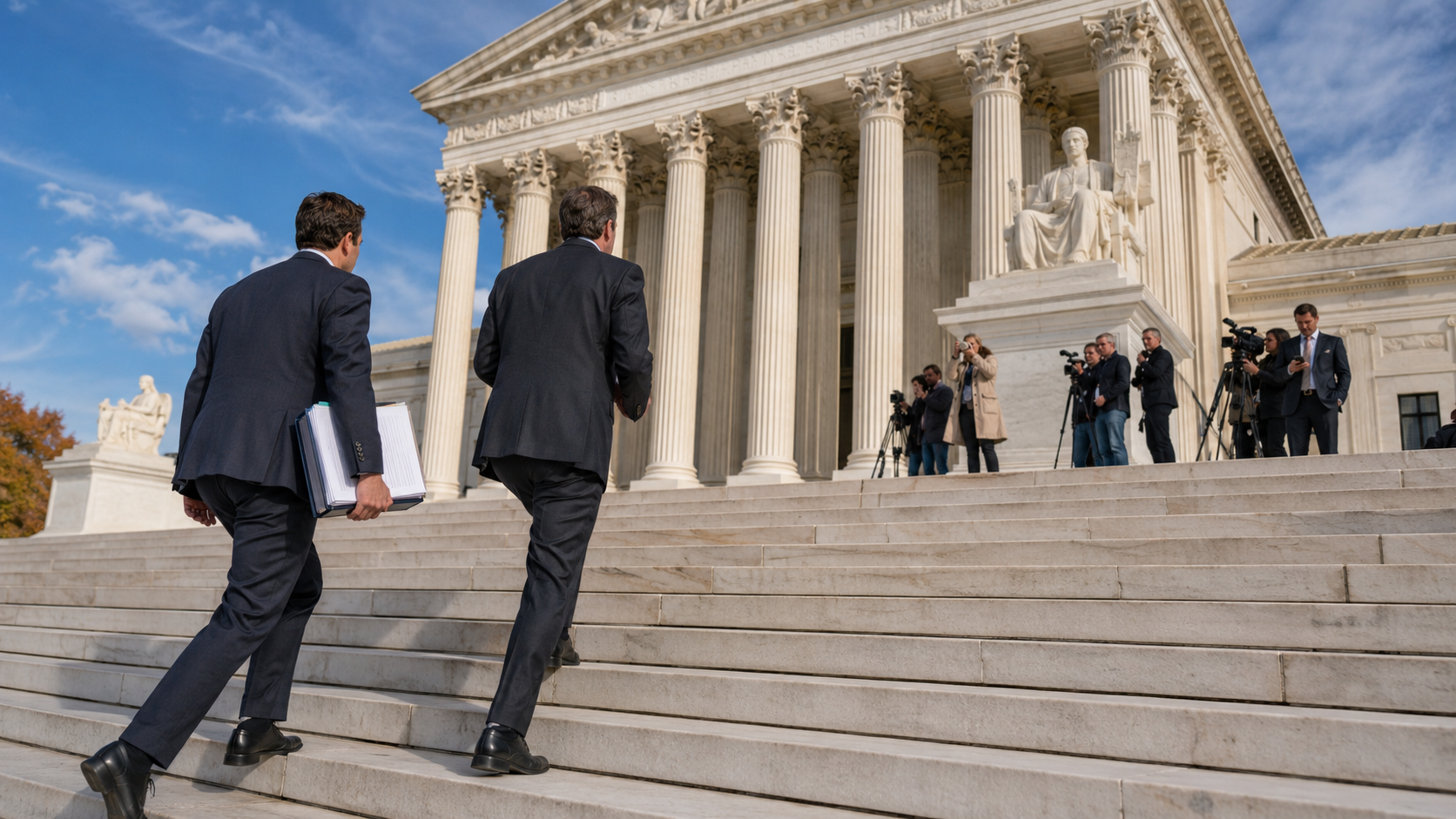
The state's petition follows a circuit split that has been building since April, and a Polymarket contract on whether the justices take the case nearly doubled in the two days before the filing.
New Jersey filed a petition for a writ of certiorari with the U.S. Supreme Court, asking the justices to resolve a split between two federal appeals courts over whether prediction-market contracts like Kalshi's sports-event products fall under federal commodities law or state gambling law. New Jersey Attorney General Jennifer Davenport said in a statement: "We're calling on the Supreme Court to resolve this issue and recognize that Congress did not silently make the sports-betting industry immune from state law." The state's petition argues that Dodd-Frank "is not nearly clear enough to transfer authority over a multi-billion-dollar sportsgaming industry to a federal regulatory agency with no gambling expertise."
The petition follows a genuine circuit split. The Third Circuit ruled in April that the Commodity Exchange Act, as amended by Dodd-Frank, gives the Commodity Futures Trading Commission exclusive jurisdiction over Kalshi's sports-event contracts, preempting state gaming law. The Ninth Circuit ruled the opposite way on August 31, finding the same federal law likely does not preempt Nevada's gaming regulations as applied to the same kind of contracts.
A Polymarket contract tracking the odds that the Supreme Court agrees to hear the case moved from 29% to 52% immediately after the Ninth Circuit's ruling, on volume of nearly $1 million. A narrower contract on whether the Court accepts the case before October 31 is priced separately, at 6%.
Kalshi, valued at approximately $22 billion, has built its national operating model on the premise that a single federal regulator, not a patchwork of state gambling laws, governs its products. A circuit split serious enough to draw a state-filed Supreme Court petition is one of the more reliable signals that the justices will eventually be asked to settle the underlying question, and a certiorari decision is expected by the fall.