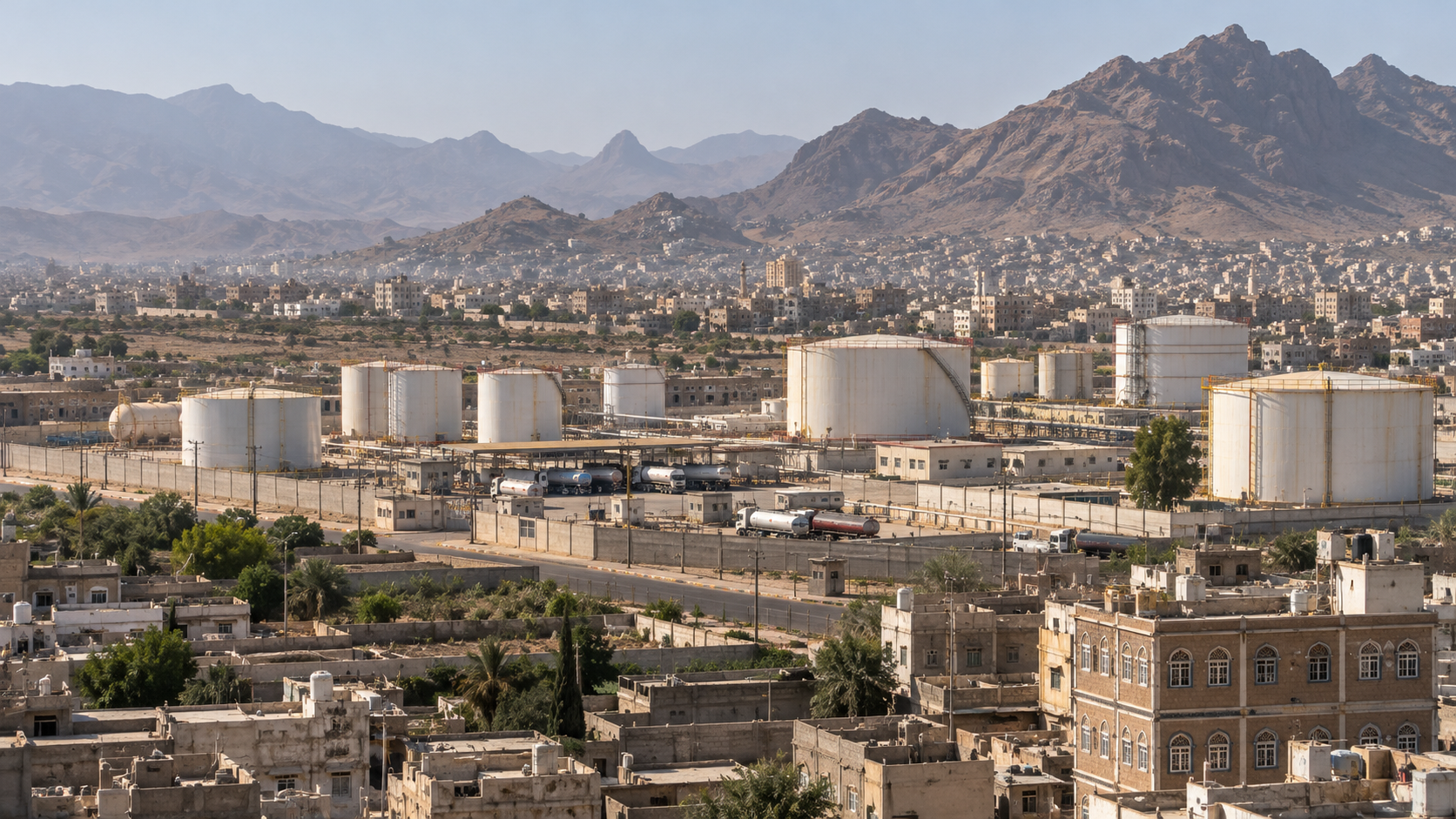
Riyadh's coalition told residents near a Sanaa fuel depot to clear out, and Houthi outlets reported an airstrike hours later. Polymarket's end-of-October line rose 4 cents as President Trump floated asking Turkey's leader to intervene.
The fighting around Yemen edged toward the capital on Tuesday. Traders added to bets that the U.S. will not join it directly.
Early Tuesday Maj. Gen. Turki al-Maliki, who speaks for the Saudi-led coalition, warned civilians away from the state fuel company's al-Sabaha depot on Sanaa's western edge "for their own safety," saying an "operation" was coming. The capital had not received such a warning since the war intensified in July. Houthi-run media later said a Saudi strike hit the oil company's site. By early afternoon Riyadh had not acknowledged carrying it out.
The Houthis answered with threats. Their military spokesman said any strike on Sanaa would bring a "harsh and painful response" in Riyadh, and the group told people to evacuate Aramco's headquarters in Dhahran, the Riyadh refinery and King Khalid International Airport. Saudi defenses downed three drones north of the capital and two missiles fired at Khamis Mushait, the coalition said.
The contract
Polymarket's "U.S. x Yemen ceasefire" line for Oct. 31 rose from 81.5 cents at 5 a.m. Eastern to 85.5 cents by 8 a.m., peaked at 86.5 cents at 9 a.m. and was at 85.5 cents at 1 p.m. The Oct. 15 line rose from 97.55 cents to 99.3 cents.
Under the rules, only an American air or surface-to-surface attack on Yemeni soil settles the contract as No. Coalition raids of any size leave it untouched. At 85.5 cents, the market implies about a 14.5% chance of an American strike before November, compared with 18.5% at 5 a.m.
The 8 a.m. move followed the evacuation warning and preceded the reported strike. Nothing in the trading record explains the buying.
What Washington said
President Trump spoke about the Houthis shortly after noon Eastern. He said they are "behaving very badly," and charged that they were trying to push oil higher before the U.S. midterms. He said he "might" ask Turkish President Recep Tayyip Erdogan to intervene: "President Erdogan, I think, would do as I ask." He announced no U.S. strike decision.
Separately, Turkey and Pakistan, partners with Saudi Arabia in a three-way defense pact, are weighing military support for the kingdom.
Regional spillover
Air India suspended flights to Riyadh, Dammam and Jeddah through Oct. 17, and Etihad suspended Riyadh service through Oct. 19. Brent crude was trading near $105.76, down slightly on the day.
Market implications
One reading is that the U.S. is outsourcing the response. Saudi Arabia's coalition is acting on its own, Mr. Trump is pointing to Turkey, and regional partners are weighing support, all of which leaves less pressure on Washington to act directly.
A second reading points the other way. A reported strike has now reached the Yemeni capital, Aramco's headquarters and Riyadh's refinery are on the Houthis' published target list, and damage to Saudi energy assets could pull Washington in. The contract is thinly traded, so small orders can swing it.
What to watch
A U.S. decision on Yemen, any Houthi strike on Saudi energy sites, coalition confirmation of the Sanaa strike and the Oct. 15 contract's settlement on Thursday are the next catalysts.