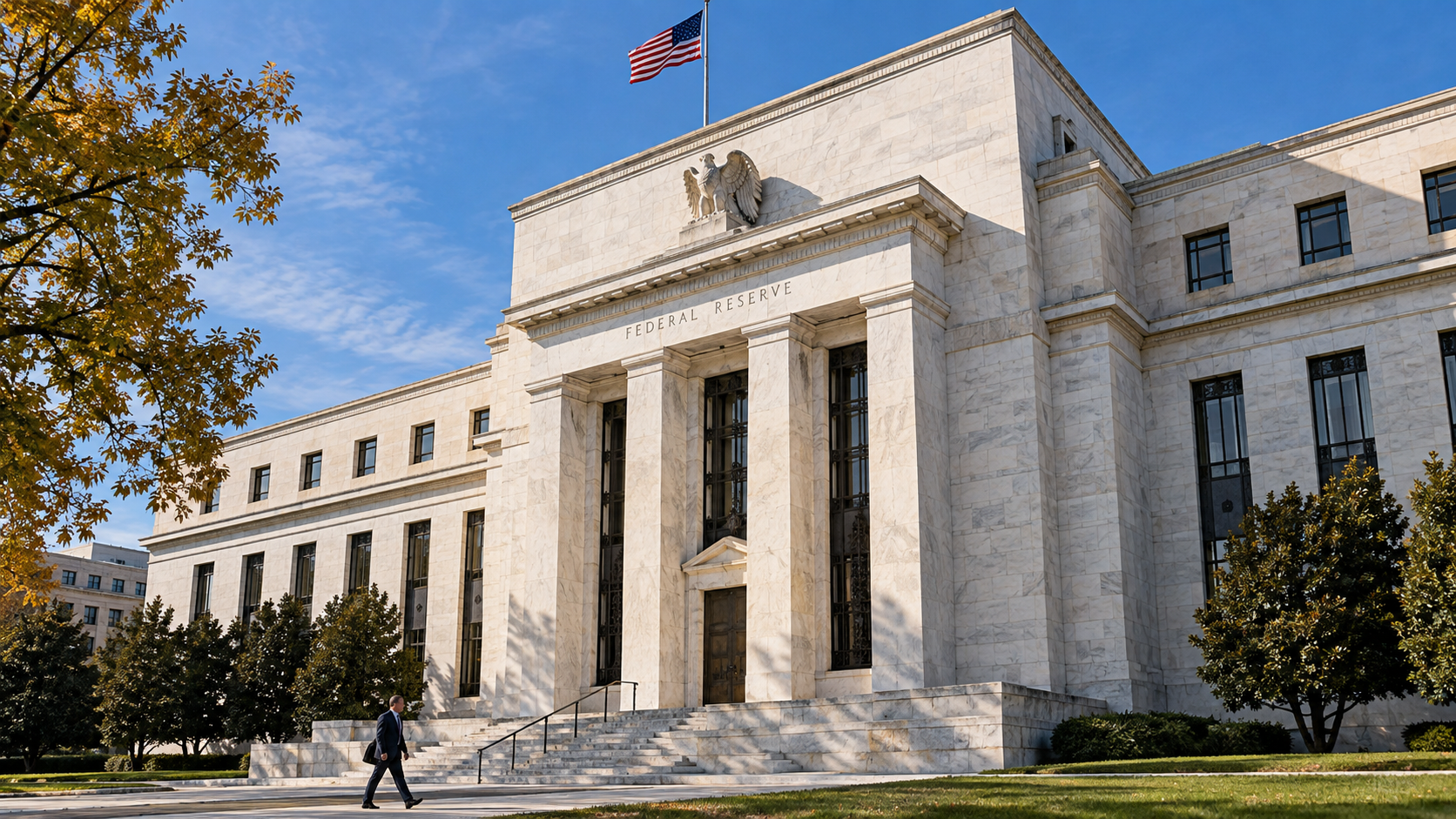
After a hot business survey and a hawkish Fed governor, futures traders lifted the odds of an October rate increase to about 70%. Polymarket's October contract held at 54%, exactly where it stood before the news.
On Tuesday, the fed funds futures market and Polymarket agreed almost exactly on the Federal Reserve's next move. Both put the odds of a quarter-point hike at the Oct. 27-28 meeting in the mid-50s. By Wednesday afternoon, they no longer agreed.
Two pieces of news arrived Wednesday morning. S&P Global's flash survey showed U.S. business activity growing at its fastest pace in more than five years, with input costs rising at the steepest rate in four years. Twenty minutes later, Fed Governor Michael Barr said "further policy adjustments are likely to be needed to ensure inflation comes down to target in a timely fashion."
Futures traders reacted quickly. The probability of an October hike implied by fed funds futures climbed to about 70%, from about 55% a day earlier. A month ago, it stood below 10%.
Polymarket's "Fed Decision in October" contract did not follow. As of early Wednesday afternoon, it priced a 54% chance of a quarter-point increase and a 46% chance of no change, the same levels it showed before the survey and Barr's remarks. The contract has drawn more than $10.3 million in total trading volume and resolves on Oct. 29.
The gap is about 16 percentage points on the same question, and it opened in a single morning.
The two markets are built differently. Fed funds futures are a deep, institutional market used by banks, asset managers and hedge funds to hedge real interest-rate exposure, and prices adjust quickly to economic data. Polymarket draws a different mix of participants who trade outcomes directly, with far less capital committed to any single contract.
That structure offers one reading of Wednesday. In it, the futures market simply processed the news faster, and Polymarket's price is stale rather than a dissenting view. A second reading is that Polymarket traders see the data and the speech as less decisive than the futures market does.
The two readings make different predictions about what happens next. If the first is right, Polymarket's contract should drift toward the futures price over the coming days as traders catch up. If it stays near 54% while futures hold near 70%, the gap reflects a genuine difference of opinion between two groups of traders.
Thursday offers new inputs for both markets. The presidents of the New York, Cleveland and Philadelphia Fed banks are scheduled to speak, and weekly jobless claims will show whether the labor market is as strong as the business survey suggested. Whichever market moves toward the other first will show which one was out of position on Wednesday.