
TQ Evening Briefing
Fair Isaac fell 26.5% after Fannie and Freddie put VantageScore on FICO's pricing grid. OpenAI launched dots to rival Meta's Muse. Conference Board confidence hit its lowest since 2014, and Carnival jumped 13% on record 2027 bookings.
Oil Fell Below $90. The 30-Year Touched a 24-Year High Anyway.
The Dow fell 0.3%. The S&P 500 slipped 0.2%, and the Nasdaq lost 0.1%.
The 30-year yield touched 5.613%, its highest since June 2002. The 10-year reached 5.289%, just short of its 2007 peak of 5.303%. They closed at 5.59% and 5.26%.
The front end went the other way. New York Fed President John Williams said there is "no need for urgency" on another hike. The 2-year fell 3 basis points to 4.89%.
The venues split on October. Fed funds futures cut the odds of a hike to just over 50%, per CME FedWatch. Kalshi traders cut theirs only to 64% from 68%.
WTI fell more than 3.5%, closing near $89.38. About 62% of prewar oil traffic is crossing Hormuz, and routes around the strait lift the total near 80%.
Cheaper oil did nothing for the long end.
TQ Trade Implication
The curve took Williams at his word and ignored the barrel. The gap between 2- and 30-year yields widened to about 70 basis points. Paramount Skydance (PSKY) is expected to price a $32 billion high-grade bond sale Wednesday, the same day as August PCE. If core PCE runs hot, the 2-year loses its Williams cushion, and 5.303% on the 10-year is the next line.
In January, Gold Touched Nearly $5,600 an Ounce. Today It's Around $4,100.
So the story's over, right?
Then explain this.
The metal is still leaving the vaults. Physical deliveries still running at levels the exchange rarely processed before. Central banks still buying. Dealers charging 30-40% premiums over paper price for real coins.
When price falls but physical demand doesn't — only one of those two is telling the truth.
The paper market sets the price. The physical market sets the deadline.
Anyone who wished they'd bought miners before January's run just got handed the entry back.
One company I've been tracking controls an 88 million ounce deposit — trading near $4 billion. About 1% of the value of its metal in the ground.
That gap is the whole opportunity.
Fair Isaac Fell 26.5%. Washington Took Away the Discount on Its Rival.
Fair Isaac (FICO) closed down 26.5%. It was the second policy hit this month, and a different kind.
On Sept. 4, the Federal Housing Finance Agency cleared lenders to use VantageScore 4.0 on Fannie Mae and Freddie Mac loans. FICO fell nearly 17%. The open question was whether lenders would bother.
That approval came with a catch. VantageScore scores carried a 20-point downward adjustment in pricing. After Monday's close, FHFA Director Bill Pulte posted on X that both scores will share one pricing grid. The 20-point adjustment is gone.
The same day, Rocket Mortgage said VantageScore 4.0 will become its preferred model for all eligible loans. TransUnion (TRU) said it will hold VantageScore 4.0 mortgage pricing at 99 cents through 2028.
The models do not score borrowers alike. VantageScore 4.0 can produce higher scores than Classic FICO for the same borrowers, HousingWire reported. On one grid, that can mean a cheaper loan.
VantageScore's owners, Equifax (EFX), Experian and TransUnion, did not rally. Equifax was down more than 3.5% and TransUnion about 4.5% by early afternoon. That reads as a price war, not a handoff of FICO's margin.
FICO is down about 63% this year and roughly 34% since the Sept. 4 close.
TQ Edge Setup
The Sept. 4 approval let lenders switch. The new grid gave them a pricing reason to, and Rocket said it will. If other large lenders follow, FICO loses mortgage volume regardless of what it charges per score. If they stay with Classic FICO at equal pricing, Tuesday's drop priced risk faster than revenue.
Confidence Hit a 12-Year Low. Carnival's 2027 Book Hit a Record.
The Conference Board's consumer confidence index fell 6.7 points to 81.9 in September. Economists expected 89. It was the lowest reading since 2014.
More consumers called their personal finances bad than good, a first in the four years the Conference Board has asked. Average expected inflation for the next year rose to 6.1%.
Carnival (CCL) answered with money. Customer deposits hit a third-quarter record of $7.6 billion. Booked occupancy and pricing for 2027 are both at records. Shares rose about 13%. Royal Caribbean (RCL) rose about 7.5% and Norwegian (NCLH) about 3.4%.
The quarter was not clean. Fuel and currency cost $131 million, holding adjusted earnings flat at $1.43 a share. The fourth-quarter outlook of about 20 cents came in below the 24-cent consensus. The stock is still down almost a fifth for 2026.
Chief Executive Josh Weinstein said "vacations are sacrosanct" and consumers take them "in good times and in bad."
Restaurants are telling a different story. McDonald's (MCD) said U.S. traffic fell in its second quarter. A 314-unit Wendy's (WEN) franchisee filed for Chapter 11 this month. Darden (DRI) held its outlook last week and still fell 3% that day.
TQ Execution Bias
Restaurant traffic and cruise bookings look like the same consumer measured at two income levels. The University of Michigan's August survey found sentiment falling hardest among lower- and middle-income households and those without stocks. That fits a Conference Board reading at a 12-year low beside a cruise line booked into 2027 at record prices. If the split is income, prebooked travel holds while everyday discretionary traffic keeps sliding. Friday's payrolls, forecast near 84,000, will show whether the weakness at the bottom reaches hiring.
The REAL Reason Trump Is Invading Iran
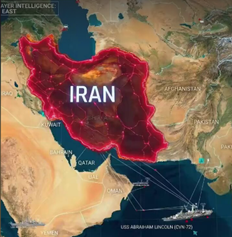
For a moment…
Forget about Trump’s ties to Israel.
Forget about reports of Iran’s nuclear program.
Because my research has led me to believe we’re risking World War 3 with Iran for a completely different reason.
Click here to find out what it is.
If you have even a single dollar invested in the U.S. stock market, this is going to directly impact you.
OpenAI Launched Dots to Take On Muse. It Picked a Different Way to Get Paid.
OpenAI unveiled dots, always-on agents that run on their own cloud computer and work toward a user's goals around the clock.
Users can message their dot in Slack, which Salesforce (CRM) owns, and in Microsoft (MSFT) Teams.
Dots are limited to Pro and Business Premium plans, and the enterprise beta is off by default. They launched alongside a new $500 top tier.
Meta Platforms (META) is running Muse the other way. Mark Zuckerberg said Meta will give away large amounts of usage and take a small cut when Muse completes purchases.
TQ Edge Setup
The agent race is now a test of two revenue models. Meta is paid when users buy. OpenAI is paid up front by people and companies who want work done unattended. If enterprise admins switch the beta on at scale, OpenAI's case shows up in business seats first.
- Oura pulled its IPO hours before pricing. The smart-ring maker postponed a $2.1 billion listing "despite strong demand, due to uncertainty in the IPO market." Of the 50 million shares, 36.5 million were coming from existing holders. The $13.5 billion midpoint was about 23% above last year's $11 billion private round.
Buffett, Gates and Bezos Quietly Dumping Stocks—Here's Why
The world's wealthiest individuals are making huge moves with their money.
Warren Buffett just liquidated billions of shares. Bill Gates sold 500,000 shares of Microsoft. Jeff Bezos filed to sell Amazon shares worth $4.8 billion.
What is going on? One multi-millionaire believes they are preparing for a catastrophic event. But not a crash, bank run, or recession. It’s something we haven’t seen in America for more than a century.
The Soft Signals Moved. The Hard Ones Held.
Tuesday's soft signals leaned one way. Williams said there was no urgency. The Conference Board index fell to its lowest since 2014. The 2-year eased.
The signals with money behind them kept their own direction. The 30-year touched a 24-year high intraday while oil fell. Carnival took record deposits. Rocket said VantageScore will become its preferred score.
Wednesday's PCE is where the two meet. A hot core reading takes the front end's relief away. A soft one, with the 30-year still climbing, leaves the long end trading on its own clock.
3 STOCKS OUR SIGNAL ENGINE SAYS TO WATCH CAREFULLY
Three stocks. Three signals. Two weeks later, the story changed.
On September 2, we published three market questions around KLAC, HPE and PG&E.
Two weeks later, every one of them produced new evidence.
One company delivered record revenue and raised its outlook.
Another saw weakness spread across its entire peer group.
And in the third, a market risk that had only been showing up beneath the surface suddenly became explicit.
Yet none of these stories is finished.
That’s why we built Market Tell.
To track the signals that keep moving after the headline is gone — and show you what investors should be watching next.
We’ve put the latest analysis into a new FREE Special Report:
3 Stocks at a Major Turning Point
See what changed… what still hasn’t been resolved… and the signals we’re watching now.