Egypt's parliament delayed a vote on military support for the kingdom so all members could speak, and a lawmaker expects it on Tuesday. A Houthi projectile injured six people in Najran. Polymarket's ceasefire contract dipped to 93.5 cents overnight before returning to 94.5, and the Iran blockade contract stayed at 6.5.
Egypt is moving toward a military role in Saudi Arabia's war with the Houthis. It is doing so slowly.
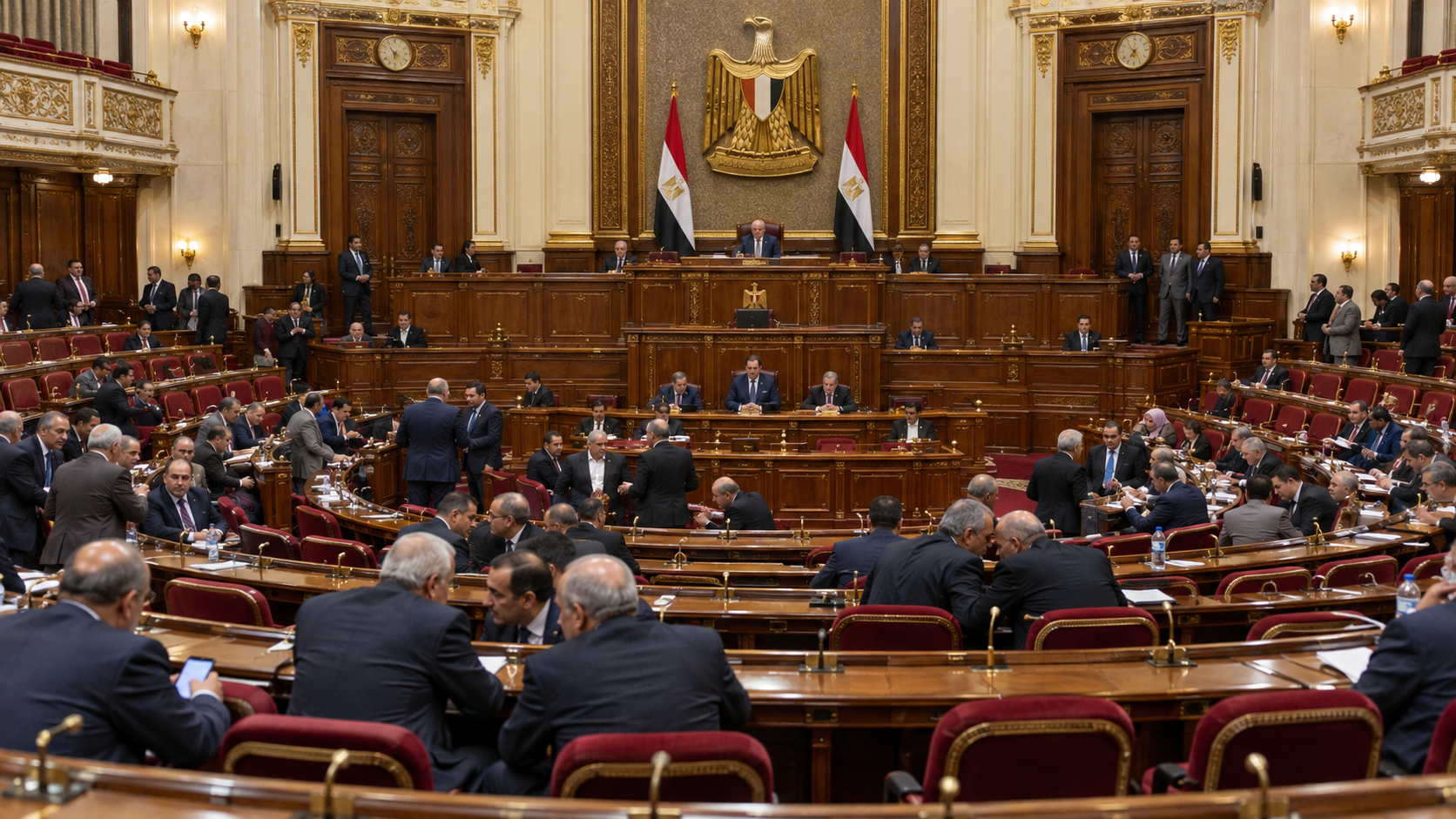
Egypt's House of Representatives postponed a vote on Sunday on authorizing support for Saudi Arabia, extending the session so all members could speak. Lawmaker Ibrahim Kholeif said most members support the measure. Deliberations continue on Monday, and lawmaker Mostafa Bakry said a vote is expected on Tuesday, Oct. 20, after three days of sessions. Under Article 152 of the constitution, sending forces abroad requires consultation with the National Defense Council and the approval of two-thirds of the House.
Egypt's foreign minister spoke with his Saudi counterpart about de-escalation. In southern Saudi Arabia, a Houthi projectile hit a residential area of Najran on Sunday, injuring six people and damaging three houses and three vehicles, according to the Saudi Civil Defense.
The contracts
On Polymarket, the contract on the ceasefire between the U.S. and the Houthis holding through Oct. 31 fell to 93.5 cents from about 1 a.m. Eastern on Monday, from 94.5 cents on Sunday afternoon, after touching 94 cents on Sunday evening. By about 5:30 a.m. it was back at 94.5 cents.
The contract covers only the arrangement between Washington and the Houthis, not the Saudi conflict. Because it covers only U.S.-Houthi hostilities, it could rise over the weekend even as the Saudi front worsened, and its overnight dip and recovery should not be read as a response to the Egyptian vote or the Najran strike. The contracts are thinly traded and the move came without a clear trigger.
Polymarket's contract on a U.S. announcement ending the Iran blockade by Oct. 31 held at 6.5 cents, with one hourly reading of 7 cents at about 3 a.m. Iran's foreign minister repeated over the weekend that Tehran's offer to reopen the Strait of Hormuz within seven days remains on the table if the U.S. lifts its blockade of Iranian ports, removes oil sanctions and ends hostilities on all fronts. Vice President JD Vance has said Iran must first make meaningful cuts to uranium enrichment.
The wider picture
Iran's parliament confirmed Mehrdad Akhlaghi as defense minister with 237 of 277 votes. He warned of "enormous damage" if the U.S. resumes strikes. The head of the International Maritime Organization has said about 6,000 seafarers are trapped in the region as attacks mount.
On Kalshi, the contract on a quarter-point Federal Reserve rate increase at the Oct. 27 to 28 meeting eased to 12 cents from 13.
Market implications
One reading is that the contracts are pricing separation correctly. Egypt and Saudi Arabia are building a regional response that keeps U.S. forces at a distance, and Washington has given no public sign of accepting Iran's terms.
A second reading is that both contracts leave little room for surprise. A Houthi strike on a U.S. vessel or a sudden shift in U.S. policy toward Iran could move either one sharply with little warning.
What to watch
Tuesday's expected Egyptian vote; any Houthi action against U.S. ships; further Saudi casualties; any U.S. reply to Iran's offer; and the Oct. 31 expiry of both contracts. A U.S. statement acknowledging talks with Iran would be the first event capable of moving the blockade contract by more than a few cents.