Underlying replacement-cost profit rose $2.7 billion from the second quarter, driven by much higher refining margins. Operating cash flow reached $14.8 billion, and net debt dropped to $13.9 billion from $22.3 billion. BP's U.S. shares rose about 1.6% early Friday.
The war premium in oil prices has been most visible in crude. BP's third quarter shows how much of it is landing in refining.
The company reported underlying replacement-cost profit, its preferred measure, of $8.5 billion, up $2.7 billion from the second quarter. Profit attributable to shareholders was $4.70 billion, compared with $3.91 billion in the second quarter and $1.16 billion a year earlier. On a per-share basis, underlying profit was $3.26 per American depositary share, against $2.22 in the second quarter and 85 cents a year earlier.
Where it came from
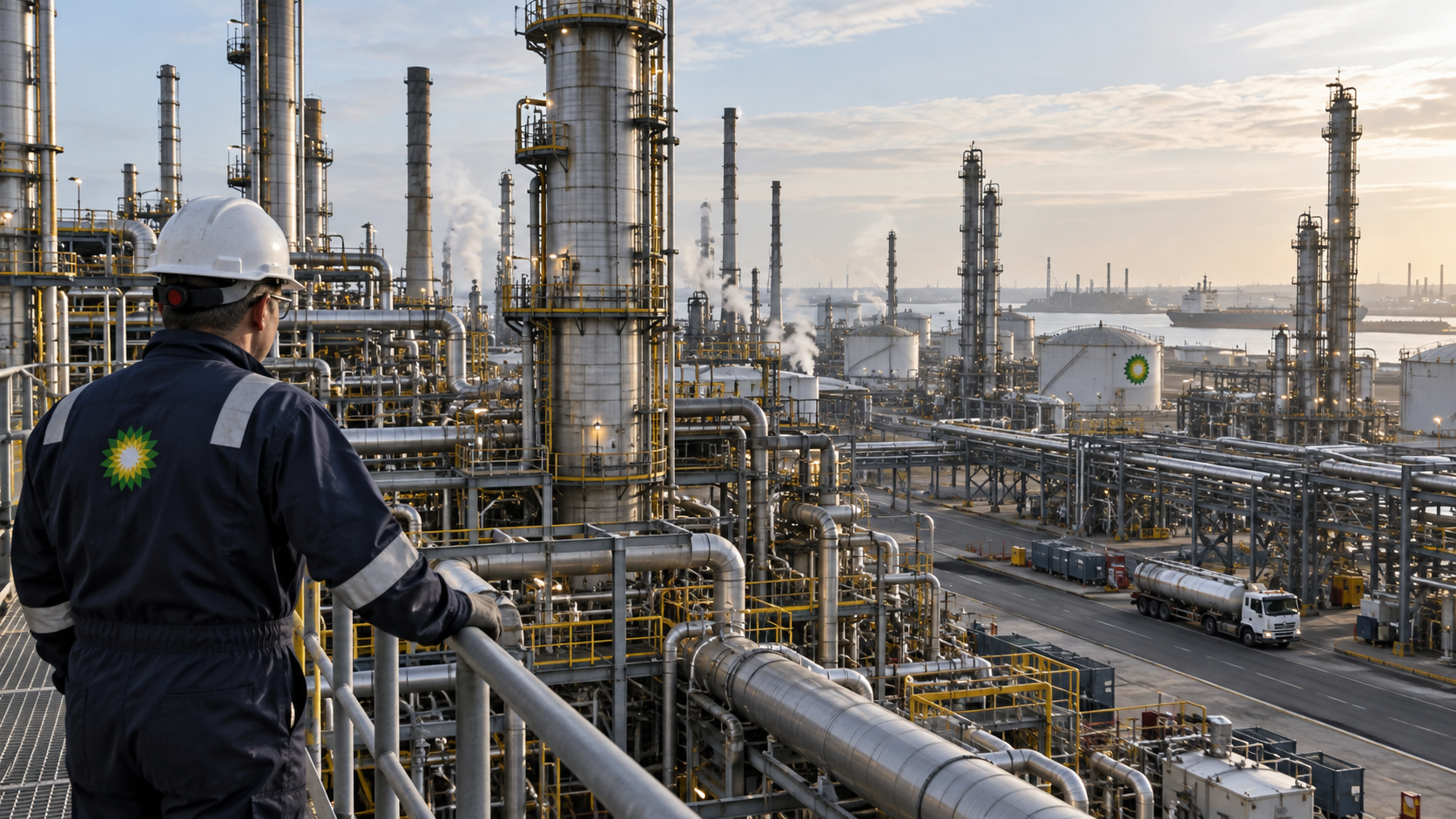
BP's products business, which includes refining, improved its underlying result by $2.5 billion from the second quarter. The company attributed the gain to significantly higher realized refining margins. When crude supply is disrupted, refined fuels such as diesel often become even scarcer, and refiners with access to crude earn more on each barrel they process.
The balance sheet
The more striking change was in debt. Net debt fell to $13.87 billion at the end of September from $22.25 billion at the end of June and $26.05 billion a year earlier. Operating cash flow was $14.8 billion, including a $0.5 billion release of working capital. Capital spending was about $3.0 billion, slightly below the second quarter.
BP kept its quarterly dividend at 8.66 cents a share, unchanged from the second quarter and up from 8.32 cents a year earlier.
The reaction
BP's U.S.-listed shares closed at $50.35 on Thursday, up 1.12%, and were about 1.6% higher at $51.17 in early Friday trading.
Windfall or reset?
The windfall view: the jump came from refining margins that depend on a supply disruption, and profit of this kind can reverse quickly when shipping routes normalize.
The reset view: whatever drives the margins, BP has used the cash to cut net debt by more than a third in a single quarter, which strengthens its balance sheet for whatever comes after the conflict.
What to watch
BP's call commentary on shareholder returns, refining margins in the fourth quarter, results from ExxonMobil and Chevron on Friday, and whether net debt keeps falling at this pace.