Equipment investment, led by computers, was a main driver of a third quarter that beat forecasts, and capital goods were the largest contributor to rising imports. The same morning, Alphabet fell about 12% after spending less than expected and burning cash. Inflation matched forecasts, and Treasury yields were lower.
On Wednesday, Federal Reserve Chair Kevin Warsh said business investment was "likely rising at about a double-digit pace" and that "high-tech investment is leading the acceleration." On Thursday morning the national accounts backed him up. But the companies doing most of that spending were telling a less certain story about what comes next.
Real gross domestic product grew at a 3.4% annual rate in the third quarter, the Bureau of Economic Analysis said, up from 2.2% in the second quarter and above the 3.1% economists polled by the Wall Street Journal expected. Real final sales to private domestic purchasers, a measure of underlying private demand, grew 4.9%.
What the report says about AI
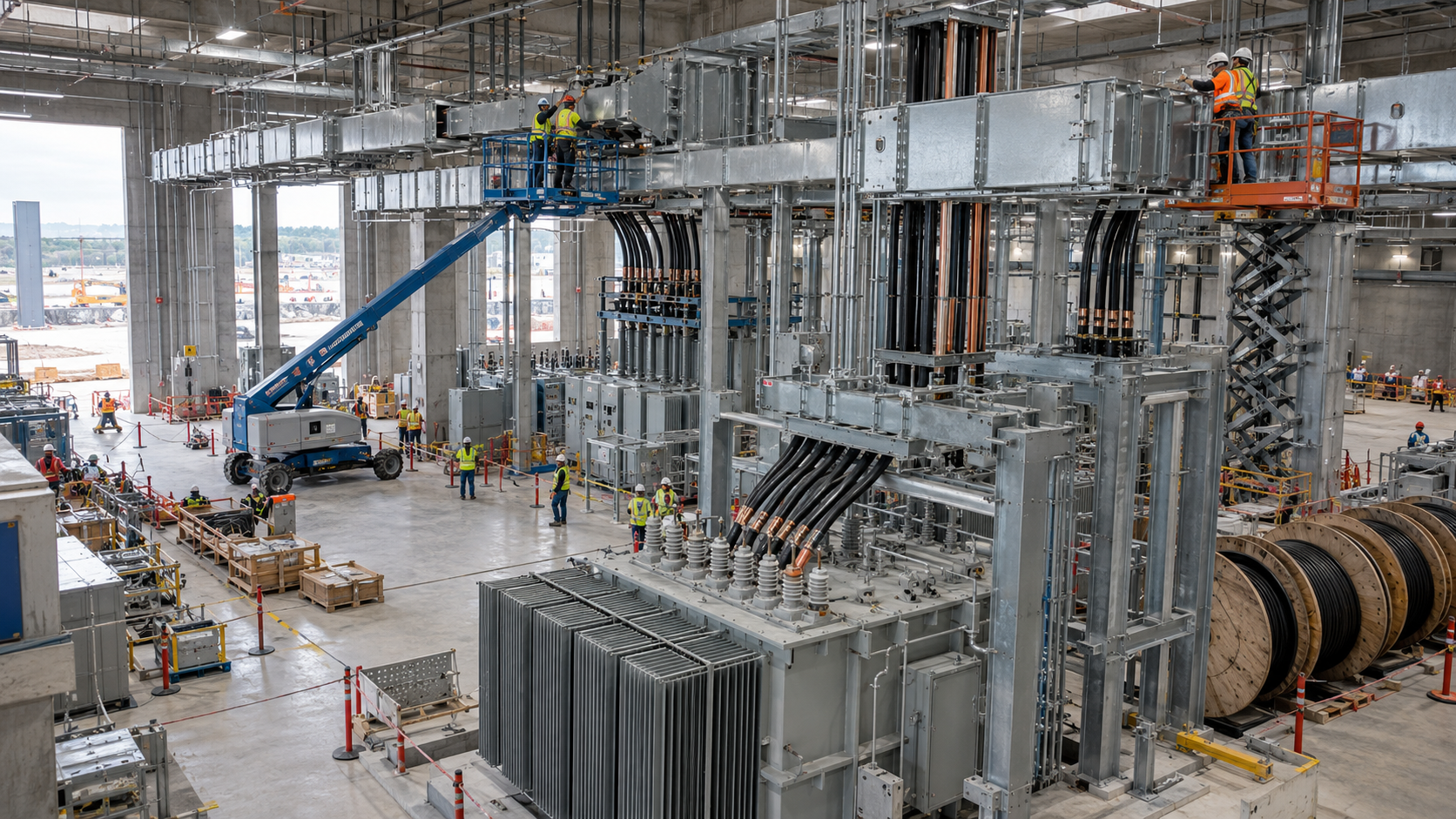
The BEA said the acceleration from the second quarter "primarily reflected an acceleration in investment and an upturn in government spending." Within investment, the increase came mainly from inventories and equipment, and "within equipment, the increase was led by information processing equipment (mainly computers and peripheral equipment)." That is the data-center build-out showing up in the official figures.
The same report points to where some of that hardware came from. "The largest contributor to imports was capital goods, except automotive," the BEA said. Imports are subtracted in calculating GDP, so equipment bought from overseas adds to investment and subtracts through imports at the same time. The quarter's net contribution from AI spending may therefore be smaller than the investment line alone suggests.
Below plan, above last year
The corporate side arrived the night before. Alphabet's purchases of property and equipment were $51.36 billion in the third quarter, below the roughly $55.09 billion analysts expected, though up 114% from a year earlier. Microsoft's capital spending, including finance leases, was $45.2 billion against an average estimate of $50.7 billion, up about 30%. Microsoft's finance chief, Hood, said some "third-party capacity deliveries we expected in Q1 were delayed," and guided to more than $50 billion this quarter. Alphabet held its 2026 forecast of $195 billion to $205 billion.
So the spending is still growing fast, but the two largest spenders came in below what investors had expected. Alphabet is also paying for it with outside money. Its free cash flow was negative $9.07 billion, and it raised about $28.7 billion from bond sales and $12.4 billion by selling shares in the quarter. Its long-term debt has risen about $78.6 billion since the end of 2025, to $125.1 billion.
Inflation matched, consumers stalled
The inflation numbers did not add pressure. The personal consumption expenditures price index rose 0.5% in September and 3.6% from a year earlier; the core index rose 0.3% and 3.1%. All four figures matched forecasts. For the third quarter as a whole, PCE prices rose at a 2.1% annual rate and core prices at 2.5%, down from 5.0% and 3.3% in the second quarter.
The consumer side was softer. Spending rose 0.5% in September in dollar terms but was flat after inflation, and real disposable income fell 0.3%. The saving rate was 3.8%. Weekly jobless claims fell by 1,000 to 194,000.
The market's split
By late morning, the market was sorting the news by exposure rather than moving in one direction. At about 11 a.m. Eastern, the Nasdaq Composite was down about 1.5%, with Alphabet down about 12% and Microsoft down about 1.9%, giving back its after-hours gain. The Russell 2000 was up about 0.9%, the equal-weighted S&P 500 up about 0.8%, and the S&P 500 down about 0.4%. Homebuilder and bank ETFs rose about 2.8% and 1.5%.
Treasury yields were lower. The 10-year was about 4.97%, down about 7 basis points from Wednesday's close, and the 5-year about 4.78%. Much of that decline came before the data: the 10-year was already below 5% at 6 a.m. Eastern, and oil fell about 2.4% during the morning, so the releases cannot be credited with the move. Investment-grade corporate bonds edged higher, with no sign of strain from the hyperscalers' borrowing.
Engine or peak?
The engine reading: the national accounts confirm that equipment investment, led by computers, is driving growth; private demand grew 4.9%; Alphabet's spending more than doubled from a year ago; and inflation came in no hotter than expected.
The peak reading: capital goods led the rise in imports, which reduces the build-out's net effect on GDP; inventories helped lead investment, which tends not to repeat; the two largest spenders came in below expectations, one of them while burning cash and borrowing heavily; and consumers stopped growing their spending after inflation in September.
For the Fed, the report gives each side something. Growth was strong and core inflation is 3.1% from a year earlier, which supports the case for a December hike that futures priced at about 85% before the data. Quarterly inflation slowed sharply and real spending stalled, which weakens the urgency.
What to watch
The $44 billion 7-year note auction at 1 p.m., Amazon's capital spending figures after the close, Friday's employment cost index, Treasury's quarterly refunding on Nov. 4, and the second estimate of third-quarter GDP on Nov. 25.