The economy grew 4.5% from a year earlier in the third quarter, faster than forecast, as exports and imports surged. Fixed-asset investment shrank 7.2% this year and retail sales rose just 1.1% in September. The market barely moved.
China's growth figure beat expectations. What it was made of matters more for the rest of the world than the headline.
The economy expanded 4.5% in the third quarter from a year earlier, the National Bureau of Statistics said on Monday, up from 4.3% in the second quarter and above the 4.4% median forecast in a Reuters poll. Quarter on quarter, output grew 1.2%, faster than 0.9% in the prior three months. Growth for the first nine months was 4.6%.
The monthly data for September showed industrial output up 5.5%, roughly in line with forecasts, and retail sales up 1.1%, ahead of expectations but still barely positive. Urban unemployment was 5.2%.
Where the growth came from
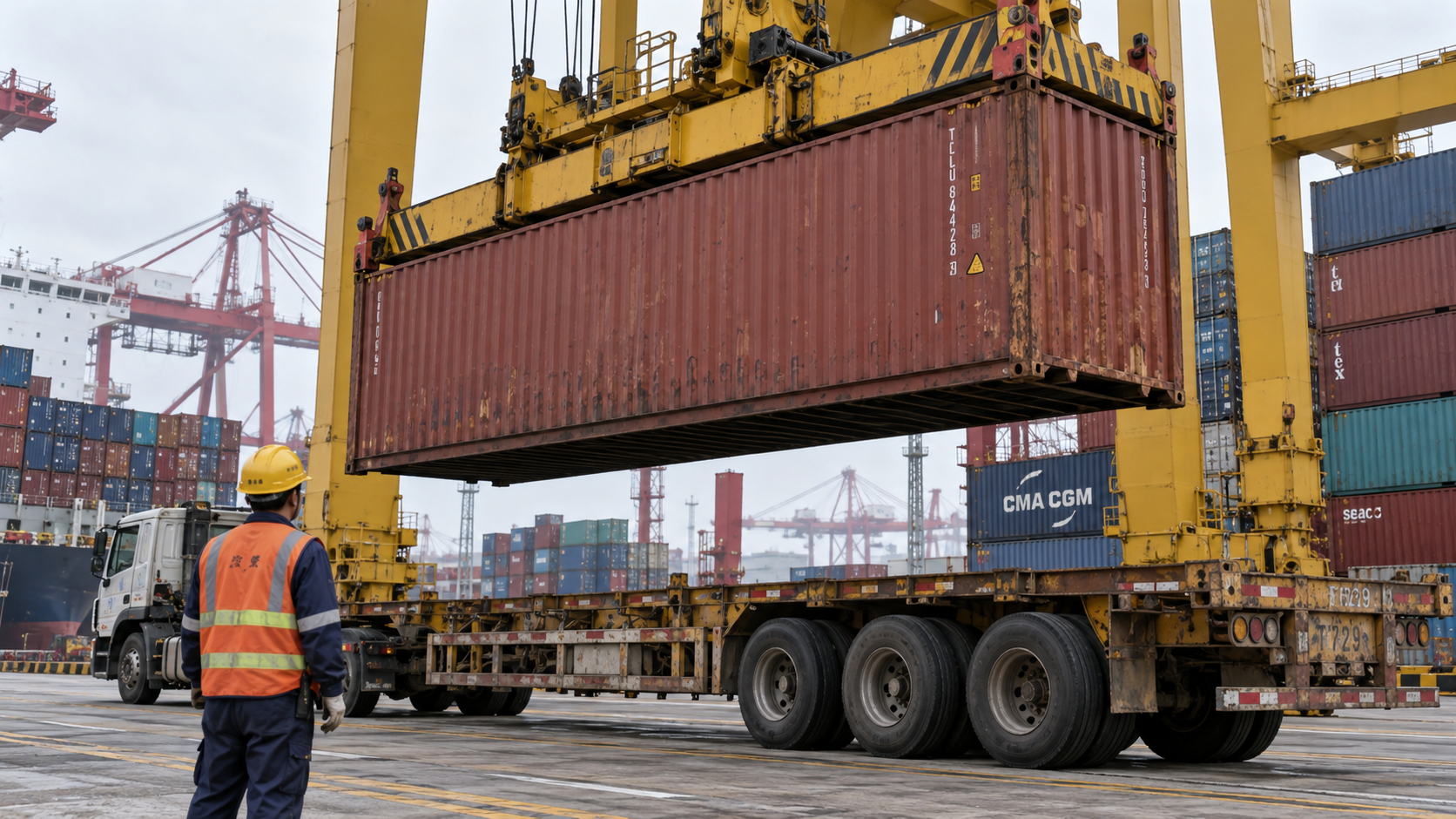
The strength sat outside the household and investment sectors. China's goods trade rose 18.8% in the first nine months to 39.94 trillion yuan, with imports up 22.3%, and September trade jumped 27.5%. Industrial output kept pace.
Domestic demand did not. Fixed-asset investment fell 7.2% in the first nine months, and 4.2% excluding real estate. Property investment dropped 20.6%. New-home prices were 2.8% lower than a year earlier, a slightly smaller decline than the 3.0% in the previous reading. Real disposable income per person grew 4.4% in the first nine months. Mao Shengyong, deputy head of the statistics bureau, said weak domestic demand remains a challenge.
Strong factories, quiet shoppers
That mix shapes how the beat travels. A China growing on exports adds supply to world markets more than it adds demand. That could raise the risk of trade friction with Europe and the U.S.
The 22.3% rise in imports is the part that could cut the other way, since it suggests China is buying more from the world as well. But this has been a year of sharply higher energy prices. Part of the increase may reflect what China paid for oil and other commodities rather than how much it bought, a question the volume data will have to answer.
The muted reaction
Markets treated the beat as largely expected. The Shanghai Composite rose about 0.4%, and the yuan was little changed at about 6.68 per dollar. Brent crude fell about 2% on the same session, so there was no visible sign of traders betting on stronger Chinese commodity demand.
China's banks set their benchmark loan prime rates on Monday evening, Eastern time. The one-year and five-year rates stand at 3.00% and 3.50%.
Market implications
One reading is that China is supporting global demand. Imports are up more than a fifth, factory output is growing at a healthy pace and growth accelerated in the third quarter. On that view, commodity exporters such as Australia and suppliers of industrial inputs benefit.
A second reading is that the economy is leaning on exports while its domestic engine stalls. Investment is shrinking, property is still contracting and consumers are spending cautiously. On that view, the beat raises trade-policy risk more than it raises demand for commodities, and policymakers face pressure to add stimulus.
What to watch
Monday evening's loan prime rate decision; detailed customs data on September import volumes for crude, copper and iron ore; any new support measures for consumption or property; and trade responses from Brussels and Washington. Import volumes rising as fast as values would strengthen the global-demand reading.