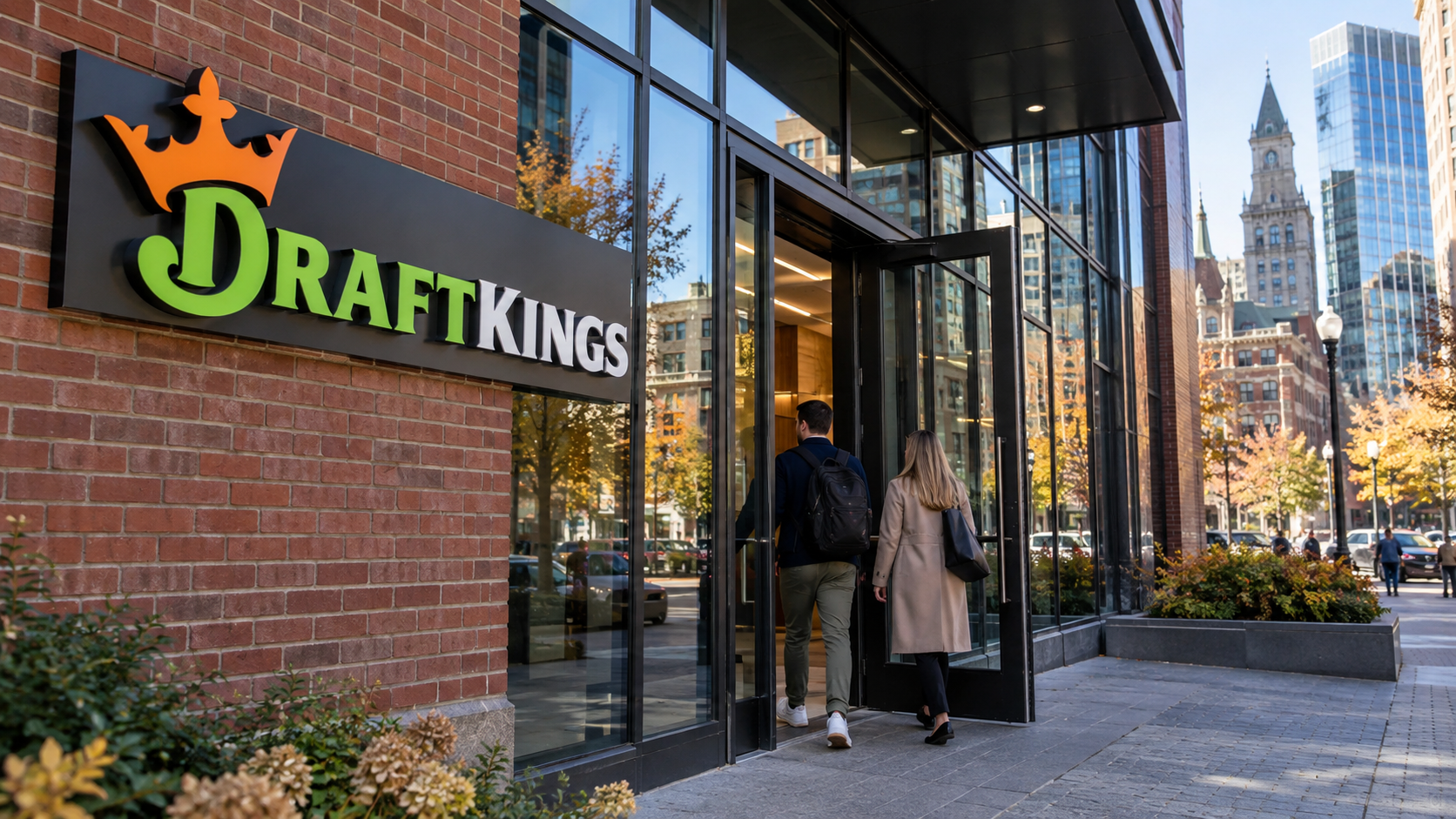
An upgrade valued DraftKings' prediction-market business at up to $800 million a year in fees and market-making by 2027. Missouri has ordered six operators to stop, and the industry has spent at least $3 million on lobbying this year.
Prediction Markets · FinancialMarkets.com · · Tickers: DKNG, HOOD
Wall Street put a number on prediction markets for a sportsbook on Monday. State regulators are trying to put an end to them.
Bank of America upgraded DraftKings to Buy from Neutral, arguing that the company comes out ahead whatever happens to prediction markets legally. "While the regulatory future of PMs remains uncertain, we think DKNG is well positioned either way," analyst Julie Hoover wrote. "If PMs stay, DKNG has established itself as the #3 player."
DraftKings shares rose more than 5% after the upgrade.
The numbers
Her model puts DraftKings' 2027 prediction-market fee revenue at $400 million, with another $200 million to $400 million from acting as a market maker. Together, that is $600 million to $800 million a year. She also said prediction markets pose less risk of cannibalizing DraftKings' existing sportsbook business.
The bull case rests on optionality. If prediction markets survive the legal challenges, DraftKings has a large new business. If they do not, it keeps its licensed sportsbook.
The states' side
The other side of that bet is playing out in state capitals. Missouri's attorney general has sent cease-and-desist letters to Kalshi, Polymarket, Underdog, Robinhood, Crypto.com and Novig. On Monday, Kalshi's head of research, Nicole Kagan, defended the model in a radio interview. "We're not the house. We're not setting pricing," she said.
The industry is spending to protect its position. Kalshi, Polymarket and the Coalition for Prediction Markets have spent at least $3 million on lobbying and campaign contributions in 2026, including lobbying by Kalshi on provisions of the annual defense authorization bill.
The legal calendar
The fight is headed to the Supreme Court. Responses in prediction-market cases are due there on and . A proposed injunction in an Illinois case is due . The CFTC's own rules on event contracts remain under review at the White House, and the crypto rulemaking the agency announced Monday does not address them.
Two ways to read the upgrade
One reading is that a large, licensed operator is the safest way to own prediction markets, because it profits if they grow and loses little if they are curtailed.
The other is that the revenue estimate depends on a legal outcome no one can predict, and that $800 million a year is a large figure to attach to a business several states are trying to shut down.
What to watch
Missouri's compliance deadline in mid-October, the Supreme Court filings and any CFTC action on event contracts will each shift the odds that Hoover's estimates are reached.