Bank of America, Citi and Morgan Stanley are arranging the senior debt, Blackstone is the sole committed lender in the second lien, and Broadcom is providing residual-value support equal to the first lien. The vehicle will buy Broadcom chips and lease them to Anthropic, with deliveries from 2027.
Computing hardware is among the largest costs of building AI. The newest financing for Anthropic's chips keeps ownership of that hardware outside the company and spreads the lending risk across banks, a private-credit manager and the chipmaker that sells it. Anthropic still stands behind the rent.
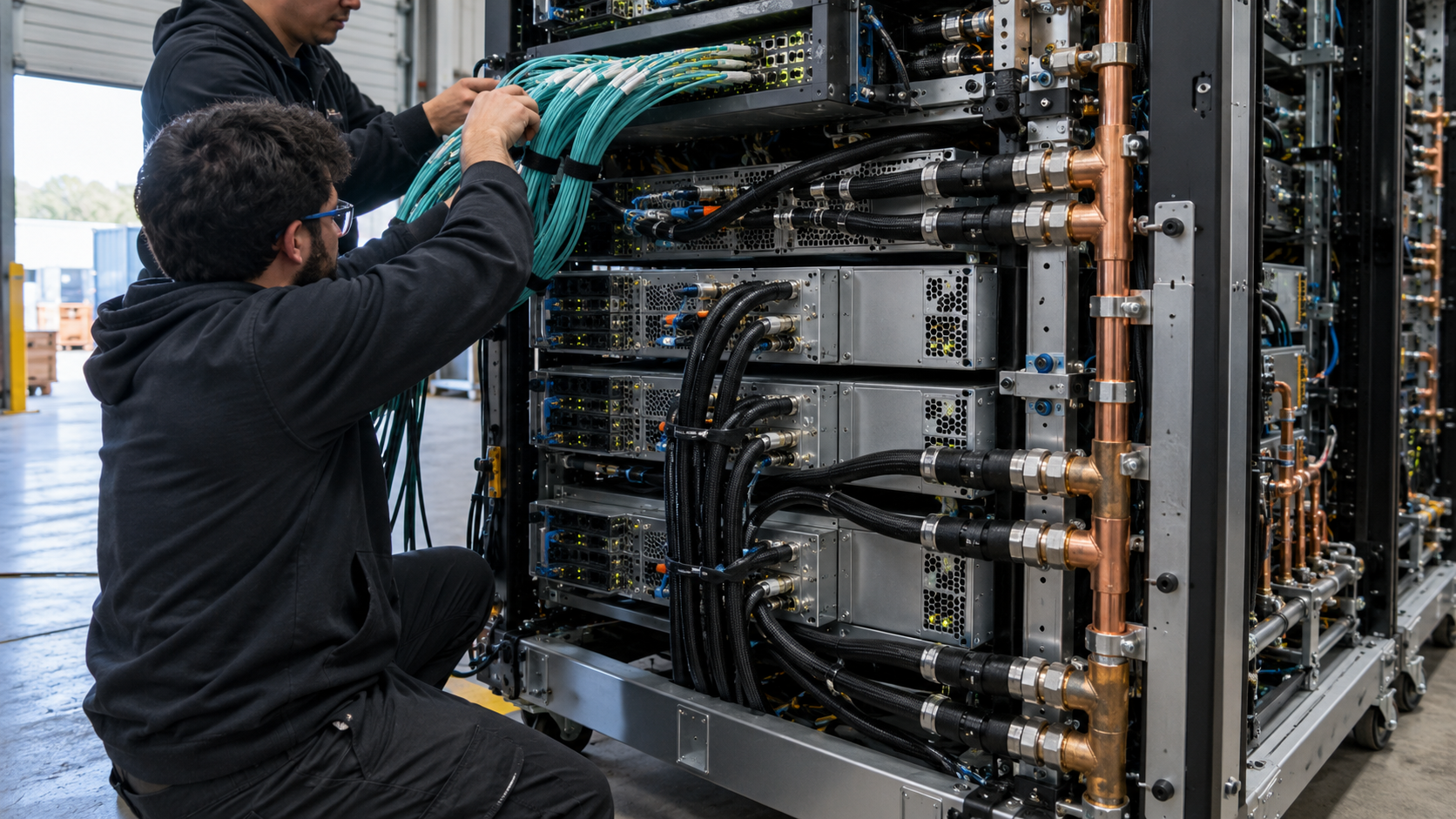
After the close on Oct. 26, Bank of America, Blackstone, Citi and Morgan Stanley announced, with Broadcom, a $63 billion financing structure. A newly formed special purpose vehicle, backed by committed financing from the four firms, will buy Broadcom's XPU AI accelerators and networking equipment and lease them to Anthropic. Deliveries are expected to begin in calendar 2027. The companies said the vehicle is part of Broadcom's previously announced compute agreement with Anthropic.
The announcement came the same day Anthropic made its IPO filing public.
Who holds which risk
The structure has three layers. Bank of America, Citi and Morgan Stanley are arranging the first-lien debt, which is repaid first. Blackstone is the sole provider of the committed portion of the second-lien debt, which ranks behind it. Broadcom is providing residual-value support to the vehicle "for the amount equivalent to the first lien portion."
Residual-value support is a promise about what the equipment will be worth later. AI accelerators can lose value quickly as newer generations arrive, so the question of who absorbs that decline is central. On the announced terms, Broadcom's support sits against the senior debt. That leaves Blackstone's junior layer more exposed to two things: how fast the chips depreciate, and Anthropic's ability to keep paying rent.
The borrower is the vehicle, not Anthropic. The lessees are two Anthropic special-purpose subsidiaries, and Anthropic guarantees their lease obligations, which are secured by the equipment, according to its S-1. Anthropic can also issue up to $42 billion of convertible notes to Broadcom, or a partner Broadcom designates, solely to pay rent under its Broadcom equipment lease. None had been issued as of June 30.
What was disclosed, and what was not
Broadcom's investor materials put numbers on the residual-value support. Its potential liability is any shortfall between 72.5% of the amount still owed on the lease and the value of the AI racks. Peak exposure is expected to be about $43 billion, declining to zero on a straight-line basis over five years of lease payments, in an illustrative schedule. Broadcom said the support is not a direct cash outlay. Anthropic's S-1 describes its Broadcom equipment lease as a five-year lease.
The companies did not say exactly how the $63 billion splits between first and second lien, how much Blackstone is lending, who will fill the uncommitted part of the second lien, or the pricing. HSBC analysts estimated that the vehicle will support about 1.7 to 1.8 gigawatts of computing capacity.
Earlier this month, Bloomberg and the Financial Times had reported a financing of about $60 billion. The announced structure is larger.
Part of a pattern
The deal fits a trend running through this autumn's AI build-out: moving the cost of computing capacity into debt markets and private credit. This week Microsoft was reported to be selling about $25 billion of bonds, its first U.S. investment-grade deal since 2017, and Alphabet raised about $41 billion of bonds and stock in the third quarter to cover its spending. The same appetite showed up late Thursday, when Reuters, citing The Information, reported that Nvidia is in talks to provide credit support for a deal between Nscale and Anthropic.
Broadcom shares had closed up 2.3% at $329.17 on Oct. 26, and Blackstone up 0.9% at $119.06, before the announcement.
Engineered or concentrated?
The engineered view: a senior layer backed by the chip vendor, a junior layer held by Blackstone, and a lessee that just disclosed about $131.7 billion of cash and short-term investments make for a carefully divided risk.
The concentrated view: one lessee, one vendor and one junior lender carry most of the exposure to a fast-depreciating asset; Anthropic guarantees the rent; the pricing and tranche sizes are undisclosed; and the vendor's support ties Broadcom's balance sheet more closely to its customer.
What to watch
Disclosure of the tranche sizes and Blackstone's commitment, syndication of the rest of the second lien, Broadcom's reporting of its residual-value exposure as racks are delivered, and lease-commitment detail in Anthropic's amended S-1.