
TQ Evening Briefing
AI's biggest spenders went to public investors for money, and their chip suppliers rallied. Brazil had its worst session since 2020 while most of emerging markets barely moved.
Wall Street Funded AI. São Paulo Hit the Brakes.
U.S. stocks rose. The S&P 500 gained 0.7%, the Nasdaq 0.8% and the Dow 0.3%. The VIX fell about 5% to near 18.4.
Chips led. Nvidia (NVDA) rose about 2.4%, and Broadcom (AVGO) and AMD (AMD) gained about as much. That came on the day Anthropic made its IPO filing public and Meta Platforms (META) launched about $35 billion of stock sales. Meta fell about 2%.
Brazil went the other way. The Ibovespa tripped a circuit breaker at the open, and the iShares MSCI Brazil ETF lost about 20%. The 10-year yield held near 4.99%.
TQ Trade Implication
The tape paid AI's suppliers on the day AI's buyers asked for public money. Meta's capital spending already ran past its operating cash flow last quarter, $34.91 billion against $32.79 billion, and it is now turning to new stock for part of the buildout. Meta fell about 2% while its chip suppliers rose, so the cost of the raise landed on Meta's holders rather than on the chip trade. If Meta's sale prices without a deep discount, public investors are still underwriting the buildout at today's equity cost.
Lately Every Top Stock List Has Started Looking the Same.
Nothing wrong with Nvidia, Tesla, or SpaceX — but we believe there are plenty of other top-quality opportunities for investors willing to dig into the details.
That's why our MarketBeat analysts built an all-new list of the 5 Best Stocks to Buy Now.
Every company on the list:
- Worth at least $5 billion
- Strong fundamentals
- Strong growth prospects ahead
You'll get the full bull case — and the full bear case — for each stock. Every opportunity, every risk, every factor we considered. So you can invest with confidence.
The report is called 5 Stocks to Buy Now — and it's yours free today.
Three Ways to Pay for AI, All on One Day.
Anthropic made its S-1 public and plans to list on Nasdaq under the symbol ANT. It has not set a share count or a price. The filing shows first-half revenue of $16.3 billion, about 14 times the $1.16 billion of a year earlier. The operating loss was $693 million. The net loss was $80.7 billion, and most of the gap was a $72.4 billion fair-value charge on convertible notes and similar instruments.
Polymarket's contract on an Anthropic listing by Nov. 30 rose to about 91 cents from 61. Kalshi's contract on a confirmed IPO before Dec. 1 rose to 91 cents from 69. The two pay on different events: Polymarket needs shares trading, Kalshi a pricing, an effective filing or an assigned ticker.
Meta's raise is about $22.5 billion of common stock under forward sale agreements and $12.5 billion of mandatory convertible preferred, with a planned $60 billion at-the-market program to follow. Nvidia, AMD and Broadcom gave non-binding indications of up to $5 billion as cornerstone investors.
SpaceX (SPCX) put its chip financing on file. The filing describes a binding commitment letter for an approximately $40 billion master finance lease with a lessor managed by Apollo (APO). Closing is subject to conditions, and the rate will be set at pricing. Elon Musk had called the deal closed on Sunday.
TQ Edge Setup
The money came on offer as an IPO, a stock sale and a lease, and none had priced or closed by Monday's end. When chipmakers offer to buy a customer's shares, some of their own cash can come back to them as orders. That ties supplier revenue to equity markets more tightly than order books show. If Meta's offering clears easily and Anthropic holds a November date, the suppliers' rally has public buyers behind it; if either slips, the cost of capital moves back into the chip trade.
Brazil Answered This Morning's Question.
This morning's test was whether the real would hold most of its overnight futures loss once local trading opened. It did. The dollar jumped as much as about 12% against the real and was still up more than 8% late in the day.
The Ibovespa fell as much as 17.3% and closed down about 13.4%, its worst day since March 2020. Long-dated local rates hit the exchange's daily limit, and the Treasury canceled two of this week's bond auctions, keeping only a floating-rate sale.
U.S. listings carried the currency loss on top. XP (XP) fell about 48%. Itaú Unibanco (ITUB) lost about 20% and Nu Holdings (NU) about 17%. Petrobras (PBR) fell about 14%.
The selling spread little past Argentina. An Argentina fund fell about 5%, but the broad emerging-markets ETF slipped 0.3%, and the Mexican peso firmed.
TQ Edge Setup
Brazil repriced mostly as a country, not as an asset class. The shock ran through the real, long rates and the Treasury's own borrowing, and each of those channels is local. That makes the auction calendar a better gauge of the damage than the equity drop. If the Treasury returns to market at these rates without canceling again, today's prices become Brazil's new cost of money rather than a forced exit.
Hidden in Tesla's Filing: A $12 Billion "Super Startup"
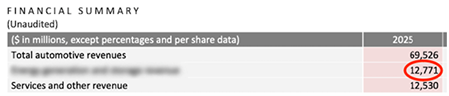
Pull up Tesla's most recent SEC filing. Page 5.
And you'll see a single line showing $12 billion in revenue from a brand-new "super startup" Elon Musk has been quietly incubating inside Tesla.
This new "super startup" has nothing to do with cars or robots or space or AI…
But it sits at the center of what Blackstone calls "a $23 trillion investment opportunity."
And on Oct 21st, Elon is expected to pull back the curtain and reveal exactly what he's building.
But Adam O'Dell already knows… and he reveals it all in this urgent video.
Hike Bets Rose. Nobody at the Fed Said Anything.
Kalshi's contract on a quarter-point hike Wednesday rose to 9 cents from 6 on about 675,000 contracts. That is more than twice last Wednesday's 273,500, and more than 40% of it traded in a single afternoon hour. The 2-year auction results landed in that same hour, though the 2-year yield barely moved on them. The Fed is in its quiet period, and no cause has been identified. Polymarket's no-change contract slipped to about 92.6 cents from 95.5.
A regional survey offered a backdrop. The Dallas Fed's raw-materials price index rose to 55.3, about twice its long-run average, while new orders fell to 9.3 from 30.7. At the $69 billion 2-year sale, indirect bidders, which include foreign buyers, took 45.7%, below their recent average of about 58%.
TQ Edge Setup
The hike bet moved on real money, with no clear news behind it. On Oct. 21, about 160,500 contracts moved this market 2 cents; Monday it took 675,000 to move it 3, so each contract moved the price about two-thirds less. That makes 9 cents harder to dismiss as a few orders, though the Dallas survey explains the buying no better than before. If Tuesday's 5-year sale also draws thin outside demand while hike odds hold near 9 cents, the front end is pricing a surprise the Fed has not signaled.
- Verizon raised and fell. Verizon (VZ) raised its full-year outlook for a third straight quarter and added 406,000 postpaid phone customers, about twice what analysts expected. Revenue of $34.3 billion missed estimates as equipment revenue fell 9%, which Verizon tied to fewer upgrades and smaller device subsidies. The shares fell about 3.5%, while AT&T (T) slipped 0.4%.
- Surgery Partners signed above the report. Surgery Partners (SGRY) agreed to be bought for $23.50 a share in cash by an affiliate of Bon Secours Mercy Health, valuing it at about $5.7 billion with debt. That is above the roughly $20 reported over the weekend and a 49% premium to Friday's close. Bain Capital, which owns about 39%, will roll its stake at a price about 9% below its own 2025 offer.
- Crypto's corporate buyers split. Strategy (MSTR) bought no bitcoin last week and spent $204.9 million buying back its STRC preferred. Strive (ASST) bought 6,182 coins, about $511 million, and set up a program to sell up to $1 billion of 15% preferred. Both stocks fell as the S&P 500 rose. Circle (CRCL) fell about 7% after Mizuho kept its Underperform rating, cut its target to $43 from $45 and argued AI assistants could steer savers away from USDC.
On December 10th, a powerful new law signed by President Trump
will trigger a radical shift in America’s money system...
When a small group of private companies — not the Fed — will perform a major mint of a new kind of money.
And those who act before this new system fully kicks in could see gains as high as 40X by 2032.
But those who fail to prepare will be blindsided by this sea change to the U.S. dollar.
Go here now for the details — before the December 10th mint hits the market.
The Buildout Now Has a Public Price.
AI's spenders asked public investors for money in three forms on one day, and the chip stocks that sell to them rallied. Brazil showed what happens when a crowded bet meets the other outcome.
The cleanest test is Meta's offering. A tight price says public buyers will keep funding the buildout at today's cost. A wide discount says the suppliers rallied on money that just got more expensive. The Fed decides Wednesday with hike odds higher than Monday's news explains.
Rates Just Reset. Who Feels It First?
On January 2, the 10-year Treasury yielded 4.19%. By September 30, it was 5.29%. Most of that move landed in a single quarter.
The bond market repriced and companies are starting to report it.
Some companies earn from higher rates. Some pay for them. And each one runs on a different clock.
We traced three of them, IBKR, WRB and FIS, in a new FREE Special Report:
Rates Just Reset. Who Feels It First?
Who earns it fast. Who earns it slowly. Who pays. One has already reported. The other two report next, and the report tells you the exact line to check.
We'll text the report straight to your phone.