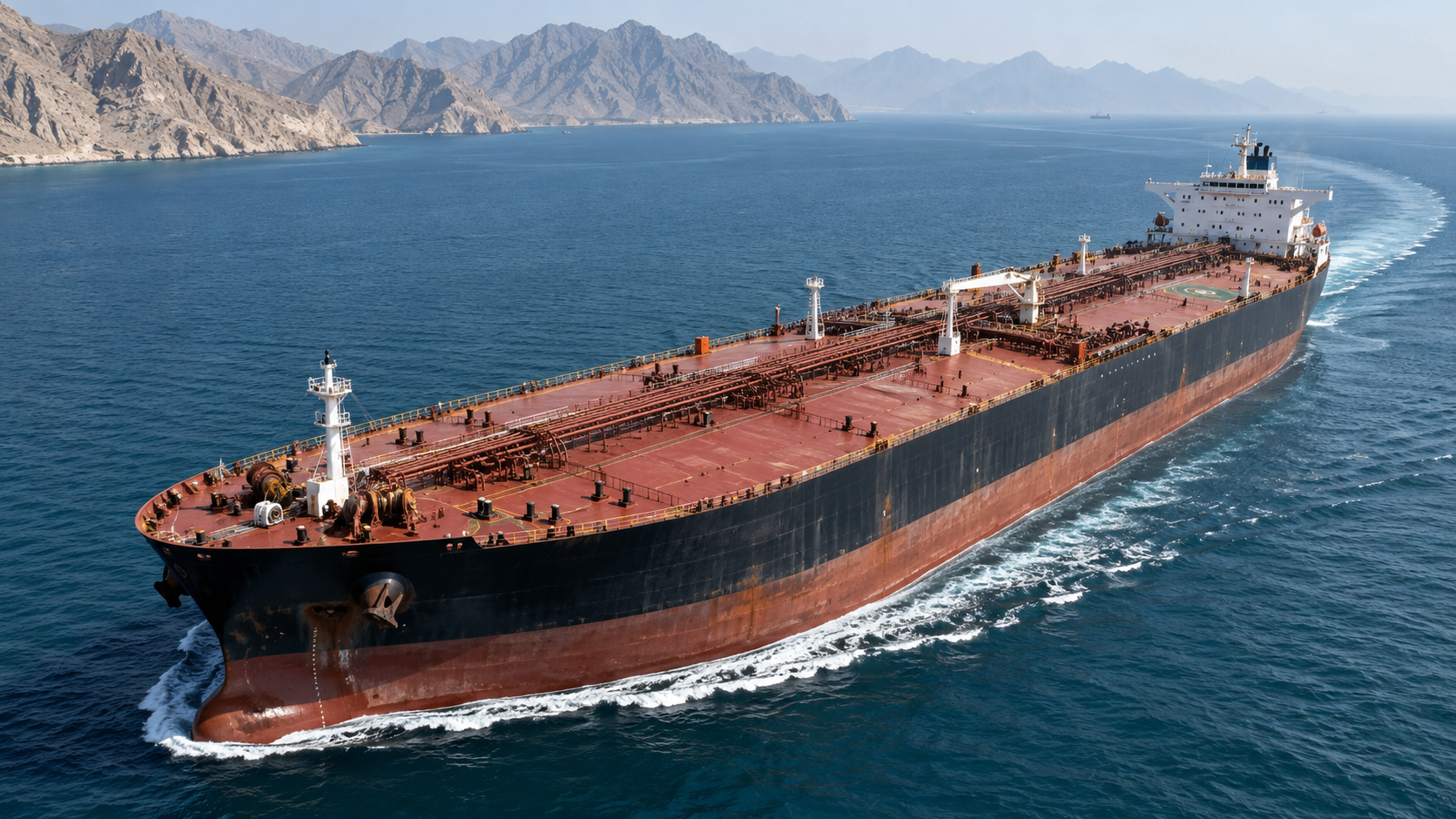
Brent fell 0.8% to $115.81 as talks with Iran continued, even as a delayed report of an Oct. 23 tanker strike and a ship fire off Iraq circulated. Overnight it swung within Monday's range and was slightly higher in early European trading.
On Monday, oil traders appeared to weigh diplomacy over the incident reports. Some of those reports described attacks that were already days old.
Brent crude settled down 91 cents, or 0.8%, at $115.81 a barrel on Monday, and West Texas Intermediate fell $1.51, or 1.46%, to $101.76. Senior officials from Saudi Arabia, Pakistan and Turkey met Iran's president and foreign minister in Tehran, and the parties agreed to keep talking.
Overnight, Brent swung between $114.50 and $116.92. It was at $116.51 at 4:36 a.m. Eastern and slightly higher than Monday's settlement in early European trading.
News that arrives late
On Monday, the U.K. Maritime Trade Operations center issued a delayed notice of a projectile strike on an outbound tanker in the Strait of Hormuz on Oct. 23. The strike was days old by the time it entered the public record.
It was not the only incident in circulation. By Monday afternoon, UKMTO had also reported a vessel on fire 63 nautical miles southeast of Al-Faw, Iraq, with the crew's status and the extent of damage unknown. Overnight, the Saudi-led coalition said it intercepted three Houthi ballistic missiles.
For a market that sets prices minute by minute, a lag of days matters. Traders weighing whether diplomacy is lowering the risk to shipping are doing so with an incomplete and delayed record of what is happening on the water. On Monday, the talks appeared to carry more weight at the settlement than the incident reports did.
Mixed signals from Tehran
The diplomatic signals did not line up either. Iran's state media said the Tehran meeting ended with an agreement to continue discussions. At his Monday briefing, Iran's foreign ministry spokesman said "the American side is not serious about negotiations." Over the weekend, Tehran denied reports that it had offered a deal on the Strait of Hormuz through Pakistan.
No single development accounts for the overnight moves, which stayed inside Monday's range.
Two readings
One reading is that diplomacy is still the dominant force. Brent settled lower, Saudi Arabia, Pakistan and Turkey are talking directly with Tehran, Qatar is mediating, and President Donald Trump has said the U.S. will not attack Iran before the midterm elections.
The other is that the price is being set on partial information. Incidents are reaching the public record days after they occur, attacks and claimed attacks on ships and bypass routes continue, and Tehran is sending conflicting messages about the talks. On Sunday, Trump also said it was "getting to be decision time" on whether to make a deal or "finish it off." On that reading, a lower settlement on diplomacy is a provisional price, not a trend.
What to watch
Further UKMTO reports, including any update on the Al-Faw fire, the next round of regional talks, Israel's election results on Tuesday night, the Fed on Wednesday, the OPEC+ meeting on Nov. 1 and the U.S. midterms on Nov. 3.