Phathom lost 18% on Friday after disclosing a challenge to Voquezna's exclusivity through 2032. On Monday it said the FDA has opened a public docket on the legal questions the lawsuit raises, with comments due Nov. 23.
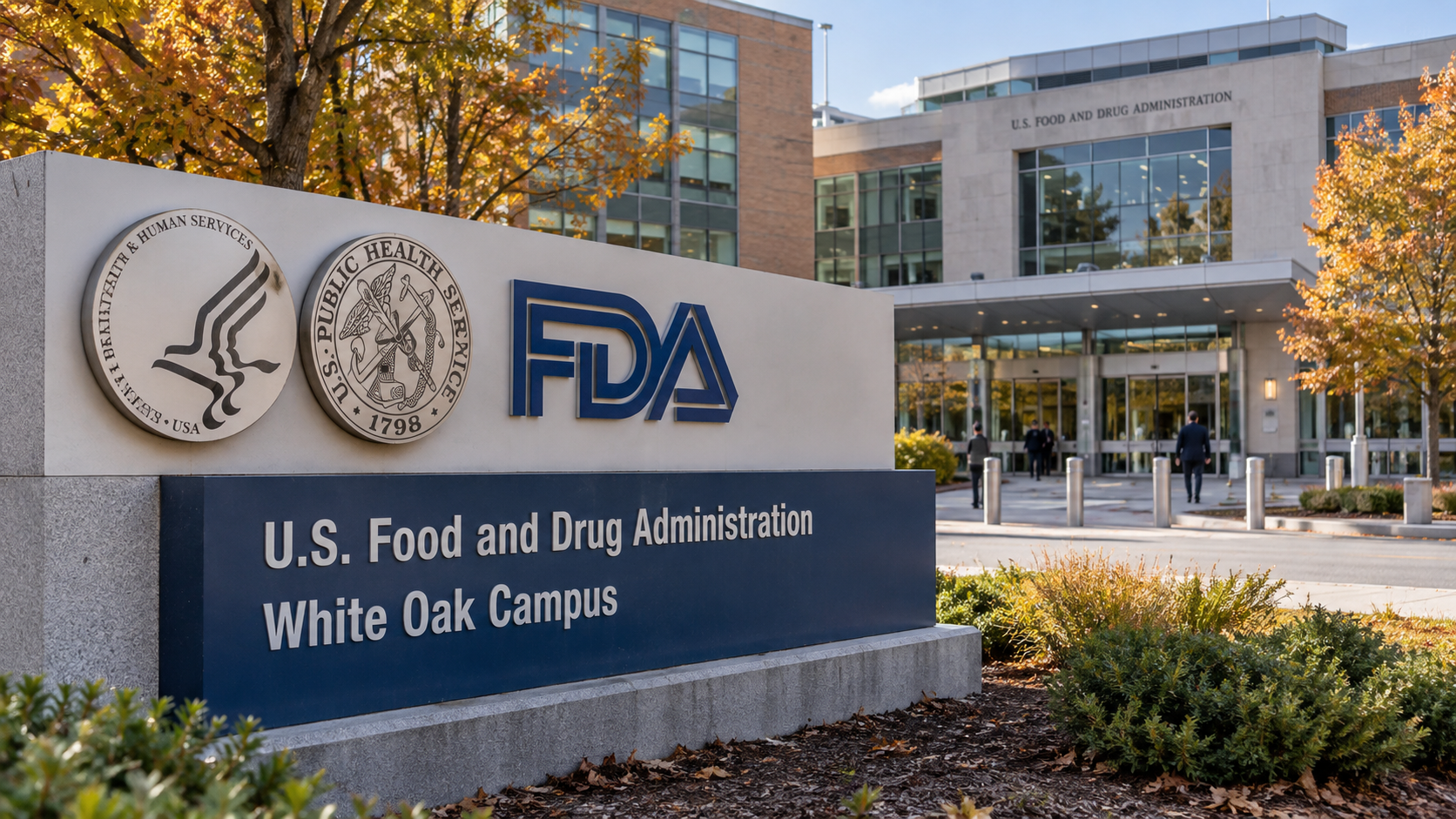
On Friday, a generic drugmaker's lawsuit against the Food and Drug Administration cost Phathom Pharmaceuticals almost a fifth of its value. On Monday, the agency asked the public to weigh in on the questions the lawsuit raises.
Phathom said before the market opened that the FDA has established a public docket, No. FDA-2026-N-13038, "to solicit comment on legal and regulatory questions regarding certain issues raised by" BDR Pharmaceuticals, in BDR's suit against the agency. Comments are due Nov. 23. Phathom has moved to intervene in the case, and a second company seeking to sell a generic version, Saba Ilac, has said it intends to consolidate its own case with BDR's.
What is being challenged
The dispute concerns how long Voquezna, Phathom's treatment for acid-related conditions and its only source of revenue, is protected from generic competition.
In June 2025, the FDA granted a petition from Phathom and recognized 10 years of exclusivity for Voquezna tablets, running through May 3, 2032. That period combines five years of new chemical entity exclusivity with an extension under the GAIN Act, a law intended to reward new antibiotics and antifungals.
BDR, which filed suit in federal court in Washington on Oct. 21, argues the agency applied that law improperly. Its complaint says Voquezna tablets' acid-related uses are neither antibiotic nor antifungal, and that the tablets were never designated a qualifying infectious disease product. Without the GAIN extension, the base exclusivity would end on May 3, 2027. BDR asks the court to treat its generic application as filed on May 3, 2026.
Phathom says the FDA "carefully and correctly evaluated this issue." Chief Executive Steve Basta said on Monday: "FDA carefully reviewed the NCE exclusivity period applicable to VOQUEZNA through a full public process, and we believe reached the right decision. We will make that case clearly in our comments to FDA and in any appropriate court proceeding."
In its own disclosure, Phathom lists the risk that the FDA "may, in light of those comments or otherwise, reconsider, modify or reverse its prior decision." The docket itself is a request for comment, not a decision.
Three possible end dates
The headline contest is 2032 against 2027. The practical range is more complicated.
The first outcome is that the FDA's current position stands and exclusivity runs to 2032. The second is that BDR wins on exclusivity but still faces a patent. According to BDR's own complaint, a patent listed for Voquezna runs to Aug. 11, 2030, and BDR asks for any automatic 30-month stay tied to patent litigation to end between Dec. 17, 2028, and Jan. 4, 2029. BDR also says it "can almost certainly not obtain a final court decision on patent infringement or patent invalidity before patent expiry" without relief. The third, and earliest, outcome would require BDR to prevail on both the exclusivity question and the patent.
That means generic entry in 2027 is not the only downside case, and not an automatic one.
What the stock prices
Phathom closed Friday at $5.74, down 18.1%, while the XBI biotech fund fell 1.38%. The decline began in the session after Phathom disclosed the suit, not after the first trade-press report of it a day earlier. At Friday's close, the company's market value of about $464 million was roughly 1.5 times the midpoint of its 2026 revenue guidance of $310 million to $325 million. It had $182.5 million of cash at the end of June. The stock is down about 69% from its 52-week high of $18.31.
Two readings
One reading is that Friday's drop was an overreaction. The FDA reached its 2032 position through a full petition process and applied it in writing to BDR. Cantor Fitzgerald, in a note on Friday before the docket was announced, said it saw a low likelihood that the agency reverses its decision. Behind the exclusivity sits a patent to 2030.
The other is that the market is right to discount Voquezna's protected life. The agency has now opened its 2025 decision to public comment, a second generic filer is joining, and for a company with one product, the difference between 2032 and an earlier date goes directly to what the business is worth.
What to watch
Monday's first session against biotech benchmarks, Phathom's third-quarter results and call on Oct. 29, the Nov. 23 comment deadline, any court ruling on intervention and scheduling, and any FDA action after the comment period closes.