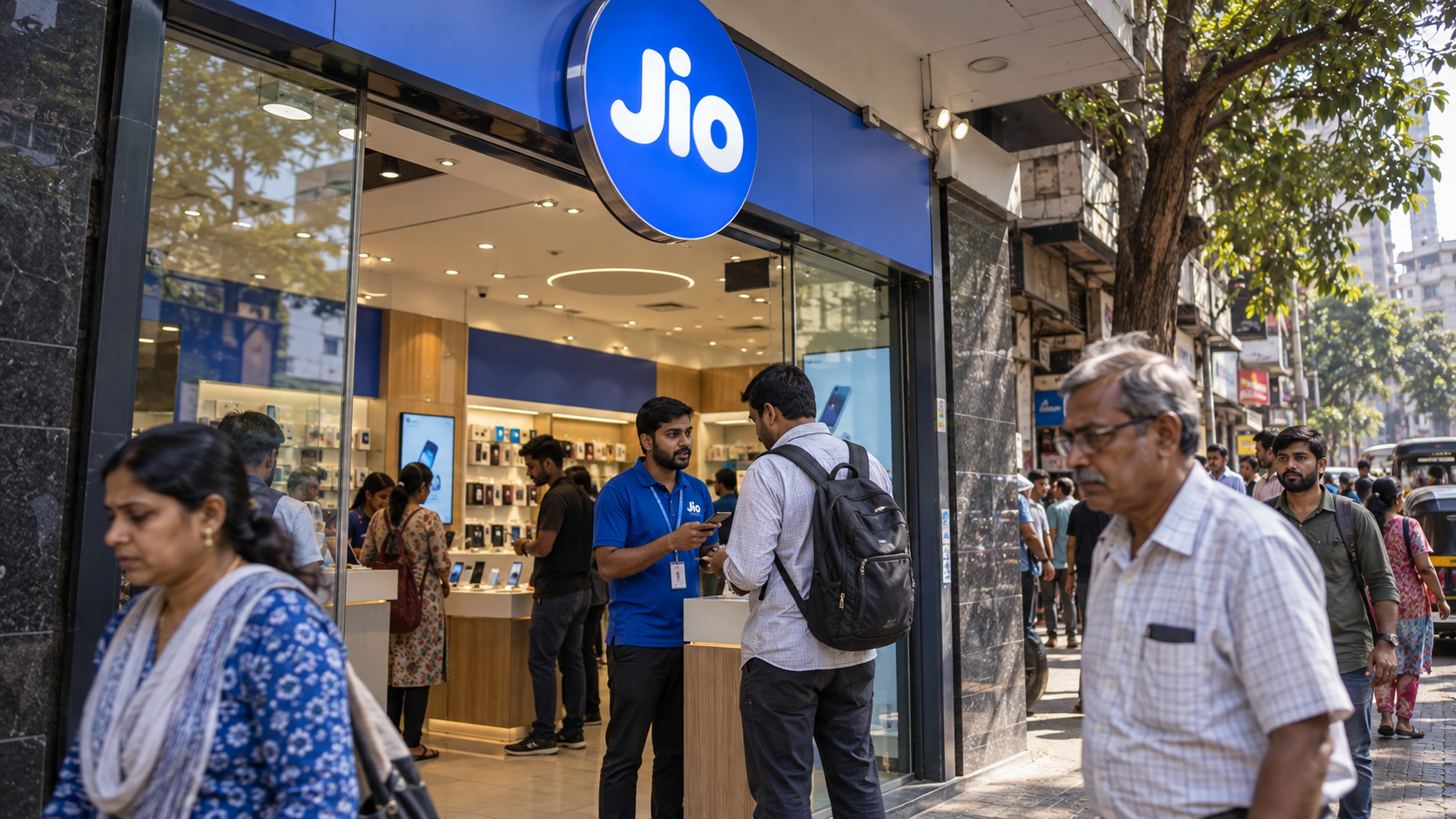
The 72.47 million shares placed with institutions at 1,119 rupees, worth about 81.1 billion rupees, leave roughly 197.5 million shares for the public offer that runs through Friday. Demand from the institutions that bid ran to about 2.5 trillion rupees, according to people familiar with the matter cited by Reuters and PTI.
Jio Platforms has sold about a quarter of its initial public offering before the public has had a chance to bid. The harder test is the rest.
The company said on Monday that it had placed 72.47 million shares with anchor investors at 1,119 rupees each, the top of its price band, for about 81.1 billion rupees. Out of a maximum of 270 million new shares, that leaves roughly 197.5 million, worth about 221 billion rupees at the same price, for other institutions, wealthy individuals and retail buyers, by this publication's arithmetic.
The anchor portion itself drew heavy demand. Bids totaled about 2.5 trillion rupees, or about $26.3 billion, according to people familiar with the matter cited by Reuters and the Press Trust of India, roughly 31 times the shares available by this publication's arithmetic. BlackRock, Capital Group and the Government of Singapore are among the 212 investors allotted shares, according to the company's filing.
The anchor book is the slice of an Indian IPO reserved for large institutions before the offer opens to the public. Jio's public subscription runs from Wednesday, Oct. 21, to Friday, Oct. 23, and the shares are tentatively scheduled to list on Oct. 28.
Where the money goes
At the top of the band, the full offer would raise up to about 302 billion rupees, roughly $3.2 billion, so the anchor placement accounts for about 27% of it. Because every share is new, no existing holder is selling. Jio has said it will use about 27,500 crore rupees, or roughly 91% of the maximum proceeds, to prepay borrowings at Reliance Jio Infocomm, its telecom operator. Meta Platforms and Google are already shareholders.
What the demand says
An anchor book oversubscribed 30 times is a strong signal, but it is a signal about a specific group of buyers: large institutions bidding at a price already fixed at the top of the band, before the broader market commits any money.
The demand stands out against the week's backdrop. South Korean data-center company Elice fell as much as 32% below its offering price on its debut on Tuesday, and technology shares across Asia were lower. Jio's book suggests that investors are drawing a sharp line between infrastructure plays priced on future AI demand and an established telecom operator with existing cash flows.
Market implications
One reading is that the IPO is set up for a strong public offering. Global institutions have committed at the top of the band, demand outran supply many times over, and the debt repayment improves the balance sheet the new shareholders are buying into.
A second reading is that anchor demand at a fixed price does not guarantee a strong listing. Institutions bidding many times their desired allocation can inflate the headline multiple, the public tranche is more than twice the size of the anchor book, and most of the money raised goes to lenders rather than growth.
What to watch
Subscription levels by investor category from Oct. 21 to Oct. 23, especially the qualified institutional and retail portions; the final allocation; first-day trading on Oct. 28; and Reliance Industries' share price during the offer. A retail portion that is undersubscribed while institutions pile in would show how narrow the demand is.